


One downside of new technologies — particularly in classrooms — is the absence of long-term data on how they influence outcomes.
It's been nearly 25 years since Maine became the first state to introduce assistive learning technology, and as Fortune reported, broad pedagogical outcomes could be a warning as artificial intelligence is increasingly adopted in education.
What's happening?
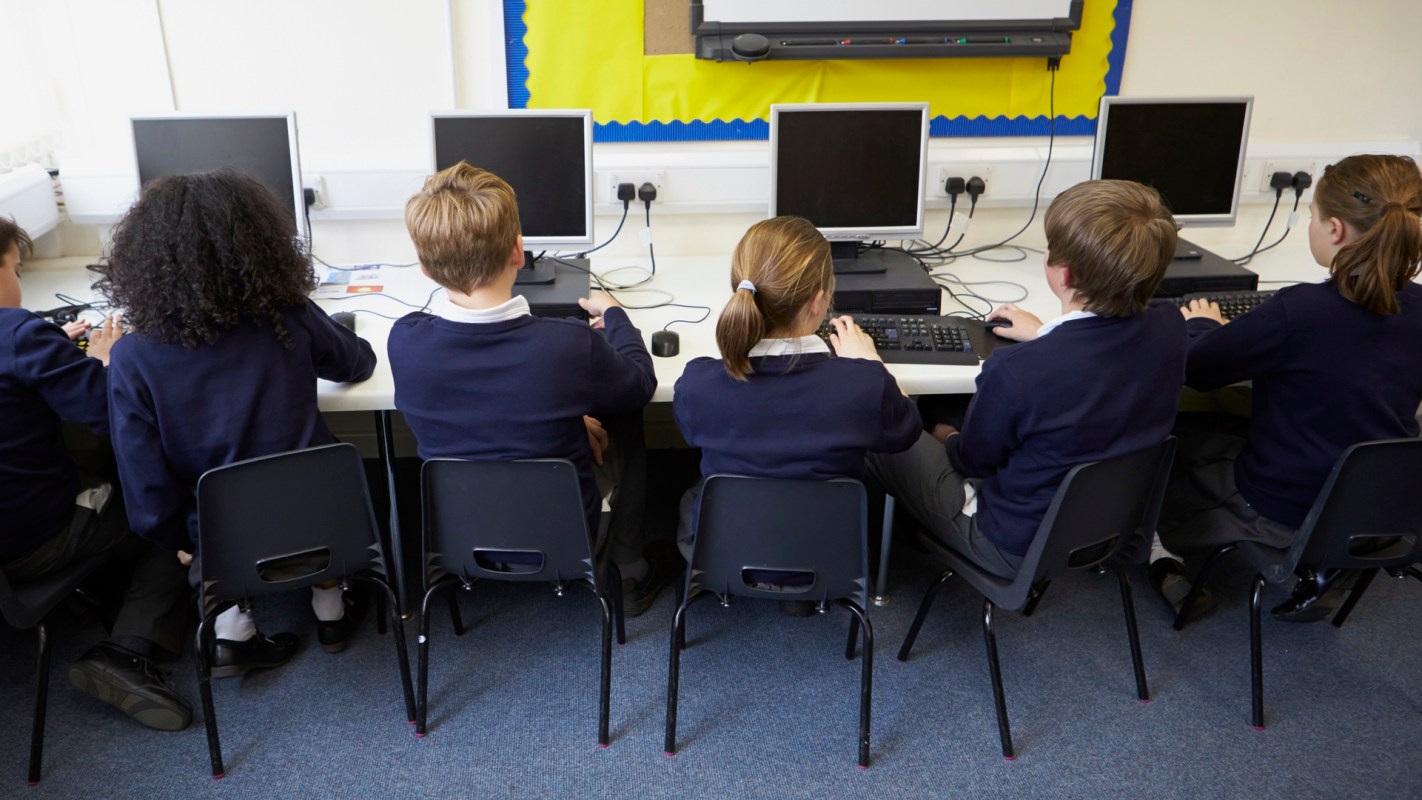
School-issued laptops are extremely commonplace in the United States; the National Center for Education Statistics estimated that 96% of public schools provided devices to students.
This wasn't always the case, but Maine introduced an ambitious concept in 2002. By 2016, the Maine Learning Technology Initiative had provided 66,000 school-issued laptops to students.
As Fortune noted, the program has since "been mirrored across the country." But Maine was the first, and after 24 years, experts say the long-term data tells a story of unseen consequences.
King envisioned the initiative as a way to give students internet access and an edge, but in the intervening decades, broad educational outcomes worsened — at an alarmingly rapid rate.
In late 2024, the NCES determined that a quarter of young adults were functionally illiterate, and that the percentage of people between 16 and 24 with the lowest literacy levels skyrocketed, from "16% in 2017 to 25% in 2023," according to the Miami Times.
Neuroscientist Jared Cooney Horvath, who recently submitted testimony to the Senate Committee on Commerce, Science, and Transportation, told Fortune that "Gen Z [was] less cognitively capable" than previous generations, despite unprecedented access to information.
Horvath explained that cognitive capability and intelligence were not directly interchangeable, but that general cognitive skills had been waning for years.
Distractions were among technology-related barriers to knowledge retention, but Horvath also explained that the "friction" of hard-won learning was a casualty of convenient technology.
TCD Picks » Upway Spotlight
💡Upway makes it easy to find discounts of up to 60% on premium e-bike brands





|
Which of these savings plans for rooftop solar panels would be most appealing for you?
Click your choice to see results and speak your mind. |
 Save $1,000 this year 💸
 "Unfortunately, ease has never been a defining characteristic of learning. Learning is effortful, difficult, and oftentimes uncomfortable. But it's the friction that makes learning deep and transferable into the future."
Why is this concerning?
As Horvath's in-depth testimony was analyzing established educational technologies, AI was steadily making its way into classrooms — and causing havoc.
Although laptops in schools and AI in classrooms aren't necessarily the same, early data on AI in schools has indicated a similarly detrimental overall effect.
AI is relatively new, and its impacts extend beyond education.
Data centers have become a political flashpoint, in no small part because their demand for energy has driven up electric bills across the U.S.
With an already aging public grid, AI's growing energy demand prompted a rare warning from the Department of Energy about the increasing risk of blackouts.
What's being done about it?
The NCES' repeated findings on laptops and schools were arguably a blaring warning signal for the potential impact of AI in classrooms.
Horvath said he tells students that the system has failed them, not the other way around.
"Whenever I work with teenagers I tell them, 'This is not your fault. None of you asked to be sat in front of a computer for your entire K-12 schooling.' That means we … screwed up — and I genuinely hope Gen Z quickly figures that out and gets mad."

Get TCD's free newsletters for easy tips to save more, waste less, and make smarter choices — and earn up to $5,000 toward clean upgrades in TCD's exclusive Rewards Club.
Cool Picks





