


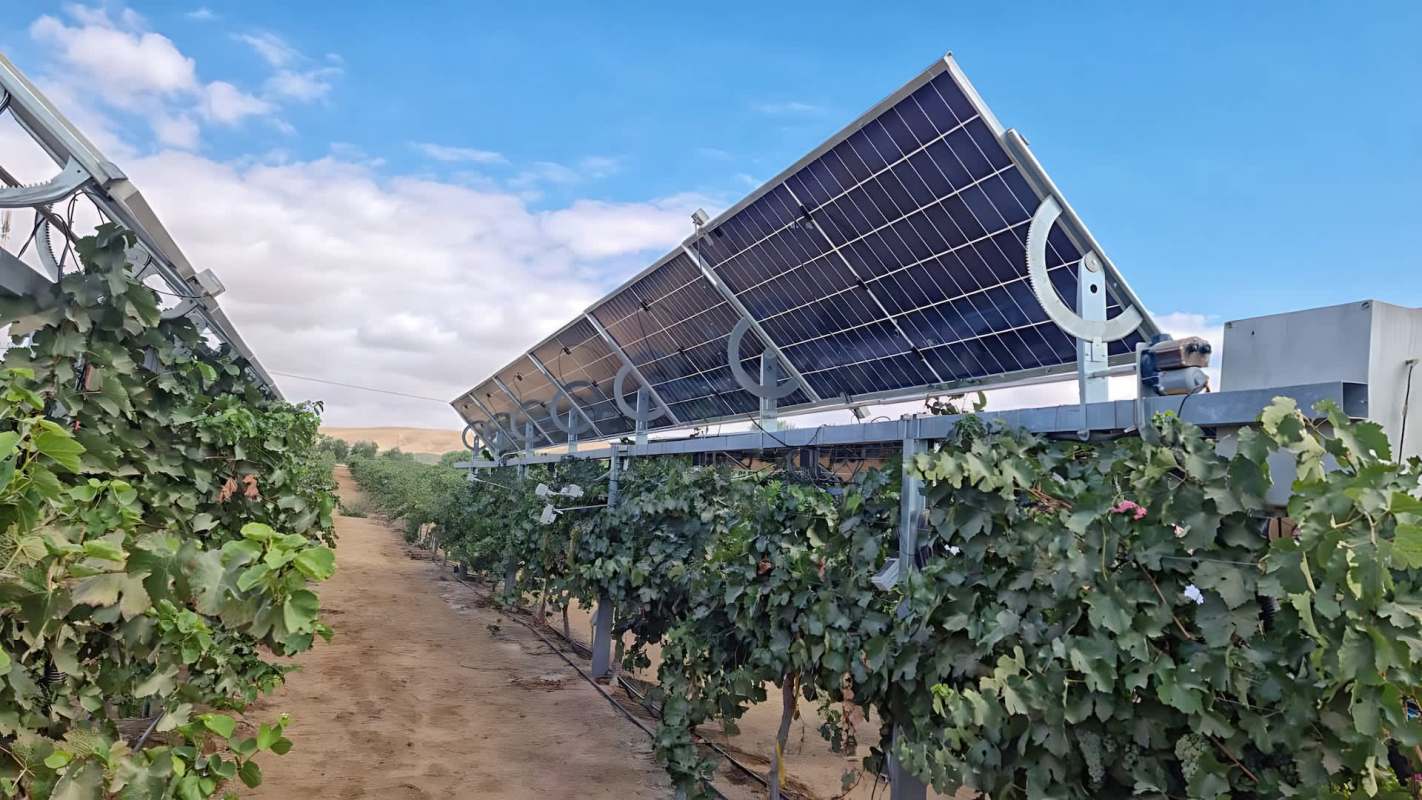
New evidence shows that solar panels may provide yet another benefit when paired with crops.
Research from Cornell University has demonstrated that the panels can offer an extra layer of wind protection for crops, aiding their resilience, according to PV Magazine.
The researchers' findings should hearten farmers exploring the use of agrivoltaics — the co-location of agricultural production and solar energy systems.
"Airflow under solar panels is a key consideration for agrivoltaic systems," the study's corresponding author, Max Zhang, told PV Magazine. "If conditions are too windy, crops can be damaged; if too calm, crops risk mildew."
The researchers used computational fluid dynamics modeling to evaluate how various agrivoltaic designs can change crops' wind exposure. By adjusting the panels' configuration and tilt, they were able to maximize airflow.
The team compared the outcome of conventional agricultural windbreaks. The study, published in Agricultural and Forest Meteorology in April, found that single-axis sun-tracking solar panels can block strong winds when positioned low and provide airflow for aeration when tilted upward.
TCD Picks » Quince Spotlight
💡These best-sellers from Quince deliver affordable, sustainable luxury for all




The scientists took great care to mimic how farms already use windbreaks so that a proposed solar system design could theoretically work within conventional agricultural production. The goal is to optimize mixed land use, growing strong crops while also capturing clean energy from the sun. This energy can generate passive income for farmers while also helping farms to reduce the use of fossil fuels.
Separate research shows that many crops thrive under the shade of the panels. Farmworkers and animals can also benefit from them in hot or wet conditions. Wind protection is thus a promising new dimension for the practice.
"The new lowered-first-row design offers an aerodynamic solution to the acceleration zone found in other agrivoltaic scenarios, achieving up to 86% protection in the shelter zone under extreme wind conditions," Zhang told PV.
The findings emphasize scientists' ongoing efforts to discover innovative strategies for cultivating abundant harvests while harnessing sustainable energy.
Next up, the team will look at how farmers might manage solar panels in real time to maximize their benefits relative to wind.
|
Which of these savings plans for rooftop solar panels would be most appealing for you?
Click your choice to see results and earn rewards to spend on home upgrades. |
 Save $1,000 this year 💸
Get TCD's free newsletters for easy tips, smart advice, and a chance to earn $5,000 toward home upgrades. To see more stories like this one, change your Google preferences here.






