


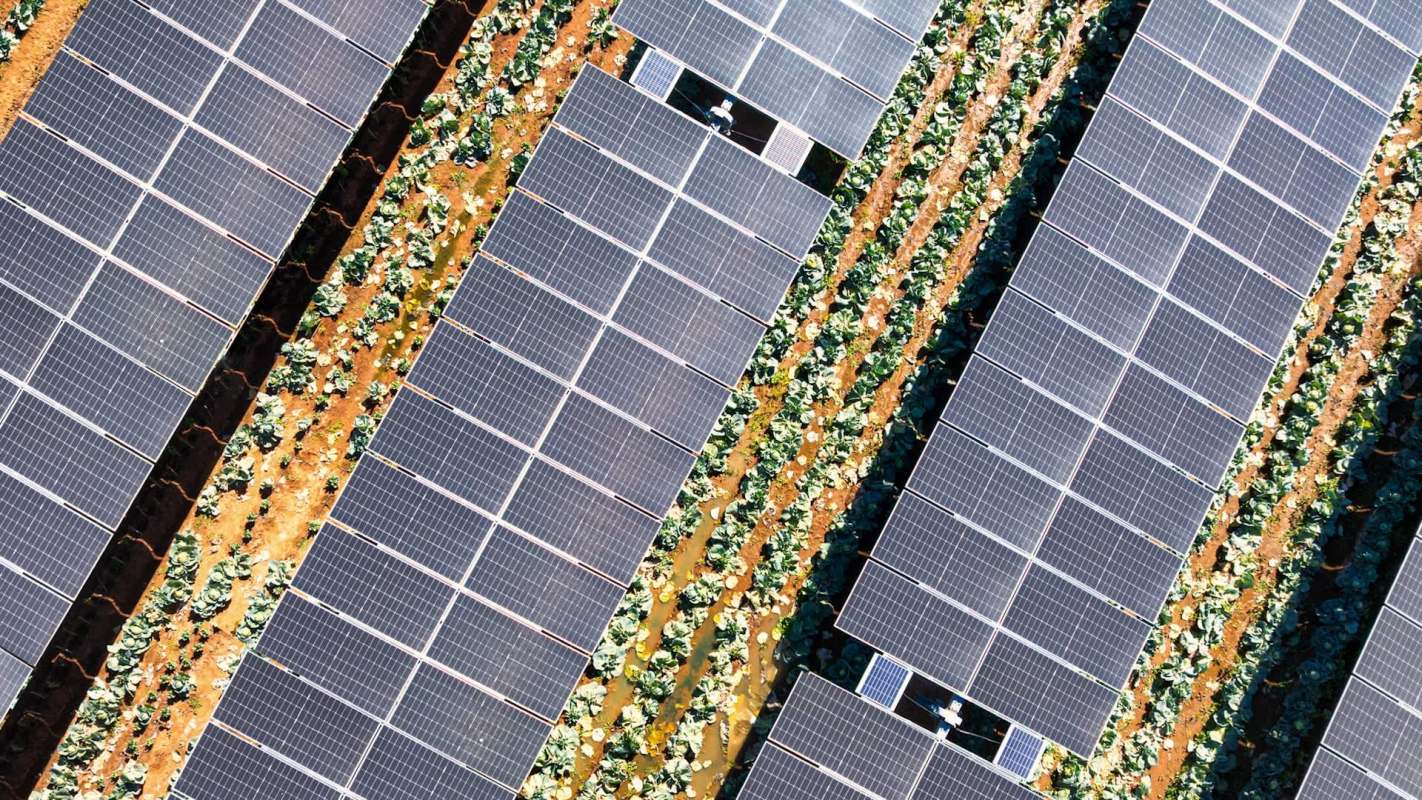
A pilot program in New Jersey was instituted in 2021 to support and study agrivoltaic projects in the state, to expand sustainable energy installations while reinforcing the region's agricultural commodities.
The Rutgers Agrivoltaics Program was born from this initiative and has grown to three sites across the state, where the university aims to understand and optimize solar projects in conjunction with key crops, according to Lancaster Farming.
The report shared that program lead Dave Specca envisions agrivoltaic installations that can suit a variety of commodities, from hay to soybeans and produce.
"In 20 or 30 years, the panels are still going to be there, but the farmer could be growing a quite different crop than he started out doing," Specca told the outlet.
Agrivoltaic projects represent the intersection of farming and solar panel arrays, where it's a win-win for both farmers and sustainable energy production.
These projects can include grazing land, crop production, pollinator habitat development, and even greenhouses, all complemented by solar energy production.
The pairing of solar panels with farming has been growing steadily over the past five years, with benefits including cooler microclimates and reduced water usage due to less evaporation.
In 2020, agrivoltaic sites in the U.S. covered 27,000 acres and generated 4.5 gigawatts of solar energy, according to research by the National Renewable Energy Laboratory. By 2024, these sites will have more than doubled in size, covering 62,000 acres and producing 10 gigawatts of clean solar energy.
The largest segment of agrivoltaic projects, comprising over 400 sites, has been focused on pairing native and pollinator habitats with solar installations.
Another 200 locations have been used as grazing land for livestock, where the panels also serve to provide shade from the sun's heat.
TCD Picks » Quince Spotlight
💡These best-sellers from Quince deliver affordable, sustainable luxury for all




|
Which of these factors is the biggest obstacle preventing you from getting solar panels? Click your choice to see results and speak your mind. |
 The upfront cost 💰
 The use of solar panels in conjunction with crop production has been developed on only 35 sites, including the Rutgers Agricultural Research and Extension Center in Cumberland County, located in the southern portion of the state.
In 2024, the team achieved success with soybean crops, as plantings under both single and double solar panel setups yielded more than test areas that were left open to the sky, the report explained.
The arrays were adjusted every 10 minutes by an algorithm that tracked the sun's path along a single axis to optimize collection. Lancaster Farming noted that the Rutgers Agrivoltaics Program will continue its research through 2026 and beyond to gather additional data to support its findings.
The results will serve to advise growers on which agricultural commodities work best when paired with solar panels in order to support New Jersey's agricultural sector and meet clean energy goals.
"People are seeing the benefits of agrivoltaics," said Jordan Macnick, who leads the InSPIRE project at NREL.
"Companies are seeing what these benefits are, farmers are seeing what these benefits are, and they're recognizing, 'Hey, this might be for me.' And so they're testing it out. That's very exciting for agrivoltaics research."

Join our free newsletter for weekly updates on the latest innovations improving our lives and shaping our future, and don't miss this cool list of easy ways to help yourself while helping the planet.
Cool Picks





