


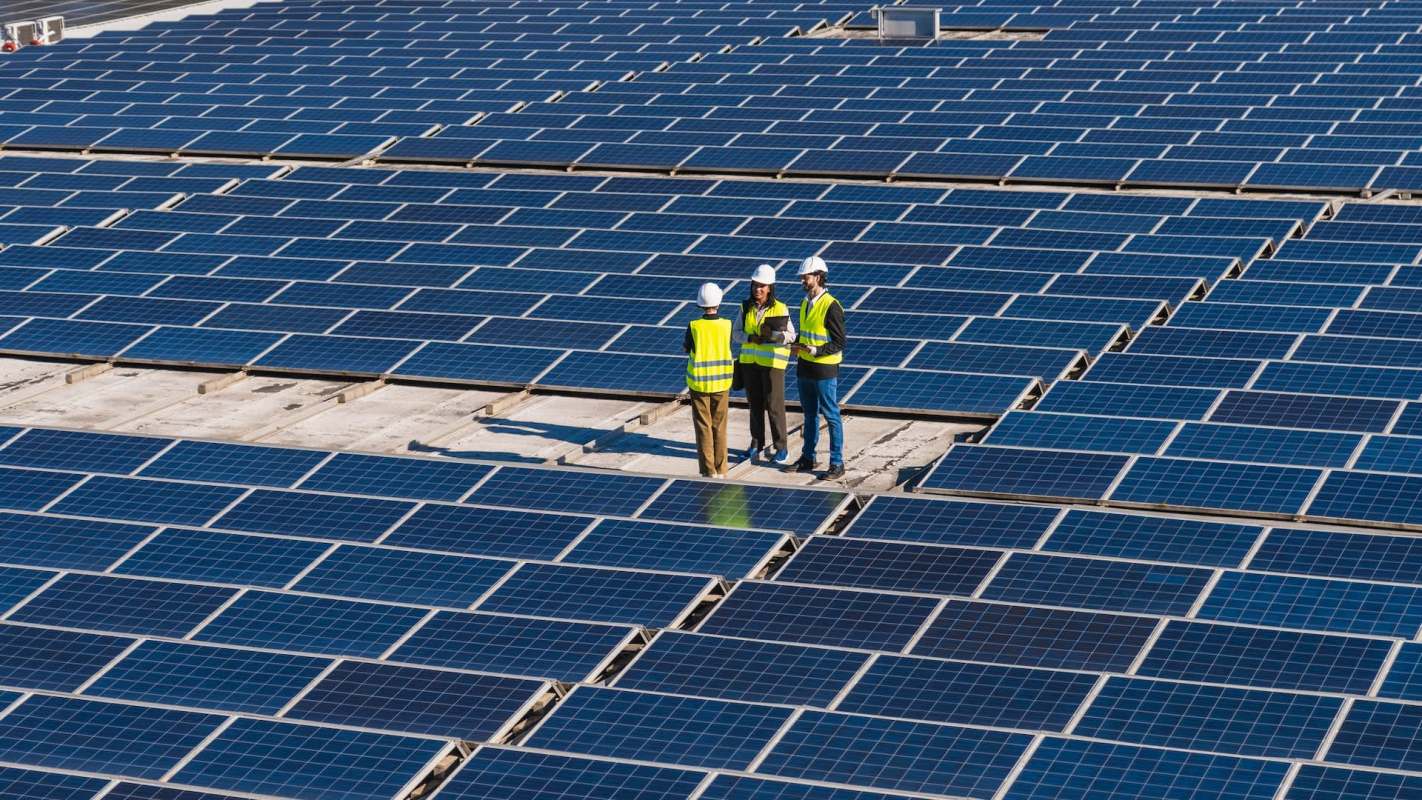
Rising electricity costs are pushing more cities to seek solutions that provide longer-lasting relief than a one-time bill credit. In Carson, California, officials are betting rooftop solar can do more than curb pollution — it can also ease monthly costs for residents on tight budgets.
What's happening?
Amid higher utility bills, Carson has teamed up with nonprofit electricity provider Clean Power Alliance on a community solar initiative meant to reduce what local residents pay for power, with particular attention to lower-income households.
The need is significant. As Spectrum News reported, data from Los Angeles County indicate that nearly one in 10 households in Carson live below the federal poverty line. The outlet also cited the National Energy Assistance Directors Association's estimate that electricity costs in the United States will rise by about 10.5% this summer.
Clean Power Alliance CEO Ted Bardacke said the installation is designed as a shared source of electricity rather than a system that powers the building it sits on.
"This power being generated here does not go back into the building," Bardacke said. "We're just using the roof space and instead it's going back into the grid and serving homes and households in the neighboring area."
Why does it matter?
That shared model allows the benefits of solar energy to reach people who may not own a home or be able to afford to install panels themselves.
TCD Picks » Quince Spotlight
💡These best-sellers from Quince deliver affordable, sustainable luxury for all




"A low-income customer for whom this project is serving is going to get about between $120 and $150 a month of an electricity bill. And they'll get 20 percent off that," Bardacke said, according to Spectrum News.
Carson Mayor Lula Davis-Holmes said the savings could be especially meaningful in a city with many older residents who rely on fixed incomes.
"Energy rates were skyrocketing, and we wanted to bring something to our residence to lower the cost. We have a large senior population here, on a fixed-income, what better way to assist them than to provide a service that will lower their energy cost?" she said.
Beyond lowering bills, the project will also cut pollution. A Stanford University study cited by Spectrum News estimated that, over 25 years, solar power avoids roughly 15,000 to 20,000 pounds of carbon dioxide per household compared with conventional electricity.
Reducing planet-warming pollution can also help lessen air quality problems associated with burning non-renewable energy sources.
What's being done?
The Carson program is one part of Clean Power Alliance's broader effort to expand community solar in Southern California, and Bardacke said that addressing the effects of planetary warming will require multiple approaches.
"This isn't the only solution. We also need to build stuff out in the desert, where it's super low-cost, mass economies of scale and that is going to require more transmission. So it's not like one solution is better than the other, we need to bring everything to bear on our climate crisis," he said, per Spectrum News.
Even as federal clean energy funding has been cut or shifted in some cases under President Donald Trump's administration, California officials say they are continuing to move forward with cleaner power options.
Molly Sterkel, director in the energy division at the California Public Utilities Commission, said, "Our grid is evolving, and we're using more and more clean energy. And we're finding that our clean energy future can be both safe, reliable, and affordable for all customers."
"When you put on a solar panel, you've locked in your fuel source for a generation or two, which is right up there with the sun," Bardacke said. "I see this as climate change, and for our kids, but also for right now, this is the most secure energy we can have in the world."

Get TCD's free newsletters for easy tips, smart advice, and a chance to earn $5,000 toward home upgrades. To see more stories like this one, change your Google preferences here.






