


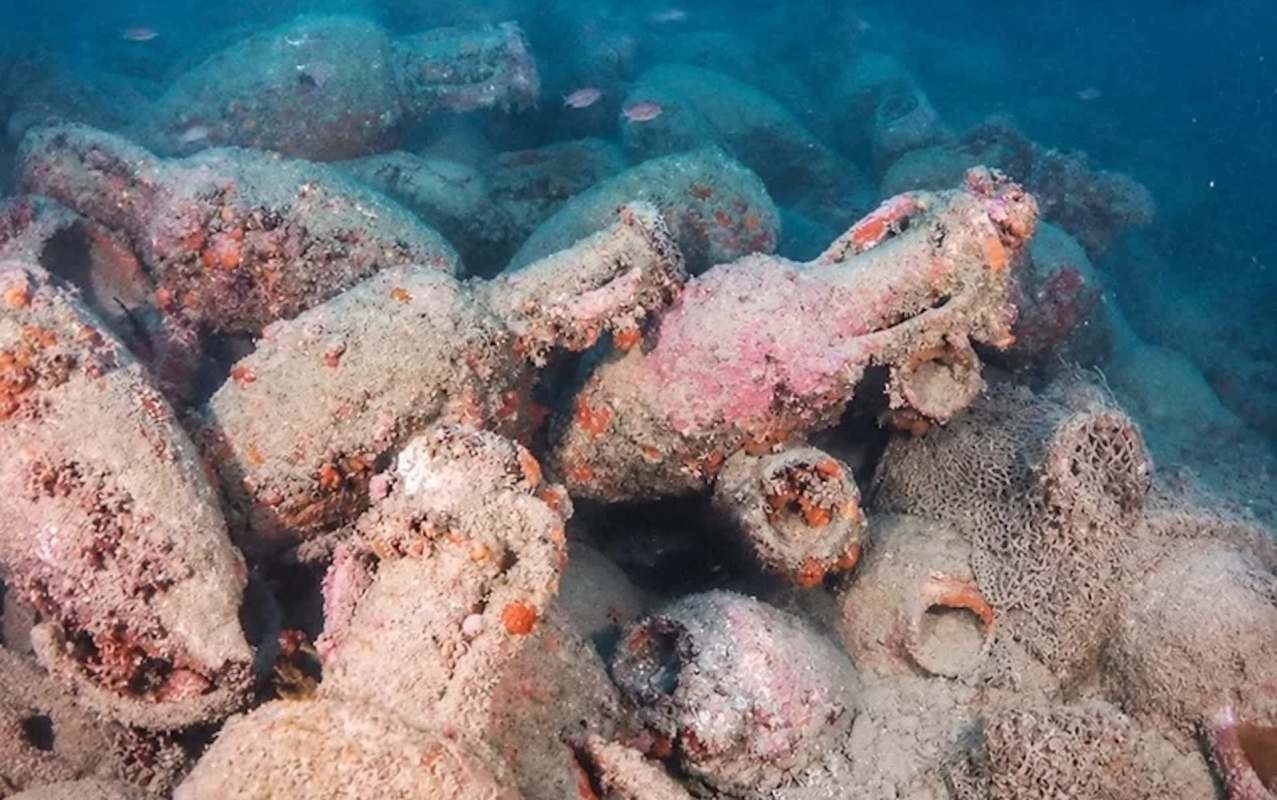
Archaeologists have pinpointed a Roman-era wreck off western Sicily, a find that could help clarify how commerce moved across the ancient Mediterranean.
Here's what to know
Reported by Divernet, the site sits about 3.1 miles (5 kilometers) from Mazara del Vallo at a depth of 151 feet (46 meters), according to the Carabinieri Cultural Heritage Protection Unit, or TPC. Authorities were notified after sonar identified the location and spear divers Giacomo De Mola and Igor Bisulli reported it.
Afterward, the Carabinieri Cultural Heritage Protection Unit in Palermo, the Sicilian Region's Superintendency of the Sea, and Carabinieri divers from Messina carried out a coordinated inspection, with support from a patrol boat based in Trapani.
Early examination suggests the vessel dates to somewhere between the 2nd and 1st centuries BC. The amphoras visible on the seafloor have mostly been provisionally identified as Dressel 1A, a type tied to Roman transport and trade.
Some accounts put the cargo at roughly 500 amphoras, but officials have described it only as numbering in the hundreds. The survey also documented two lead anchor-stocks and another lead object that has not yet been identified.
More background
Shipwrecks can function like time capsules. Rather than examining isolated artifacts, archaeologists can study cargo, ship equipment, and site layout together, helping them reconstruct how goods moved and how people traveled across the ancient Mediterranean.
TCD Picks » Quince Spotlight
💡These best-sellers from Quince deliver affordable, sustainable luxury for all




Sicily sat at a strategic crossroads linking Europe, North Africa, and the eastern Mediterranean. A Roman merchant ship sunk off its coast can reveal what kinds of products were being shipped, where they may have originated, and which routes were active at the time.
The discovery also adds to a growing list of ancient wrecks in the waters around Sicily and southern Europe. Comparable Roman-era sites have been documented near Palermo and off eastern Sicily, while other amphora-laden wrecks have been found near Greece and southern Italy.
Preserved cultural heritage can support research, museum interpretation, education, and sustainable tourism, while also deepening public understanding of how trade networks shaped daily life long before modern shipping lanes existed.
What's being done?
The Superintendency of the Sea is expected to conduct further documentation and study to better understand the wreck's age, cargo, and historical context.
Once officials map and assess a site, they can decide how best to protect it from disturbance, looting, or accidental damage. Underwater archaeological sites are especially vulnerable because they are difficult to monitor continuously.
Sonar detection, diver verification, patrol support, and archaeological review all helped move the find from rumor to a documented site.
Responsible reporting by divers and boaters can help preserve artifacts in place, allowing experts to study them properly and protect them for the future.
Italian Culture Minister Alessandro Giuli described the wreck as one of the most important underwater archaeological discoveries and said it could help explain the people, routes, and commercial exchanges that made the Mediterranean a crossroads of civilizations.

Get TCD's free newsletters for easy tips, smart advice, and a chance to earn $5,000 toward home upgrades. To see more stories like this one, change your Google preferences here.






