


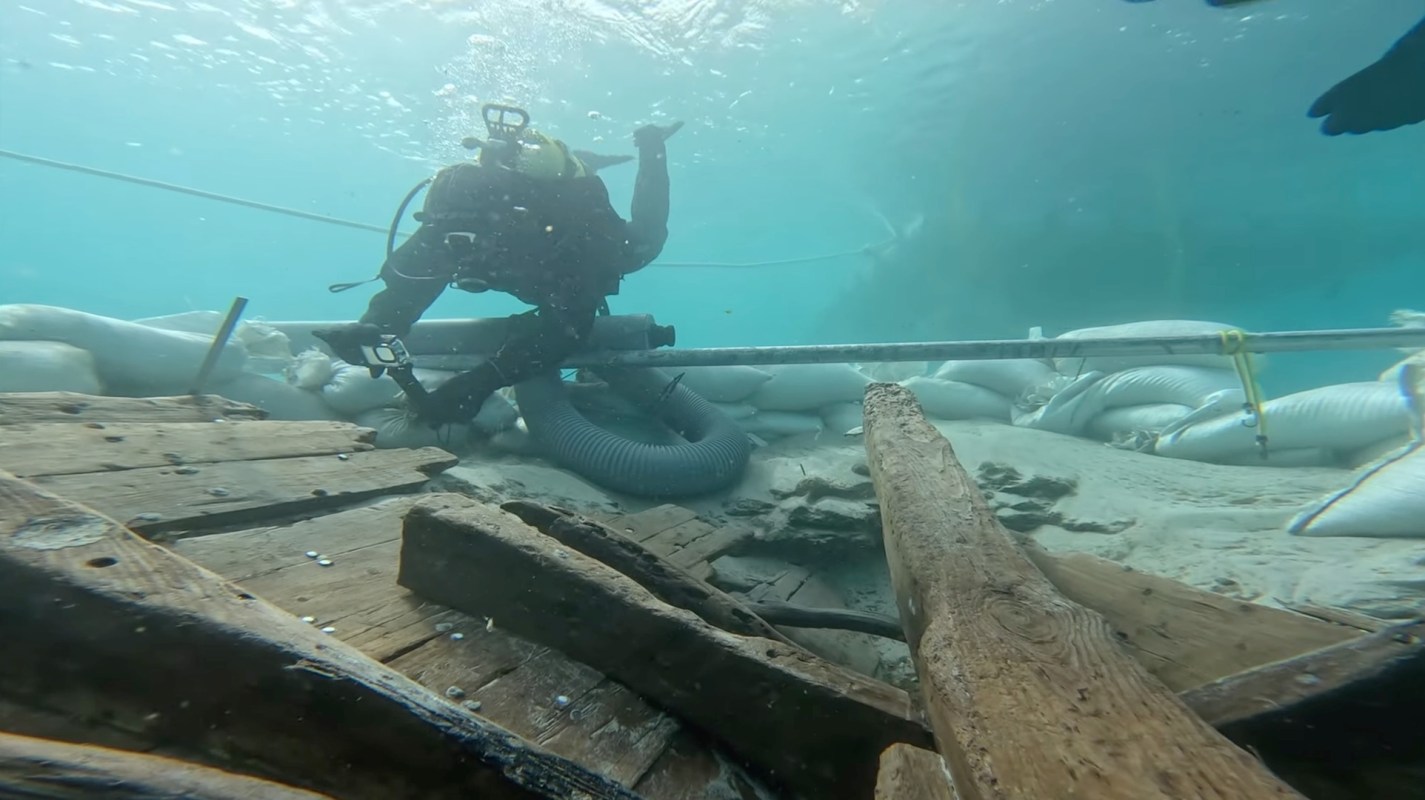
Spain has recovered Ses Fontanelles from the Bay of Palma near Mallorca after months of careful underwater work, in what AS USA said is the first time the country has brought up a Roman ship from the seabed largely intact.
The recovery of Ses Fontanelles is also giving researchers a rare window into how goods, people, and maritime technology moved across the Mediterranean during the late Roman Empire.
What happened?
AS USA reports that archaeologists spent four months excavating and lifting Ses Fontanelles, a Roman merchant ship from the fourth century A.D. Researchers said Spain has never before recovered a Roman vessel this complete and intact.
More than 300 amphorae — two-handled clay jars — filled with olive oil, wine, and fermented fish sauces were aboard the roughly 39-foot ship when it left the Cartagena area. Archaeologists believe the vessel was probably headed to Rome or another major port in the western Mediterranean before a storm sank it near Ses Fontanelles.
It stayed buried under sand for centuries until a 2019 storm reshaped the seabed, exposing several amphora necks that a diver spotted by chance. Since that discovery, the team has recovered more than 600 objects, including pieces of the hull, traces of cargo, ropes, baskets, anchors, steering parts, and a rare section of the ship's original sail.
Why does it matter?
Discoveries this complete are exceptionally uncommon, making Ses Fontanelles especially important to historians and conservators. Researchers can study the ship, its cargo, and elements of how it operated all at once, rather than piecing together scattered debris.
TCD Picks » Quince Spotlight
💡These best-sellers from Quince deliver affordable, sustainable luxury for all




Because some amphorae were still sealed with their original stoppers, traces of their contents survived. Many also bear painted inscriptions, known as tituli picti, that can help identify merchants, scribes, and even tax-related details associated with the shipment. The vessel also preserves a record of how a major commercial network functioned.
Researchers said the recovery also produced Spain's first documented tiller handle from a side rudder. The finds could eventually lead to museum exhibits and educational programs.
What's being done?
To protect the hull during the lift, archaeologists worked with specialists from multiple Spanish universities and divers from the Spanish Navy, using fiberglass support structures that were shaped underwater.
The project has now entered the conservation phase. The recovered materials are being stabilized at a facility in San Carlos Castle in Palma, where they are expected to stay for at least a year before additional preservation work begins at the National Museum of Underwater Archaeology in Cartagena.
The recovered objects are also helping researchers build a more precise timeline for the wreck. One of the most important finds was a coin struck in A.D. 320 beneath the mast base, possibly placed there as part of a traditional shipbuilding ritual.
Officials eventually hope to display Ses Fontanelles in an archaeological center the Balearic regional government is planning. Before that, part of the cargo is expected to be on display in a temporary exhibition this fall.
With its preserved cargo, rare sail fragments, and unusually complete hull, Ses Fontanelles could help researchers reconstruct nearly the entire story of one ancient voyage.

Get TCD's free newsletters for easy tips, smart advice, and a chance to earn $5,000 toward home upgrades. To see more stories like this one, change your Google preferences here.







