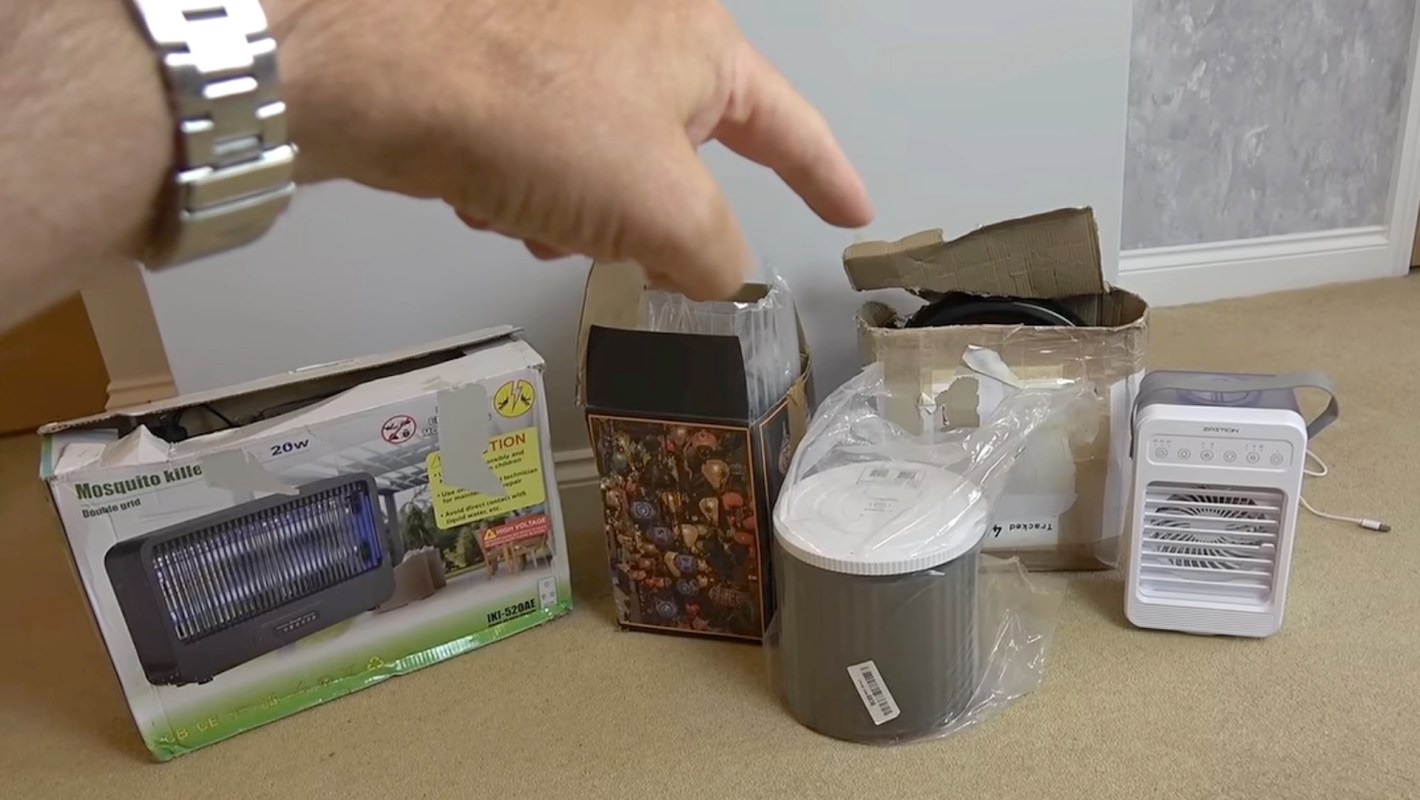
Vince (@Mymatevince), a repair content creator on YouTube, posted a video sorting through a pile of Amazon returns deemed to be broken to see if anything was salvageable, showing that "broken" does not always mean unusable.
Here's what to know
The returns included a Turkish lamp, a bug zapper, an air cooler, and a toastie maker. As Vince explained, "These have all been returned to Amazon from customers because they're faulty or they're supposed to be faulty."
Corrosion turned out to be the key issue with a USB-powered air cooler that showed no signs of life. Once Vince opened it, he found water damage on the circuit board and determined the failure was due to corroded traces that were no longer conducting power. After checking for continuity, he cleaned the board, drilled holes to add jumper wires, and used solder to repair the broken connections.
The batch was a mix. Some products were truly defective, but others had only minor problems, such as a missing cord or a drained battery. However, it goes to show that items can enter the returns stream well before they are actually trash.
Why is this important?
Most shoppers never see what happens after a return is dropped off, but pallets of mixed customer returns can create a messy downstream problem involving resale, refurbishment, liquidation, or disposal.
When electronics are treated as disposable, the waste adds up quickly. A gadget with a minor defect — or even just missing accessories — may still require extra shipping, repackaging, testing, labor, and replacement, all before anyone knows whether it is truly unusable.
TCD Picks » Quince Spotlight
💡These best-sellers from Quince deliver affordable, sustainable luxury for all




Basic troubleshooting can sometimes save money. A dead device may simply have a drained battery, a faulty cable, or corrosion in a single spot. Vince warned that opening or repairing electronics can be risky, particularly when mains power, stored charge, or damaged batteries are involved, saying that some repair jobs are better handled by qualified professionals.
What can be done?
Better sorting and testing of returns could keep more products in circulation instead of sending them straight into bulk liquidation or waste streams. Clearer product listings, better quality control, and stronger support for replacement parts could also prevent some needless returns in the first place.
Buying refurbished gear when possible helps extend the life of products that might otherwise be written off too early, and it can lower costs compared to buying brand-new replacements.
People can also cut waste by checking simple issues first — charging cables, batteries, filters, and setup instructions — before assuming a product is a dud. When something truly no longer serves its purpose, exploring repair, resale, and donation options is worth considering before disposal.
One commenter wrote, "I love the Amazon return videos. Well done Vince 100% isn't that bad is it."

Get TCD's free newsletters for easy tips, smart advice, and a chance to earn $5,000 toward home upgrades. To see more stories like this one, change your Google preferences here.