


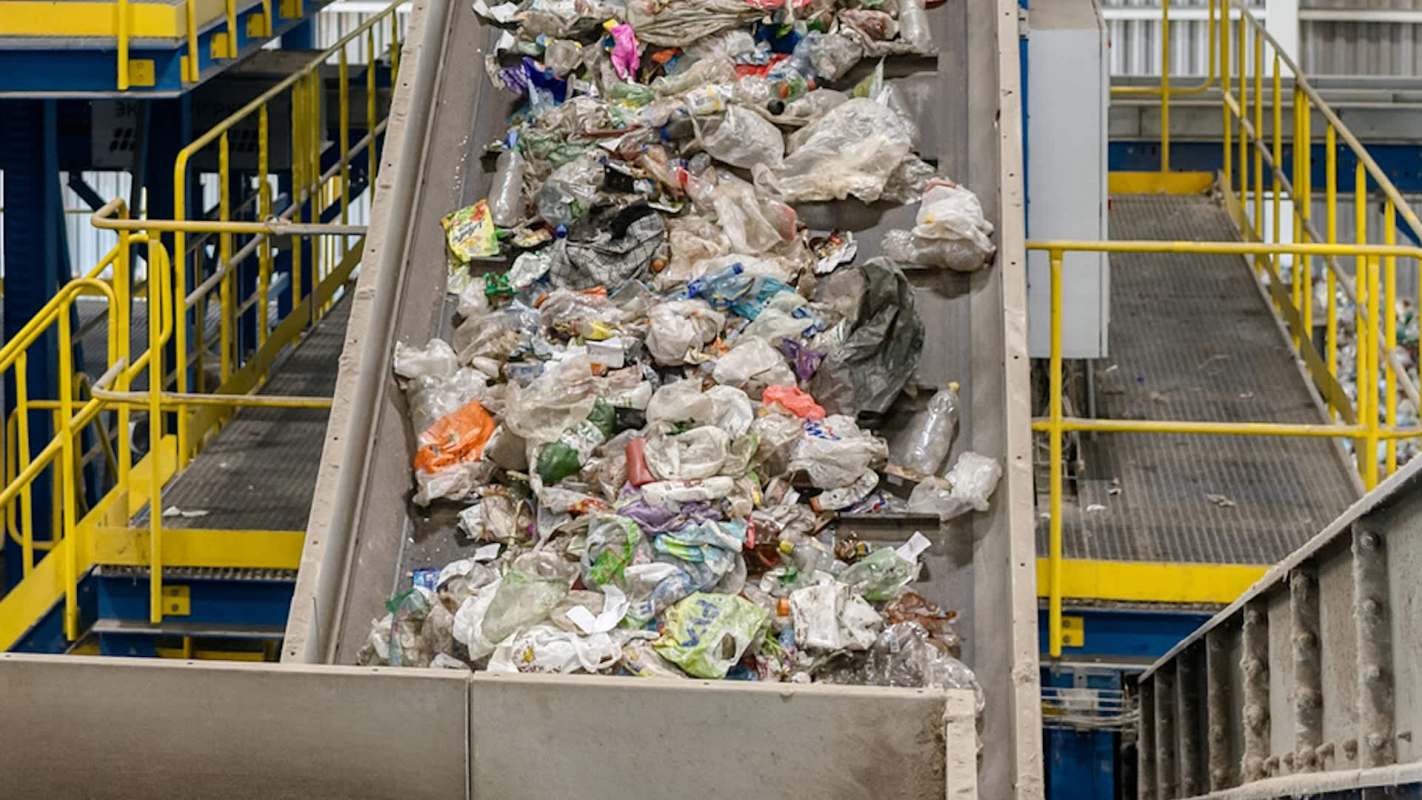
Recycling is one of the everyday actions people can take to help curb plastic waste, but the recycling industry still has room for improvement. Some plastic components, like polyolefins and polyvinyl chloride, can be challenging or impossible to break down, and the pre-sorting of plastic waste can be energy-intensive.
However, according to Mexico Business, chemists at Northwestern University may have developed a solution to these issues.
The chemists recently introduced a process for recycling plastic that could greatly reduce or even eliminate the need for pre-sorting plastic waste, as it selectively breaks down plastics containing polyolefins.
When applied to plastic waste containing polyolefins, the catalyst breaks down these plastics into waxes and liquid oils, which can then be used to create products of higher value, such as fuels and lubricants.
Additionally, a highly abundant and inexpensive nickel compound forms the catalyst, and the process operates at lower pressures and temperatures than currently utilized methods. This lets the new process operate with high precision, while using 10 times less catalyst loading but achieving 10 times the activity.
Another important discovery made during the study and development of this process was that when the catalyst interacted with polyvinyl chloride, a contaminant found in plastics that renders them unrecyclable, the polyvinyl chloride actually accelerated the catalyst's activity and improved its performance.
The discovery of a new way to recycle plastics without requiring pre-sorting of waste or concern about which plastics might be unrecyclable could simplify recycling for not only those in the industry but also for individuals who recycle, as not having to pre-sort plastics would be a time-saver for all.
This inexpensive method of recycling plastics could save the industry money, as well. Best of all, though, it could contribute significantly to the larger sustainability goal of curbing plastic waste, as more plastics would be recyclable.
As Mexico Business reported, the study's senior author, Tobin Marks, explained the process, "One of the biggest hurdles in plastic recycling has always been the necessity of meticulously sorting plastic waste by type. Our new catalyst could bypass this costly and labor-intensive step for common polyolefin plastics, making recycling more efficient, practical, and economically viable than current strategies."
An additional benefit would be that the decrease in plastic waste in our environment would also reduce the amount of microplastics, now found in nearly everything, and help to prevent the increase of microplastics-related health issues, such as hormone disruption.
TCD Picks » Quince Spotlight
💡These best-sellers from Quince deliver affordable, sustainable luxury for all




However, while the nickel compound used here is abundant, there could still be supply issues, as China and Indonesia control 75% of the globe's refined nickel, which could delay its wider use.
|
What confuses you most about recycling protocol?
Click your choice to see results and speak your mind. |
 Which materials I can recycle 📦
💰Get TCD's free newsletters for easy tips to save more, waste less, and make smarter choices — and earn up to $5,000 toward clean upgrades in TCD's exclusive Rewards Club.
Cool Picks





