


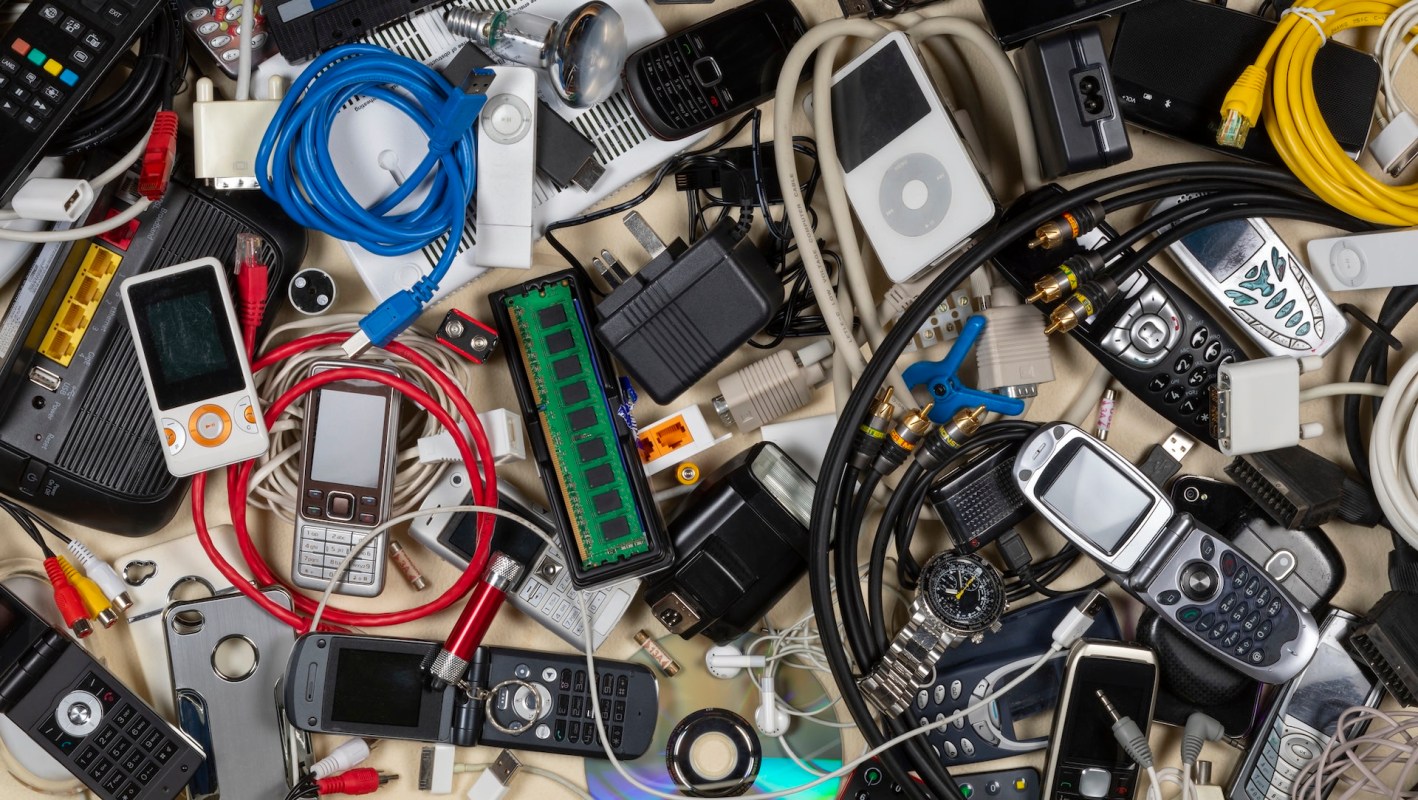
Experts at the University of California, Santa Barbara are using chemistry's version of a crab claw to sustainably pick up valuable rare earth elements that are a part of many electronics and are costly and tough to recycle.
They are working with compounds called chelators that bind to metals "like a crab claw grabbing a pebble," according to university publication The Current. The valuable metals being gathered — such as scandium and yttrium — are not as common in periodic table references as other elements. They are tough to gather from Earth's geologic deposits. Recovering them from batteries, smartphones, and other electronics is crucial to sustainability, according to the report.
"Unfortunately, their chemical similarities make them fiendishly difficult to separate from one another," professor Justin Wilson said. "... We've developed a new approach to extract rare earth elements from end-of-life products."
Last year, Wilson's team synthesized a chelator called G-macropa that's good at binding to rare earth metals. The compound was able to separate them at room temperature without the toxic substances often used for reclaiming elements. Part of the next step is working with New York's REEgen, a company focused on creating "clean" rare earths, per its website.
REEgen has developed microbes that make an organic acid and biochelator that can leach rare earths from electronic wastestreams. Wilson's crab claws are put to work after REEgen's process has done a first round of element separation, according to The Current.
Wilson's filter is akin to a tap water screen, but it's supercharged to handle large rare earths. The innovation increased fourfold the amount of valuable elements collected from REEgen's bioleachate. Some tinkering to remove excess iron and a quick hydrochloric acid bath get the rare earths ready for reuse, according to the report.
Humans made more than 68 million tons of electric waste in 2022, an 82% increase from 2010, the United Nations reported. The World Health Organization added that just over 22% is recycled. Improperly discarded e-waste is a hazard to the environment and people. Lead, for example, is a common toxic metal included in waste, the report continued.
Experts around the world are working on sustainable ways to collect the precious parts inside all our tech. At Cornell University, researchers are developing a better way to capture gold that's used in electronics. Germany's Aurubis is also perfecting its process to pull certain metals from the wastestream with improved efficiency.
Markets and Markets reported that there is ample opportunity, as the e-waste recycling market is worth over $48 billion, with forecasts for it to surpass $66 billion by the end of the decade.
Wilson's goal is to create concentrated collections of rare earths that can be sent to other outfits for separation and reuse. He highlighted automotive slag as a wastestream that's still tough to tackle. The high cost of G-macropa production and the potential impact of federal research budget cuts were also noted as hurdles in the report.
TCD Picks » Quince Spotlight
💡These best-sellers from Quince deliver affordable, sustainable luxury for all




|
What do you usually do with your old electronics? Click your choice to see results and speak your mind. |
 Store them at home 📦
 "With significant cuts to these federal funding sources, I think we're going to be hurting as a nation," Wilson said.
For the time being, reuse and recycling practices can make a big impact with other materials. Circular brands are crucial to a sustainable society, and supporting them can encourage more companies to follow suit. The Ellen MacArthur Foundation can help you learn more about brands committed to sustainability.

Join our free newsletter for weekly updates on the latest innovations improving our lives and shaping our future, and don't miss this cool list of easy ways to help yourself while helping the planet.
Cool Picks





