


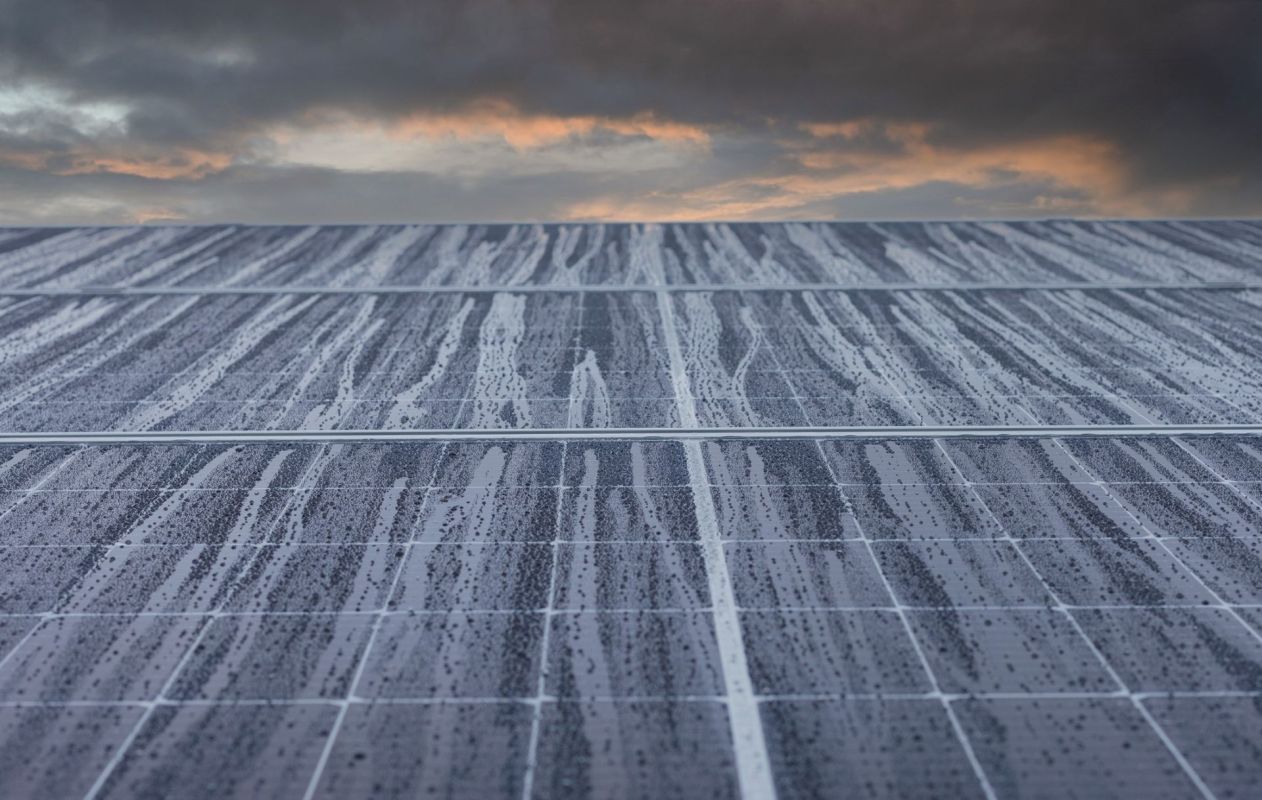
Scientists have developed a new coating to capture the energy of rain falling on solar panels.
While the impact of rain may seem minor, those tiny drops can generate measurable amounts of energy. According to recent research reported by Brighter Side News, Spanish scientists have now "demonstrated that the impact of a drop can create over 100 volts of electricity."
Researchers from the Materials Science Institute in Seville published their findings in February. Their breakthrough integrates a thin film into panels that not only protects the fragile solar cells but also captures mechanical energy from falling rain.
While widely available solar panels can already capture enough energy to power homes and reduce electricity bills, this innovation could unlock another way for panels to capture energy in the future. Those curious about how upgrading to solar can transform a home's energy use now might consider connecting with EnergySage.
"[This] establishes the potential for combining these two energy harvesting techniques in one device," study co-author Carmen López-Santos told Brighter Side.
This work was designed to make advanced, highly efficient solar technology less susceptible to degradation caused by temperature, light, or moisture fluctuations. The new coating protects the somewhat fragile solar cell while allowing light to pass through.
Fernando Núñez, a co-author and investigator with the Materials Science Institute, suggested that this more durable technology could be used to power self-sustaining appliances and devices, such as emergency lights and monitoring systems, in extreme weather conditions.
While this technology is, for now, at just the proof-of-concept stage, modern solar panels can already help to support homes' resilience to major storms when the power grid goes down — all while delivering massive savings even when the weather is fine. Some homeowners are even seeing six-figure savings on their bills by making the shift to solar.
Save $10,000 on solar panels without even sharing your phone number Want to go solar but not sure who to trust? EnergySage has your back with free and transparent quotes from fully vetted providers that can help you save as much as $10k on installation. To get started, just answer a few questions about your home — no phone number required. Within a day or two, EnergySage will email you the best local options for your needs, and their expert advisers can help you compare quotes and pick a winner. |

And EnergySage's free services can help prospective buyers find the best solar panels for their home and budget, too. Those who use its tools can save up to $10,000 on solar purchases and installation costs. Plus, EnergySage offers a helpful mapping tool that provides state-by-state price comparisons and information on local incentives, so users can be sure they're getting the best price possible.
If you're serious about taking control of your home energy security — or even going completely off-grid — you might also think about pairing solar panels with a home battery backup. Experts at EnergySage can help you here, too, by connecting you with information and competitive installation estimates.
|
Which of these savings plans for rooftop solar panels would be most appealing for you?
Click your choice to see results and earn rewards to spend on home upgrades. |
 Save $1,000 this year 💸
Get TCD's free newsletters for easy tips, smart advice, and a chance to earn $5,000 toward home upgrades. To see more stories like this one, change your Google preferences here.
Cool Picks




