


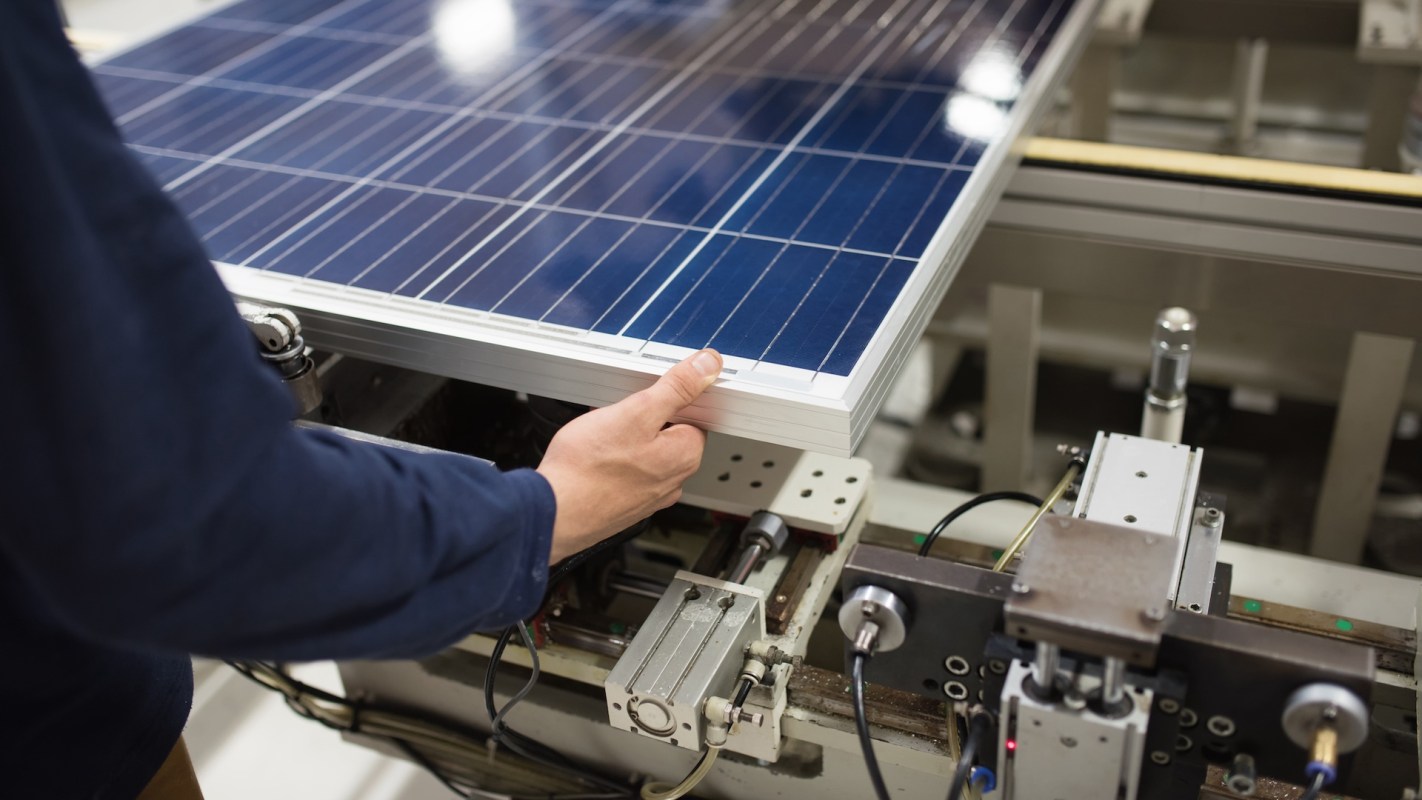
Researchers at the University of Cambridge made a discovery that could change how solar panels are manufactured in the future, Interesting Engineering recently reported.
Physics has long claimed that simple organic materials couldn't harvest light, relegating light harvesting to inorganic materials like metal oxides. However, Cambridge researchers discovered that the organic semiconductor molecule known as P3TTM can do just that. Best of all, P3TTM could lead to simpler, lighter solar panels comprised of a single material.
The University of Cambridge announced the discovery on October 1 and called it a breakthrough that "bridges a century of physics."
Researchers found that this organic material can harvest light because a single electron sits at its core. This unpaired electron allows P3TTM to have magnetic and electronic properties, which means that when several P3TTM molecules pack tightly together, the unpaired electrons alternately align up and down.
As Interesting Engineering reported, Biwen Li, the lead researcher of the study, explained, "This is the real magic. Upon absorbing light, one of these electrons hops onto its nearest neighbor, creating positive and negative charges which can be extracted to give a photocurrent (electricity)."
This alternating up-and-down alignment is a hallmark of Mott-Hubbard behavior, a phenomenon in condensed matter physics that researchers have previously observed only in inorganic complex metal oxides.
TCD Picks » Quince Spotlight
💡These best-sellers from Quince deliver affordable, sustainable luxury for all




To physically demonstrate how this would work in a real-world scenario, researchers used the film of a P3TTM molecule to design a solar cell. When light hit the cell, they found the conversion rate was astounding, with nearly all the photons absorbed turning into electricity.
The possibility of using a single material for solar panels would make them much lighter and could also be less expensive than current models. This would make it far cheaper for individuals and towns to incorporate solar energy, saving them money both upfront and in the long run while also stabilizing local energy grids.
In fact, installing home solar panels is the ultimate energy hack, as it can reduce homeowners' energy bills to as little as $0 a month. Although the wait for lightweight solar panels may be a while, homeowners can use EnergySage's free online service to receive and compare quotes for installing current solar panels and potentially save up to $10,000. Additionally, solar energy makes running appliances such as heat pumps even more affordable. For those looking to increase their savings, Mitsubishi can help you find the best affordable heat pump for your home.
Lighter, less expensive solar panels would go a long way toward the global goal of diversifying clean energy sources to reduce pollution, and with significant pollution reduction, communities would see far fewer health issues.
As for these lighter solar panels, study author Professor Hugo Bronstein explained in a press release: "We are not just improving old designs. We are writing a new chapter in the textbook, showing that organic materials are able to generate charges all by themselves."
|
Would you rather sign up for community solar, or install panels on your home?
Click your choice to see results and speak your mind. |
 I want panels 🏠
Join our free newsletter for weekly updates on the latest innovations improving our lives and shaping our future, and don't miss this cool list of easy ways to help yourself while helping the planet.






