


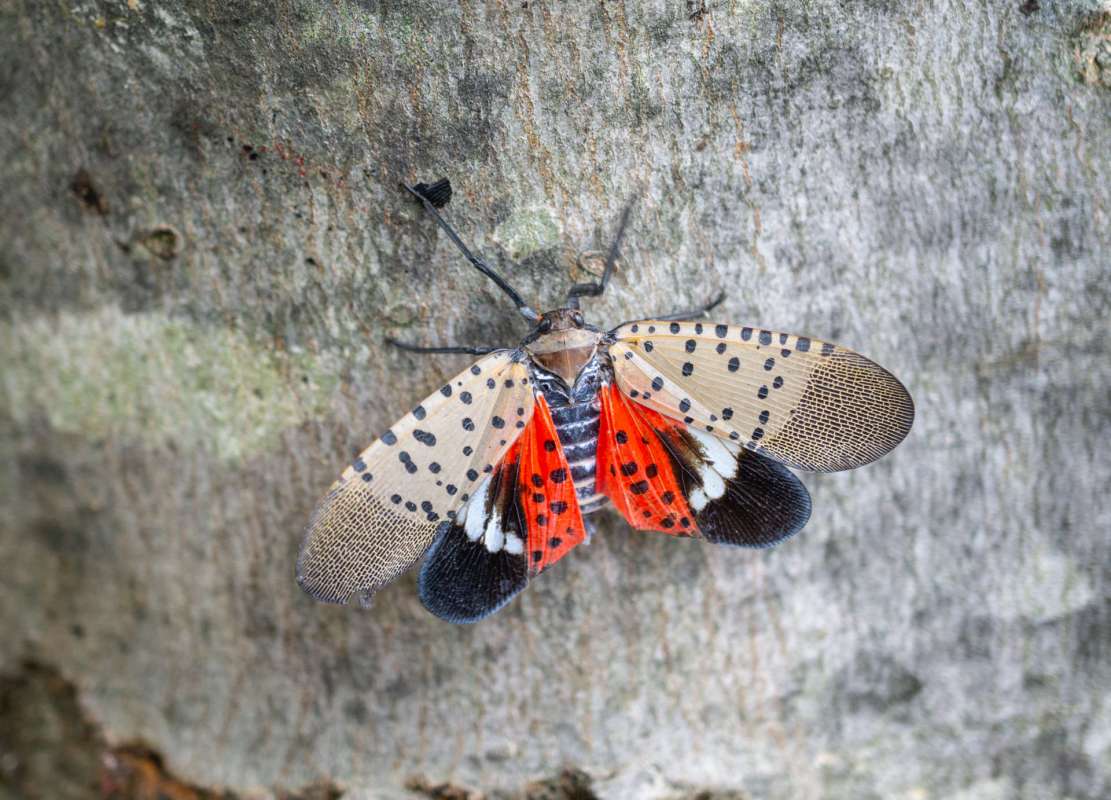
A bipartisan group of lawmakers in New York is backing legislation that would officially designate the spotted lanternfly as an invasive species, offering new research initiatives that supporters say could help protect vineyards and other crops in the region from further damage.
What happened?
According to WRFA, the measure, called the Spotted Lanternfly Research and Development Act, would give the insect an invasive-species designation and identify it as a serious risk to the nation's agricultural economy.
It would also elevate spotted lanternfly control within the U.S. Department of Agriculture by making the issue a leading research focus for the National Institute of Food and Agriculture. The insect is already affecting specialty crops, with grapes among the biggest concerns.
WRFA noted the problem is drawing particular concern in the Hudson Valley, Long Island, the Finger Lakes, and Western New York. With the pest spreading, growers reliant on productive vineyards and stable harvests are increasingly uneasy.
A 2025 estimate from Cornell University cited by WRFA found that, if the pest is not contained, New York's grape industry could lose more than $14 million during the first three years of infestation.
Why does it matter?
The industries threatened by spotted lanternflies are closely tied to food production, farming jobs, tourism, and local economies across the state.
TCD Picks » Quince Spotlight
💡These best-sellers from Quince deliver affordable, sustainable luxury for all




Grapes are one of New York's key specialty crops, supporting vineyards, wineries, and related businesses. When vines are damaged, the effects can ripple outward, affecting growers' costs, crop yields, and the broader communities that depend on agricultural revenue. Infestations can also force farmers to spend more on monitoring and control.
Lawmakers are not treating this as an issue limited to grapes alone. In the Senate proposal, the spotted lanternfly is described as a danger to the broader agricultural economy, underscoring worries that continued spread into additional regions could intensify pressure on farming systems already under strain.
The debate goes beyond pest management to whether federal research priorities are moving quickly enough to help states respond before economic losses become even more severe.
What's being done?
At the federal level, the bill's central proposal is to change how the pest is categorized and studied. Supporters want the spotted lanternfly officially designated as invasive and pushed higher on USDA's research agenda so more resources and scientific work can be aimed at controlling it.
Better research could improve how quickly outbreaks are identified and how effectively they are managed, potentially limiting damage before it becomes a larger loss.
If lawmakers move the measure forward, growers and researchers could end up with a stronger federal structure for tackling a pest that is already carrying a substantial price tag.

Get TCD's free newsletters for easy tips, smart advice, and a chance to earn $5,000 toward home upgrades. To see more stories like this one, change your Google preferences here.






