


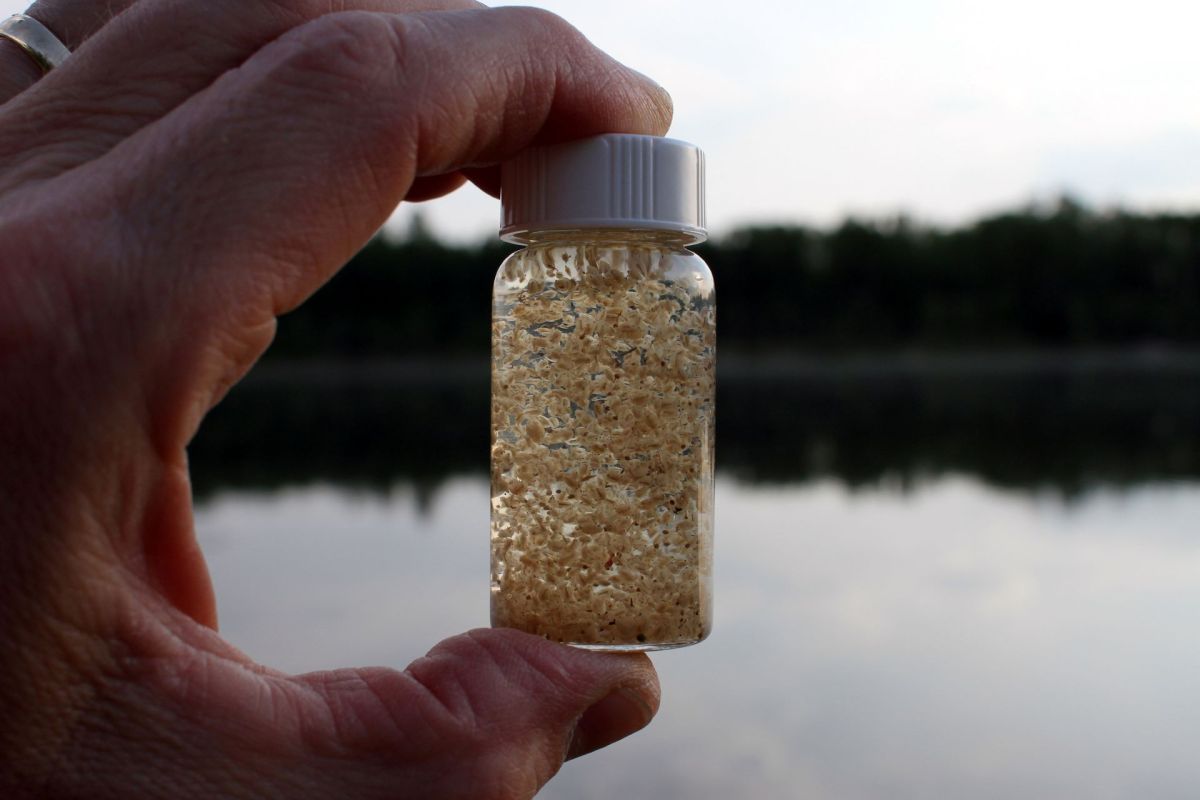
A pair of Binghamton University researchers received a federal grant to study the concerning revelation that nanoplastics can be passed down through generations.
What's happening?
The three-year, $500,000 endowment from the National Science Foundation will enable the researchers to create trackable nanoplastics and examine how they affect water fleas, according to a news release from BingUNews. Nanoplastics are a smaller version of microplastics, which are produced when plastic waste degrades and fragments.
"Tinier than the better-known microplastics, these plastic particles range from one nanometer to one micrometer in size; a human hair, by comparison, is about 100 micrometers thick," the outlet stated.
Water fleas are small freshwater crustaceans, and their transparent bodies, quick reproduction, sensitivity to environmental stressors, and more make them the perfect test subjects. They are indicator species and "surprisingly similar" to humans in the way they pass on altered gene expressions to offspring, associate professor of biological sciences Anthony Fiumera said, per BingUNews.
"It's possible that these particles are being physically transferred, but it's also possible that changes in gene expression are being inherited in addition to the actual nanoparticles," Fiumera said. "That's one of the things we're trying to figure out: How important is the actual particle transfer versus the transfer of these epigenetic effects?"
Why is this important?
Nanoplastics, according to one study, can damage DNA, disrupt cell functions, and cause chronic inflammation. These materials accumulate in animals and humans, so predators of water fleas and other tiny creatures that consume nanoplastics also gobble up the harmful materials. The problem is compounded at each level of the food chain.
"Nanoplastics are present in drinking water, food, and the air, and have been detected in both tap water and bottled water," said Huiyuan Guo, assistant professor of chemistry and Fiumera's research partner. "They are widely detected in the environment."
They're also difficult to remove because of their size, though many developments — including inventions by student scientists — have made this process easier.
Fiumera and Guo will use confocal surface-enhanced Raman spectroscopy and inductively coupled plasma mass spectrometry to detect the nanoplastics.
What's being done about nanoplastics?
They also have plans to expand their research to other animals and beyond. They are already asking questions about the development of bioplastics and how their impacts could compare to those of petroleum-based plastics. There is an educational component to their work, too, with middle and high schoolers able to learn from the team in a hands-on way during a 10-day summer camp.
TCD Picks » Upway Spotlight
💡Upway makes it easy to find discounts of up to 60% on premium e-bike brands




|
How often do you worry about the quality of your drinking water? Click your choice to see results and speak your mind. |
 Never 👎
 Binghamton will host an undergraduate course on the study and test kits for kindergartners through 12th graders, as well as community members, so they can examine the effects of plastic on the environment on their own.
To temper the plastic problem, it's vital to reduce plastic production and consumption, which you can do by swearing off single-use drink containers, restaurant to-go boxes, and grocery bags. As a bonus, these and otherplastic-avoidanceactions will save you money.

Join our free newsletter for weekly updates on the latest innovations improving our lives and shaping our future, and don't miss this cool list of easy ways to help yourself while helping the planet.
Cool Picks





