


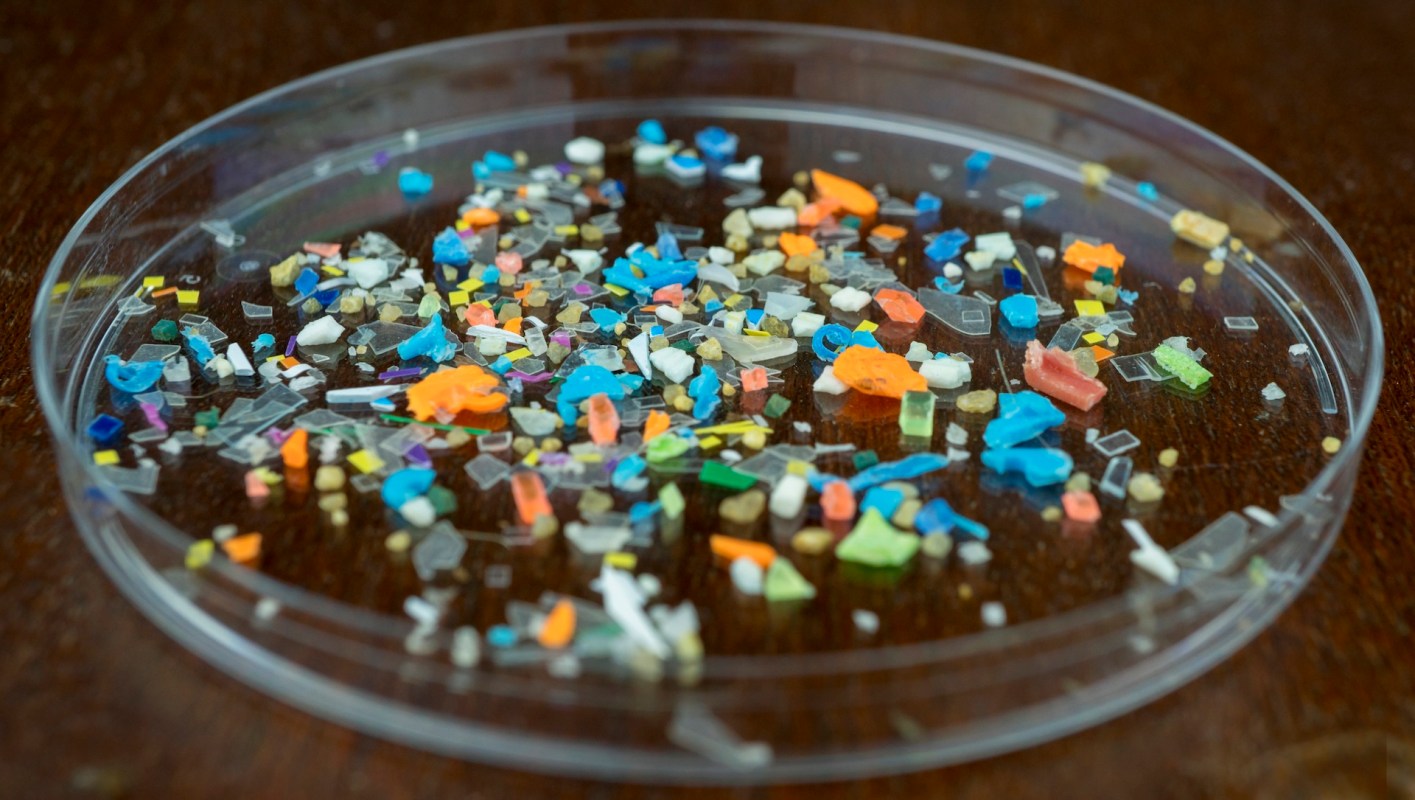
You may be familiar with microplastics and their unfortunate ubiquity across our planet. However, nanoplastics are a whole different ballgame.
Researchers at Flinders University in Adelaide, Australia, experimented with filtration materials for nanoplastics to discern which membranes and coatings proved the least penetrable for these imperceptible particles.
Nanoplastics — less than 1 micrometer in diameter — have the potential to pass through the boundaries microplastics can't, slipping unnoticed into our water, soil, and even our organs.
Notably, another shocking study by Texas A&M University scientists found that exposure to ocean water can draw these nanoplastics into our skin.
As most established filtration methods have failed thus far in detecting and deterring nanoplastics smaller than 100 micrometers, the Flinders University team developed an original system designed specifically for water-borne nanoplastics.
After testing various nano-thin hydrophobic and hydrophilic plasma coatings on a cellulose ester membrane, the researchers recorded the resulting nanoplastic behaviors and published their findings in the journal Analytica Chimica Acta.
This technique, known as "affinity capture" among experts, isolates nanoplastics by chemically attracting and binding them to specific molecules in the membrane material, thereby barring them from passing through.
"The persistence of [nanoplastics] in the environment and their potential to enter the food chain as well as to cross cellular membranes underscore the urgency of developing more efficient mitigation technologies," the researchers wrote.
It's no secret that microplastics are everywhere, but while scientists have been able to detect microplastics with promising success, most nanoplastic particles go entirely unidentified.
Even our washing machines aren't unaffected by nanoplastics, thanks to polyester textiles. These minuscule plastic pieces are entering our waterways, our homes, and our bodies — all under the radar.
TCD Picks » Quince Spotlight
💡These best-sellers from Quince deliver affordable, sustainable luxury for all




|
What's the most you'd pay per month to put solar panels on your roof if there was no down payment?
Click your choice to see results and speak your mind. |
 $200 or more 💰
 The latter is perhaps the most alarming. While we consume our fair share of microplastics on a regular basis by virtue of the plastic contamination in the water we drink and the food we eat, it turns out that our skin may be yet another way that plastics can infiltrate our bodies.
As of now, scientists don't know the extent to which microplastics and nanoplastics may be affecting our health, but studies have indicated a strong correlation between exposure to these particles and risks of hormone disruption, reproductive troubles, cardiovascular concerns, and more.
The best way to minimize these dangers is to limit the amount of plastic waste we put out into our environment. Microplastics and nanoplastics build up when improperly discarded plastic breaks apart over time in the natural world, never fully degrading organically due to the material's synthetic composition.
To help curb our plastic problem, try making easy eco-conscious swaps in your day-to-day lifestyle with reusable water bottles, fabric shopping bags, or plastic-free clothing.
Meanwhile, scientific breakthroughs, like the Flinders University study, can help keep us safe in the short term by filtering out as many nanoplastic particles as possible and minimizing our exposure.
"Our initial trials showed a dramatic reduction of fibers in wash water, demonstrating the strong potential of this technology," said Flinders researcher Anastasiia Snigirova, per TechXplore.

Get TCD's free newsletters for easy tips to save more, waste less, and make smarter choices — and earn up to $5,000 toward clean upgrades in TCD's exclusive Rewards Club.
Cool Picks





