


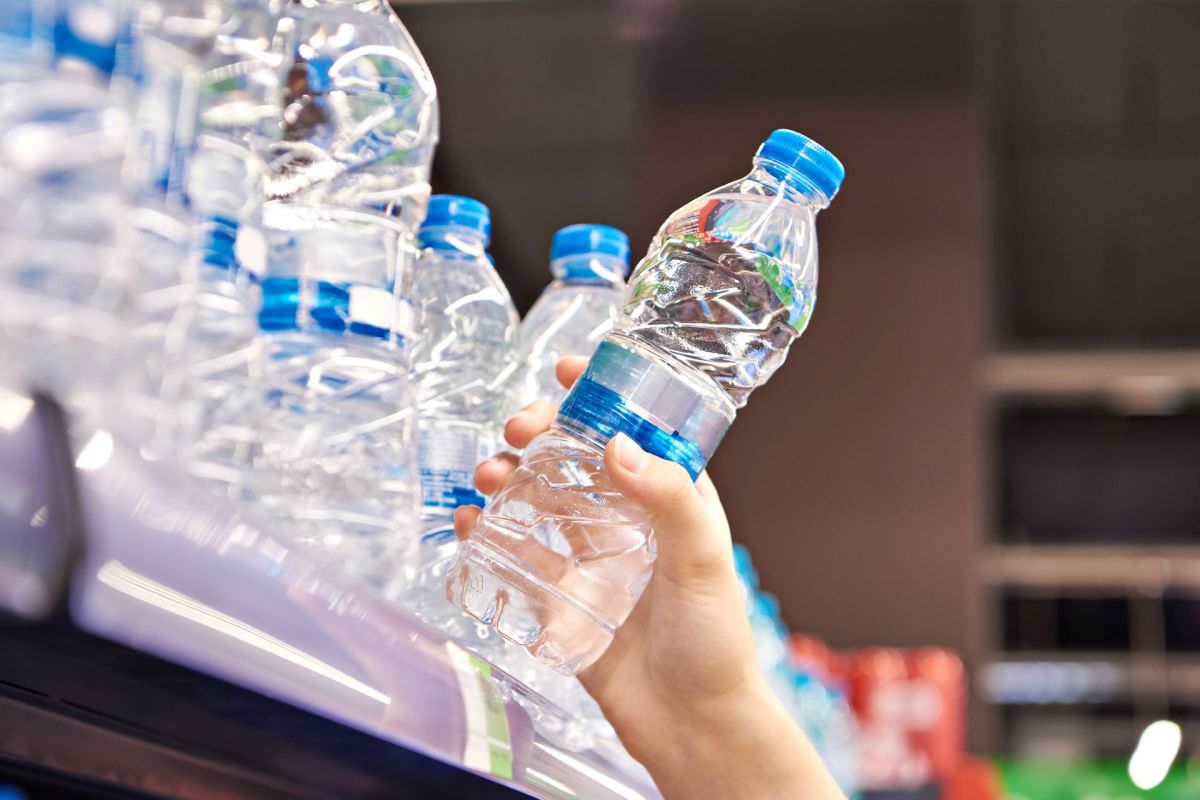
A study of water showed that hard-to-detect nanoplastics were the main source of contamination.
What's happening?
It also revealed that drinking water from treatment plants was cleaner than bottled water, Ohio State News reported. The paper, which evaluated water from four Lake Erie-area facilities and six brands, was published in Science of The Total Environment in January.
The bottled water included three times as many nanoplastic particles as the treated water. Nanoplastics are even smaller than microplastics, which range up to five millimeters and have been found nearly everywhere on Earth. The researchers used imaging and chemical identification spectroscopy to detect objects of up to 1,000 nanometers, or 0.001 millimeters.
"We can make educated choices to try and reduce our daily exposure to these harmful chemicals," lead author Megan Jamison Hart said, per Ohio State News. "For the average person who is thirsty and wants a drink, the best way to do that would be drinking it straight out of the tap rather than grabbing pre-bottled water."
Senior author John Lenhart said, "The concentrations we saw were higher than anticipated, which, unlike prior studies, we were able to attribute to the inclusion of the nanoplastics. That emphasis validates a lot of the information we've learned."
Why is this important?
So many people drink bottled water for its clean, fresh taste, especially where tap water may be considered unappealing. This study might make those and others rethink their choices.
As Ohio State News noted, microplastics are ubiquitous and have been linked to various severe health hazards, including nervous system diseases such as Parkinson's and Alzheimer's. Since nanoplastics "are more likely to cross vital biological barriers in the body" because of their size, they are just as worrisome, if not more so.
The research also showed that the most significant source of plastic in the bottled water was the bottles themselves, according to the report, highlighting the problem with plastic packaging. The overall nanoplastic concentration exceeded 50%. It was unclear where the plastic in the treated water came from.
What's being done about contaminated bottled water?
As Hart said, the solution is to avoid bottled water. Refilling a reusable metal or similar vessel has more than just a positive effect on your health; it can also save you hundreds of dollars (and a backache) since you won't buy (and lug home) a case of plastic-bound water.
If you don't like how your tap water tastes, you can use a filter or add fruits or herbs to flavor it. Boiling water and pouring it between containers to aerate it can also mitigate bad tastes.
TCD Picks » Upway Spotlight
💡Upway makes it easy to find discounts of up to 60% on premium e-bike brands




The study authors said their work could inform future research into plastic removal treatment methods.
|
Which of these savings plans for rooftop solar panels would be most appealing for you?
Click your choice to see results and speak your mind. |
 Save $1,000 this year 💸
Get TCD's free newsletters for easy tips to save more, waste less, and make smarter choices — and earn up to $5,000 toward clean upgrades in TCD's exclusive Rewards Club.
Cool Picks





