


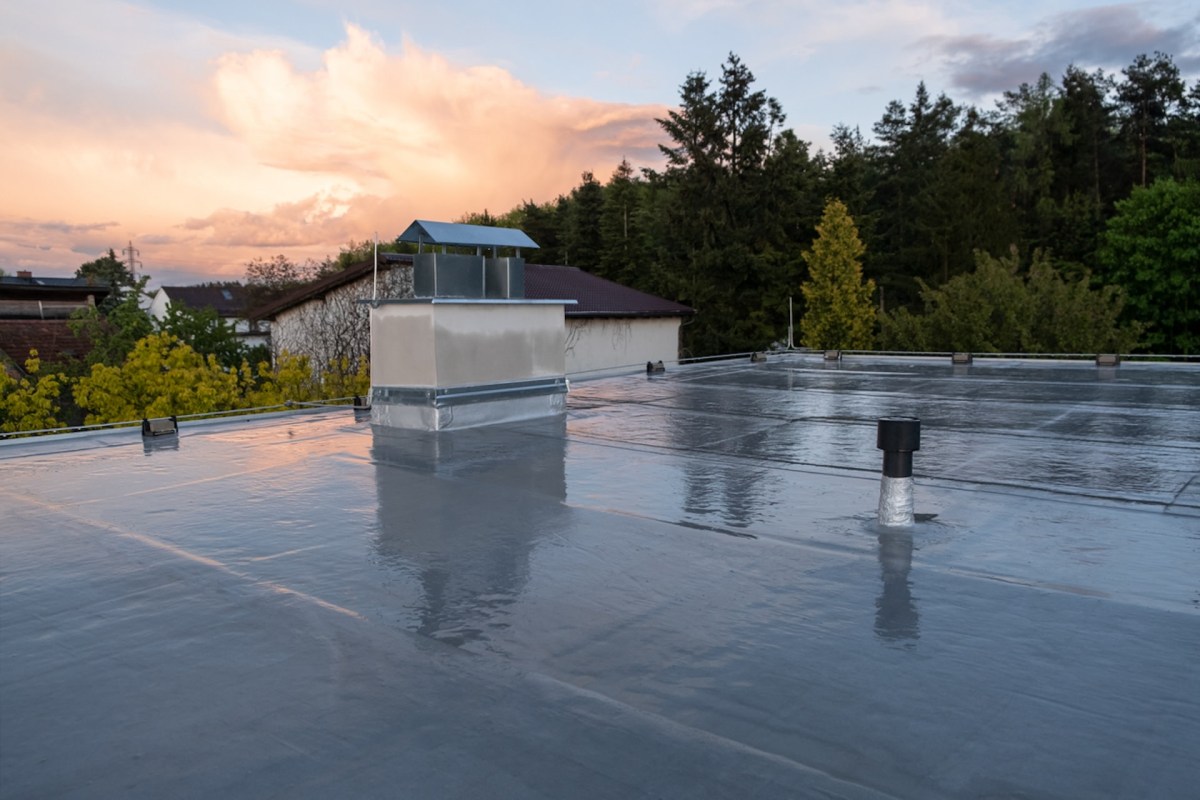
A group of Chinese scientists from Nanjing Forestry University has developed a bio-based film with a clear message for solar radiation: right back at you.
That's because the material — a nanocellulose-based aerogel, in labspeak — can reflect sunlight and infrared radiation. What's more, it's self-cleaning and sustainable, all according to AZo Materials.
If the film can be made viable for coating roofs and other surfaces, it could revolutionize how we cool our homes and buildings. It's important, as AZo reports that up to 20% of a building's electricity usage powers air conditioners and fans.
The National Renewable Energy Laboratory notes that air conditioning, including removing humidity, creates about 3.94% of the world's planet-warming air pollution.
This method for cooling the temperature within our walls is made possible by cell walls. Cellulose is "the most abundant organic compound on Earth," as it's a core part of cell walls in plant life, ScienceDirect reports.
"Cellulose has been identified as a viable candidate for radiative cooling," study first author and Nanjing associate professor Chenyang Cai said in the AZo report.
The Nanjing material is also planet-friendly, in part because it's biodegradable. When part of an aerogel, the National Library of Medicine notes that it's "well-suited" for thermal insulation. Aerogels can be made by using cellulose from rice straw, cotton, and even cannabis, among other plants.
As an added perk, Nanjing's aerogel is dust-resistant, overcoming a hurdle from other cellulose-based innovations. Dust can negate some of the reflective, cooling benefits, all according to AZo.
Cai said in the story that the material can reduce temperatures by 6.9 degrees Celsius (about 12.4 degrees Fahrenheit) "under direct sunlight in hot conditions while also exhibiting dust-repellent properties."
His team isn't alone in the search for more sustainable, cleaner cooling alternatives. More efficient AC is the subject of research and design projects around the world. Some architects are utilizing geometry to optimize airflow. An Israeli company has developed a way for ice to store energy for cooling during peak-demand hours.
TCD Picks » Quince Spotlight
💡These best-sellers from Quince deliver affordable, sustainable luxury for all




The Nanjing team's goal is for its aerogel to be commercialized through a "freeze-drying" and "hot-pressing" technique, reflecting solar energy and infrared radiation cleanly.
"We hope our study opens up new avenues for scientists to further explore cellulose-based materials for thermal regulation, addressing the issue of high energy consumption," Cai said in the AZo story.

Join our free newsletter for weekly updates on the coolest innovations improving our lives and saving our planet.
Cool Picks





