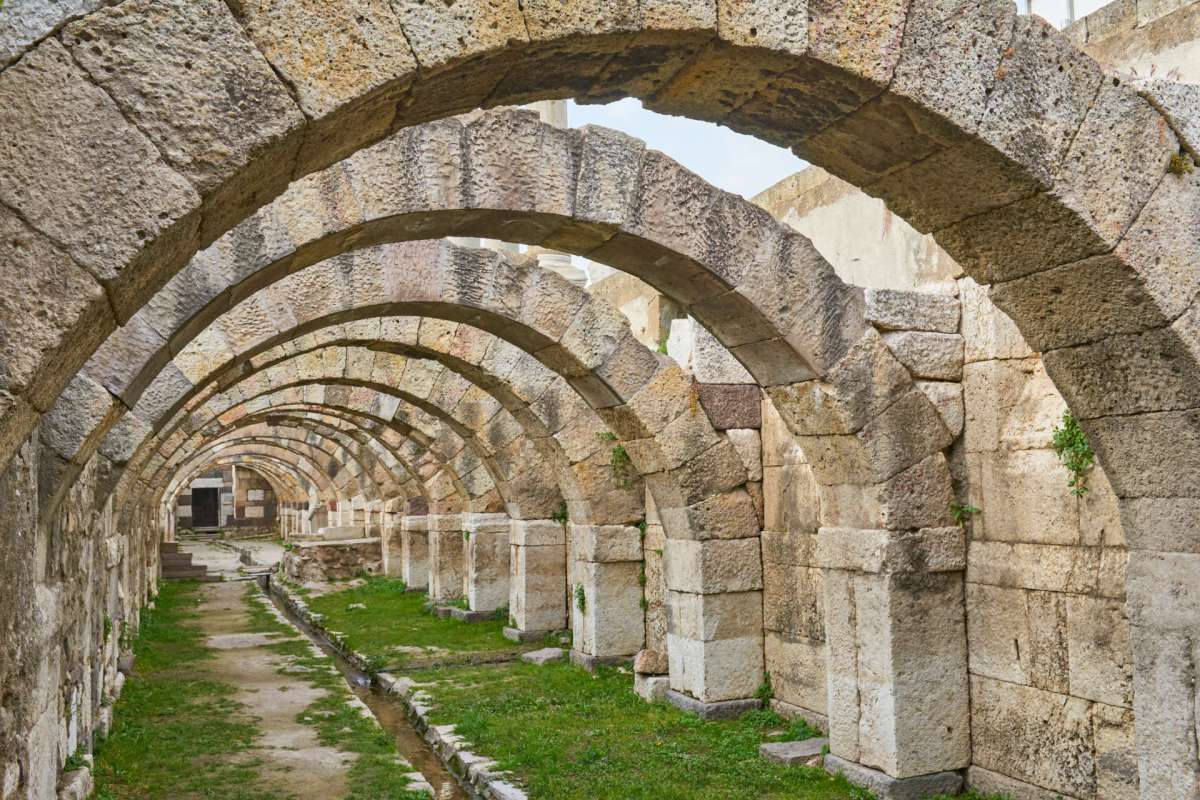
Archaeologists in ancient Smyrna, now part of modern-day İzmir, Turkey, have brought to light a mosaic floor dating back 1,500 years, adding a new layer to the history of a city known for both its biblical role and its lived-in past.
Smyrna appears among the seven churches in the Book of Revelation, but the discovery is not a grand public ruin. Instead, as Fox News detailed, it is a decorated surface from everyday space that seems to have endured repeated use over the centuries with little harm.
What happened?
The mosaic was found during infrastructure work inside the Smyrna archaeological area, according to Turkey's state-run Anadolu Agency.
Authorities said the piece dates from the fourth to the sixth centuries A.D. and spans 16.4 feet by 8.2 feet. Fox News noted that in Christian scripture, Smyrna is one of the churches of Asia Minor in Revelation.
Excavation director Akın Ersoy said researchers identified the mosaic before exposing it.
"In connection with this, we also found traces of the walls that defined the space," Ersoy told AA, per Fox News.
TCD Picks » Quince Spotlight
💡These best-sellers from Quince deliver affordable, sustainable luxury for all




Images from the excavation show the floor preserved in notably good condition, with geometric and floral patterns, including a prominent heart-like ivy leaf formed with red tesserae, or mosaic tiles.
Why does it matter?
Discoveries of this kind give researchers a way to study not just large political powers or religious history but also the aesthetic preferences and priorities visible in places used daily.
A mosaic floor can offer clues about symbolic imagery, technical skill, and how interior spaces were arranged and repurposed across long periods. Ersoy said people today might see the heart-shaped motif as a sign of romance, even though that interpretation developed much later.
"It was not very clear in the early periods that the heart represented affection and love. We see the heart emerge as a symbol of love in paintings during the Renaissance," he told AA, as Fox News noted.
The ivy leaf likely signified something else at the time. In the ancient world, that kind of image could represent loyalty, the outlet stated.
Evidence from the area suggests the space stayed in use well after the mosaic was laid.
Fox News said researchers found bags, cooking pots, and earthenware containers from the late Ottoman era and the early Turkish Republic, indicating that the location remained part of everyday life through very different historical periods.
What's being done?
Ersoy said the people who later built on the site may have taken care not to ruin the old floor.
"We believe that a structure was built over the mosaic during the Ottoman period in the 19th century and that the new layout was created while avoiding damage to the mosaic floor as much as possible," he told AA, per Fox News.
The outlet also noted that the find fits into a wider run of discoveries at other cities connected to Revelation, such as Laodicea and Ephesus, reinforcing how excavation is changing historians' picture of the region.
"We can say that the people of that period consciously protected it because there is very little damage," Ersoy said. "The space was brought back to life after 1,500 years."

Get TCD's free newsletters for easy tips, smart advice, and a chance to earn $5,000 toward home upgrades. To see more stories like this one, change your Google preferences here.