


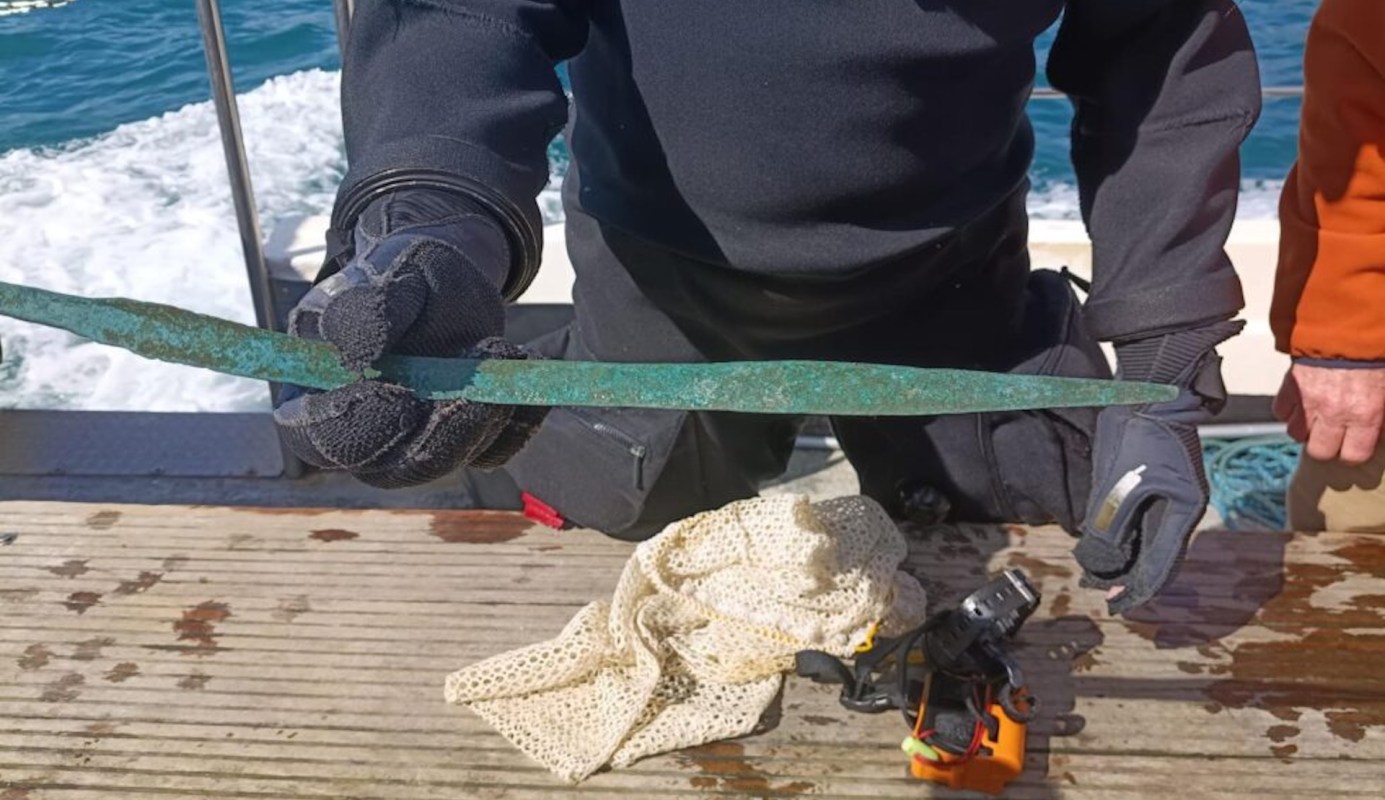
A rare Bronze Age sword has been pulled from the waters off England's Devon coast, giving archaeologists and volunteer divers a remarkable new link to a human story that began roughly 3,000 years ago.
The find came from a Protected Wreck site with overlapping historic remains that have been examined for decades, yet no comparable weapon had previously been discovered in the area.
What happened?
According to DeeperBlue, scuba divers Becky Gill and Catherine Gillon found the sword during excavation work at the overlapping Salcombe Cannon and Moor Sand sites. Archaeologists say the site had not yielded another weapon of this type in the years since investigations started in the late 1970s.
"A kid at Christmas does not come close to the excitement of finding this sword," Gill said.
Experts' initial assessment places its manufacture somewhere between 1300 and 800 BCE, in the Middle or Late Bronze Age. A major find in a long-running effort to understand what ended up on the seabed off Devon and how people in the Bronze Age lived, traveled, traded, and fought.
The recovery took place through a Historic England-funded project delivered with MSDS Marine. Its goal was to bring newer volunteers into the South West Maritime Archaeological Group (SWMAG), and help pass on marine archaeology knowledge.
TCD Picks » Quince Spotlight
💡These best-sellers from Quince deliver affordable, sustainable luxury for all




Alison James, project manager at MSDS Marine and archaeological advisor to SWMAG, called it "an incredibly exciting discovery and a powerful reminder of the importance of Protected Wreck sites and the contribution volunteers continue to make to maritime archaeology."
Why does it matter?
Underwater archaeology can disappear quietly if sites are not protected, monitored, and carefully studied.
Salt water, shifting seabeds, storms, and human disturbance all put fragile pieces of history at risk, meaning a single recovered object can provide critical evidence before it is lost forever.
The sword also shows how protected marine areas can preserve more than wildlife or coastlines. They can also hold cultural heritage that helps people understand who came before them, how communities developed, and how objects moved across ancient landscapes and seascapes.
The sword was found through a volunteer-supported effort, and community expertise can play a major role in historic preservation. Public funding, trained volunteers, and preservation programs can turn chance discoveries into shared knowledge rather than private curiosities.
What's being done?
The sword is headed for conservation — an essential step before experts can fully study it and prepare it for public care. After that process, the artifact will go to the British Museum for preservation.
The project behind the find is helping train the next generation of maritime archaeology volunteers. As newer divers join SWMAG's work, they are gaining hands-on experience that can support future surveys, excavations, and site protection. Marine archaeology depends on people who know how to dive safely, document finds, and handle sensitive material responsibly.
Programs that pass those skills on can mean the difference between lost history and preserved history.

Get TCD's free newsletters for easy tips, smart advice, and a chance to earn $5,000 toward home upgrades. To see more stories like this one, change your Google preferences here.






