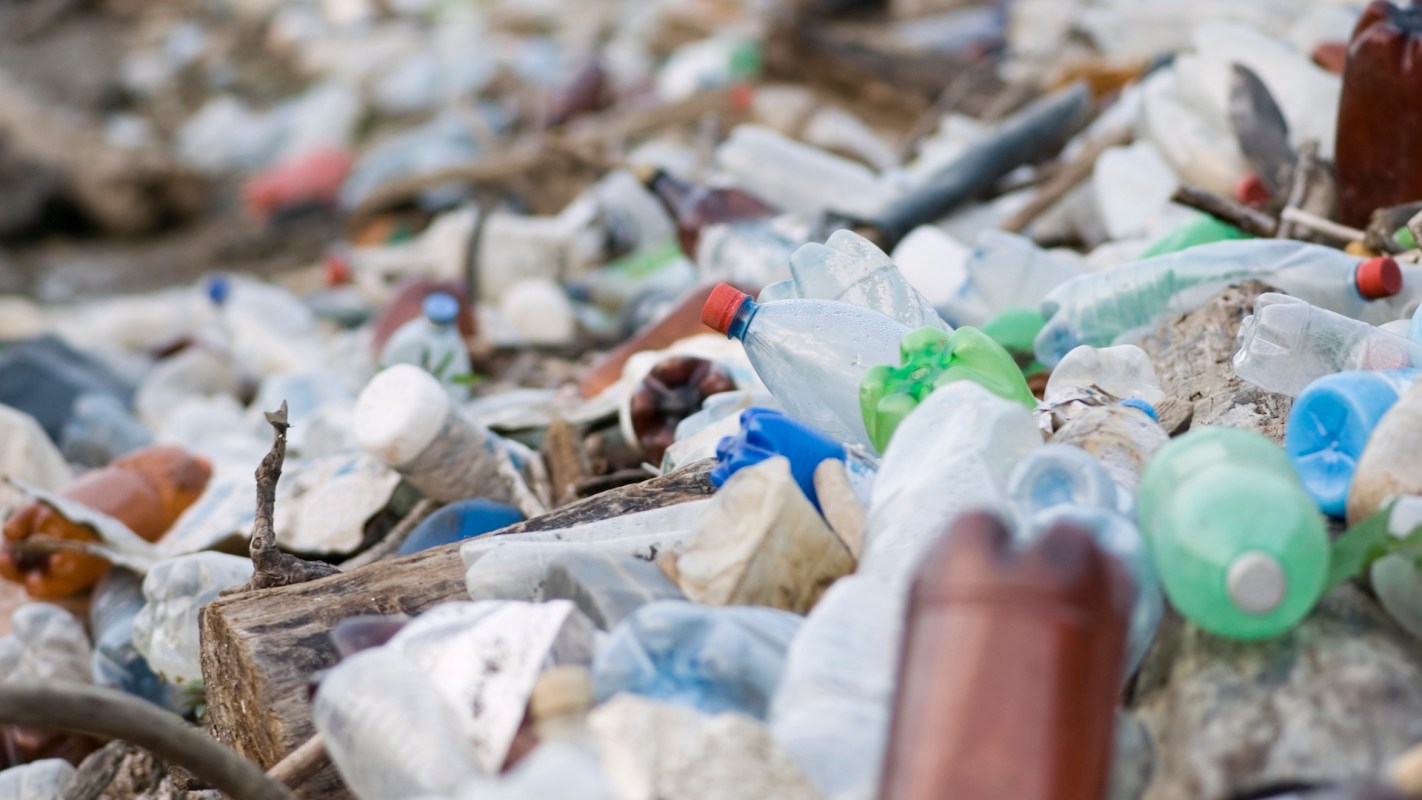
Microplastics have already been detected in the food supply, in drinking water, and in the air people breathe. Now, researchers in North Carolina say these tiny plastic particles could also be playing a role in warming global temperatures — a role that many older climate models didn't account for.
What happened?
According to Environment Journal, a new study led by Professor Drew Shindell — described in the source as Duke University's Nicholas Distinguished Professor of Earth Science at the Nicholas School of the Environment — found that microplastics suspended in the air can trap heat in the atmosphere.
To investigate, Shindell's team worked with researchers at Fudan University in China and paired laboratory experiments with computer simulations to study how light interacts with tiny plastic particles in the air. They found that color makes a difference because aging plastic often becomes more pigmented, and those darker tones let the particles absorb more sunlight and warm the surrounding air.
Published in Nature Climate Change, the study estimated that pigmented microplastics absorb about 16% as much heat as black carbon, one of the strongest warming pollutants. Shindell said the overall effect on temperature is equivalent to operating 200 coal-fired power plants each year.
Their work also identified likely concentration zones for the particles. One major hotspot is the North Pacific Subtropical Gyre, where large volumes of plastic debris gather and can be sent back into the air through sea spray.
Why does it matter?
In many earlier climate models, airborne microplastics were treated as essentially colorless particles and therefore seen as only minor contributors to warming. If they are actually taking in heat, then plastic pollution may be damaging the planet in another way besides littering landscapes, clogging waterways, and harming wildlife.
TCD Picks » Good Store Spotlight
Get 10% off your next purchase with code TCD10


There is also a public health concern. Scientists are still working to understand exactly how microplastics affect the human body, but they already know people are exposed to these particles through the air around them every day. Microplastics can degrade over time to extremely small sizes, such that they've even been found in human blood and can obstruct blood flow to the point of even causing blood clots in the brain.
The broader problem is expected to grow. The Organisation for Economic Co-operation and Development has warned that without stronger efforts to cut plastic use, improve waste management, and increase recycling, plastic leakage into the environment could rise 50% above 2020 levels and reach 30 million tons by 2040, Environment Journal reported.
Researchers are uncovering new places where microplastics are turning up. Bottled water has been found to contain microplastics that also carry the harmful chemical Benzo[a]pyrene, and even the salt you use to cook with may carry them, according to one study in Indonesia.
What's being done?
Shindell said airborne microplastics do not currently seem to rank among the biggest climate threats. Still, because the study looked only at particles closest to Earth's surface, the researchers hope it encourages more measurements across the lower atmosphere to create a fuller picture.
TCD Picks » Quince Spotlight
💡These best-sellers from Quince deliver affordable, sustainable luxury for all




That kind of monitoring could help scientists refine climate models and help policymakers better understand the full costs of plastic pollution.
"Targeting microplastics is not going to solve our climate problem by any means," Shindell said, "but removing the equivalent of 200 coal-fired power plants would be a nice contribution to getting our [carbon dioxide] down. We have so much work to do to get down to something like a Paris Agreement. We really need every single thing at our disposal."

Get TCD's free newsletters for easy tips, smart advice, and a chance to earn $5,000 toward home upgrades. To see more stories like this one, change your Google preferences here.