


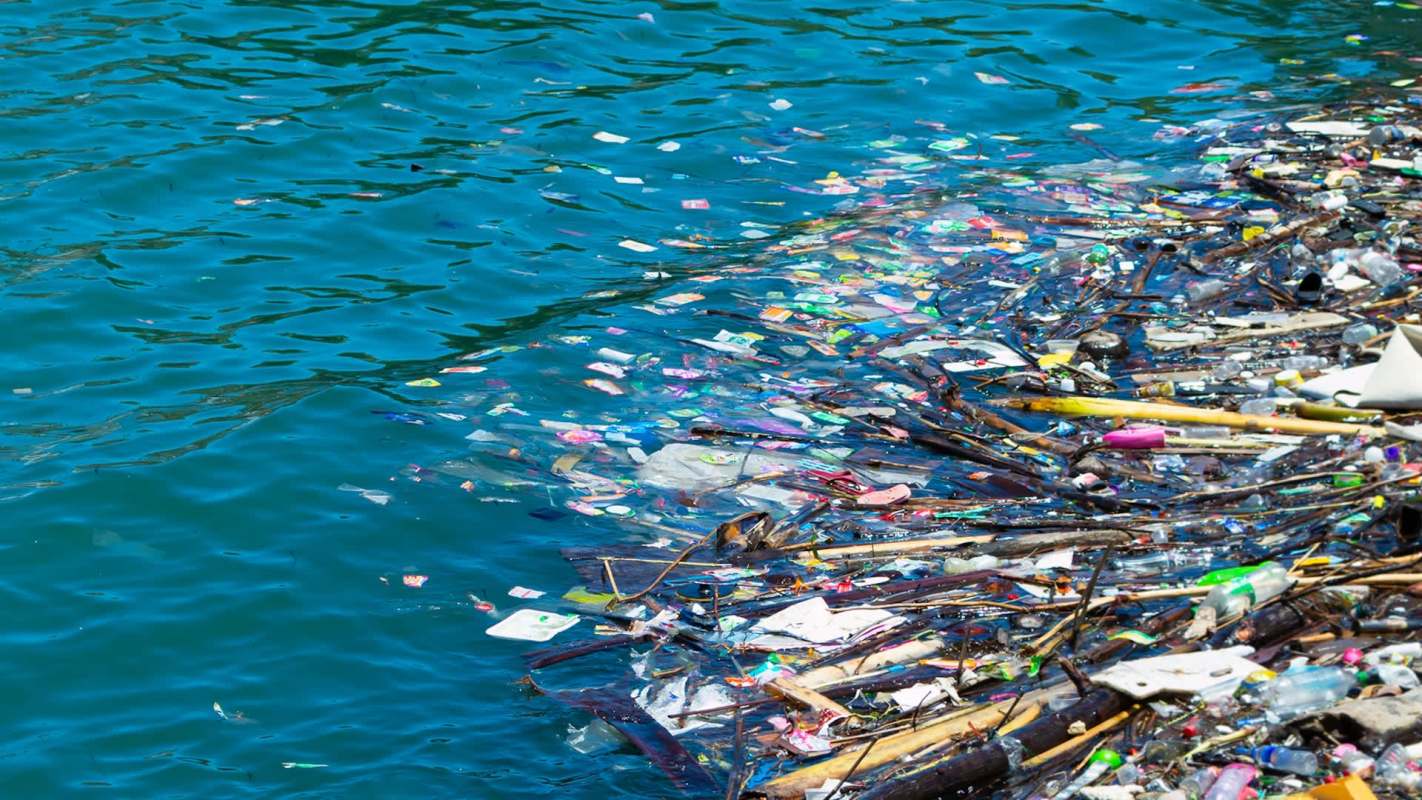
It's nearly impossible to measure how much plastic enters the oceans every day. While we can see how large pieces of plastic affect aquatic life, it's harder to estimate the effects of microplastics.
It's been assumed that microplastics behave similarly regardless of shape. A new study has found that this is not true.
What's happening?
A study led by researchers at CRC Microplastics at the University of Bayreuth was published in the journal Microplastics and Nanoplastics on the effect of microplastic shape on its behavior in rivers.
The researchers overturned a common assumption that all microplastics are transported similarly regardless of shape and found that they differ depending on whether they are fragments or fibers.
"The study clearly shows that fibers—which account for a significant proportion of the microplastics found in aquatic environments—behave differently from other particle shapes, an aspect we are only beginning to understand," Dr. Sven Frei of Wageningen University & Research and researcher at the Bayreuth Center of Ecology and Environmental Research at the University of Bayreuth said, per Phys.org.
Through their experiment, which tested different types of microplastics undergoing varying flow velocities and sediment bed compositions, they found that spherical particles most often continue downstream, while fragments penetrate and settle more deeply. Fibers simply anchor and accumulate on the sediment.
Why is studying microplastics important?
Exposure to microplastics is a growing problem that not only affects the oceans and other waterways but also the food chain and humans. These findings can help shape a new understanding of which organisms are most exposed to microplastics and assess pollution risk.
This is one of the first studies to not only explore microplastics in waterways other than oceans but also to focus on different types of microplastics. With these results, it should serve as a warning to areas prone to flooding that microplastics may be more prevalent, or possibly even more so during a flood event.
Additionally, while there are still many unknowns, microplastics in humans have been linked to reproductive issues, inflammation, and increased cancer risk, according to Harvard Medicine. Scientists have recently recommended using probiotics to fight inflammation caused by microplastics, and researchers are working on developing filtering systems to reduce microplastics in drinking water.
What's being done about studying microplastics?
After this study, the researchers have been encouraged to investigate microplastics as distinct entities to better assess their environmental and human health risks.
TCD Picks » Upway Spotlight
💡Upway makes it easy to find discounts of up to 60% on premium e-bike brands





"Microplastics cannot be regarded as a homogeneous group of substances. Instead, due to their extremely diverse properties and characteristics, they must always be examined on a case-by-case basis," professor Dr. Christian Laforsch, chair of animal ecology at the University of Bayreuth and spokesperson for CRC Microplastics, added.
|
Which of these savings plans for rooftop solar panels would be most appealing for you?
Click your choice to see results and speak your mind. |
 Save $1,000 this year 💸
Get TCD's free newsletters for easy tips to save more, waste less, and make smarter choices — and earn up to $5,000 toward clean upgrades in TCD's exclusive Rewards Club.
Cool Picks





