


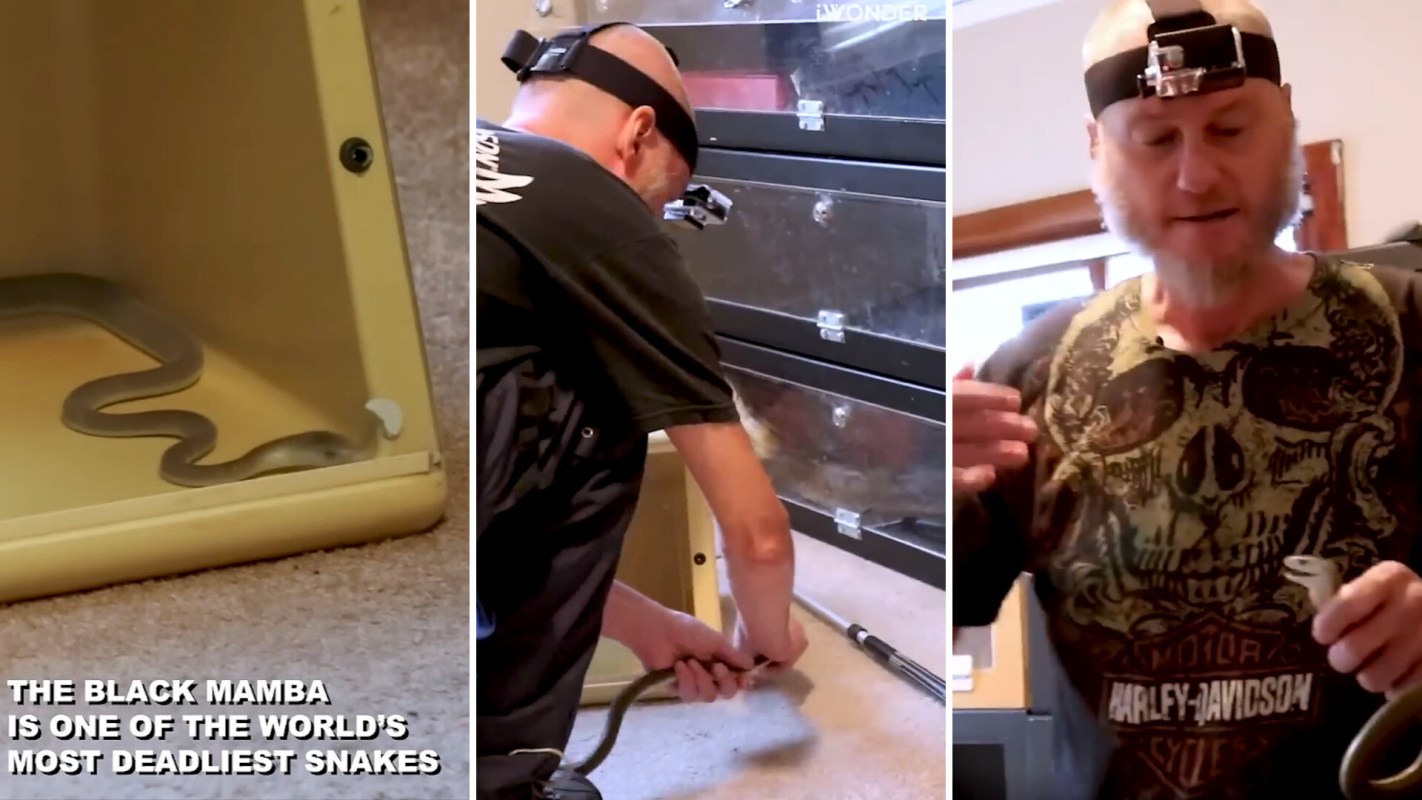
A snake handler is drawing attention online after apparently surviving repeated bites from black mambas over multiple years.
What's Happening?
A Redditor posted a brief video of Tim Friede to the r/nextf***inglevel community.
(Click here to watch the video if the embed doesn't appear.)
The video shows him taking a ton of gnarly bites in a short span. He seems to handle it way better than expected, but as it turns out, his resilience is not a natural immunity.
Top comments on the original post say Friede has survived multiple black mamba bites not because he is naturally protected, but because repeated exposure has left him with a tolerance to the venom, albeit a risky and incomplete one.
Those same comments described him as a venom supplier who self-immunizes, using tiny repeated doses to encourage antibody production. That does not mean he is truly "immune," per commenters.
TCD Picks » Quince Spotlight
💡These best-sellers from Quince deliver affordable, sustainable luxury for all




They noted he still requires urgent treatment after bites and has ended up in the hospital several times. The tolerance may improve his odds, but it does not make black mamba bites safe. Friede's goal is to boost the chances for more people than just himself.
"The reason why I inject venom, and get bit by snakes is for a larger purpose," Friede explained in the video. "And that larger purpose is to create a universal human anti-venom."
Why Does It Matter?
Black mambas are often ranked among the deadliest snakes. Their venom affects the nervous system and heart, so a severe, untreated bite can quickly cause breathing failure or circulatory collapse.
Repeated self-exposure to venom is an extreme and medically risky practice, so what Friede is doing isn't advisable to replicate. This encounter is also a human-made scenario. Repeated bites like this usually do not happen by accident in everyday life.
Human expansion into wild habitats and direct contact with animals continue to increase the chances of dangerous encounters, as does weather pushing snakes towards humans. A black mamba bite remains a medical emergency, and most people would need urgent hospital treatment.
In this case, the main protection appears to be a combination of controlled exposure, specialized knowledge, and fast medical intervention. It is not a substitute for emergency care. Even someone with partial tolerance like Friede seeks treatment right away.
In the future, though, Friede's efforts may bear fruit, as the Guardian reported. Friede is actively contributing to the development of an antivenom that will be tested on pets in Australia this year, per the outlet.
What Should I Do?
For now, the safest response is to avoid handling venomous wildlife, keep distance if you encounter a snake, and call trained professionals when one shows up in a home, yard, or workplace. If a bite does occur, it should be treated as an emergency immediately.
While it could be tempting to be a hero like Friede, that would be truly rolling the dice.

Get TCD's free newsletters for easy tips, smart advice, and a chance to earn $5,000 toward home upgrades. To see more stories like this one, change your Google preferences here.






