


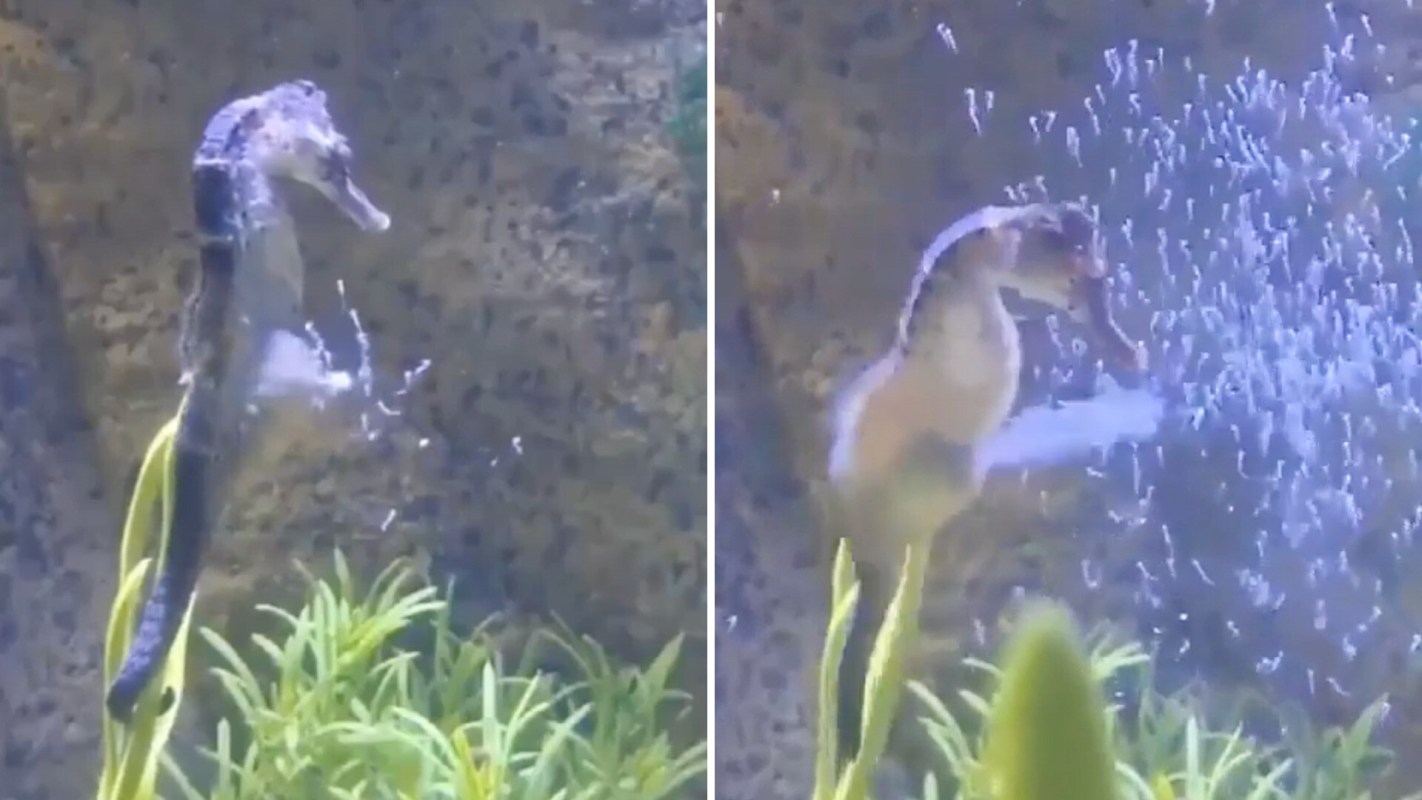
A nature video is giving online audiences a close view of what may be one of the ocean's oddest parenting scenes. In the clip, a male seahorse seems to tighten up and then send a spray of tiny babies into the water.
What happened?
A short video posted to Reddit's r/NatureIsF******Lit shows a male seahorse giving birth. It collected thousands of upvotes and nearly a thousand comments.
(Click here if the embedded video does not appear.)
The seahorse releases a sudden burst of baby offspring, called fry. The scene can look almost unreal if you have never watched anything like it before.
Part of what makes the footage so striking is that the parent giving birth is male. With seahorses, the female places her eggs into the male's brood pouch, and he carries them there until the babies are ready to emerge.
The post itself used the straightforward title "Seahorse giving birth," but one commenter described the moment a bit more colorfully: "Hold my beer, bro, I'm blowing out some seafoals real quick."
TCD Picks » Quince Spotlight
💡These best-sellers from Quince deliver affordable, sustainable luxury for all




Why does it matter?
Seahorses have reproductive strategies that challenge familiar assumptions about parenting, survival, and what looks "normal" in nature.
They rely on coastal ecosystems such as seagrass beds, mangroves, and coral-rich habitats. These environments are increasingly under pressure from pollution, warming waters, and habitat destruction, all of which can affect marine life in ways many people never directly witness.
The health of the oceans influences food systems, coastal protection, biodiversity, and the broader climate, even for people who live far inland.
What can I do?
Seagrass meadows and mangroves serve as important nurseries for marine life, and local conservation groups often offer simple ways to support restoration efforts.
Avoid purchasing dried seahorse souvenirs or wildlife products sourced from vulnerable marine species, and be cautious about buying exotic aquarium animals unless you know they were responsibly sourced.
Another practical step is to reduce plastic waste and support cleaner waterways in your own community. Trash and runoff do not stay neatly contained; they can eventually make their way into rivers, estuaries, and oceans that support species like seahorses.

Get TCD's free newsletters for easy tips, smart advice, and a chance to earn $5,000 toward home upgrades. To see more stories like this one, change your Google preferences here.






