


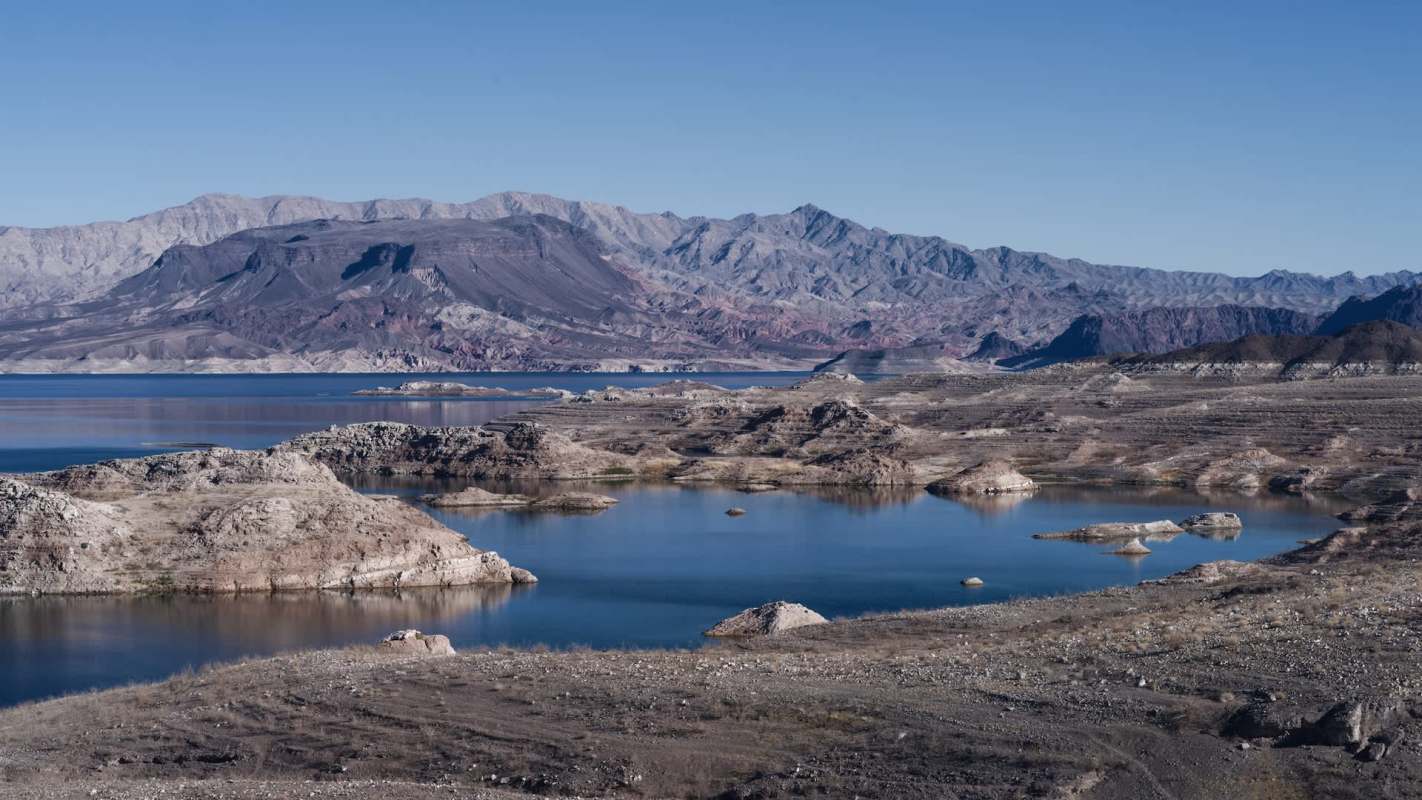
A fresh plunge at Lake Mead has pushed the reservoir to a new record low, prompting Southern California water managers to warn about the potential fallout — not only for water supplies but also for electricity production.
Given the importance of Lake Mead and water flows from the Colorado River to the Southwestern United States, declining levels could tighten water availability, raise utility costs, and sharply reduce the hydroelectric output of the Hoover Dam.
Here's what to know
Water officials told ABC30 that Lake Mead has fallen below its previous record low point recorded in 2022. Despite being located in Nevada near Las Vegas, the reservoir, which is the largest in the United States, is a major water source for Southern California.
Lake Mead is supplied by the Colorado River, which provides roughly half of the Metropolitan Water District of Southern California's water.
Bill Hasencamp, the Metropolitan Water District of Southern California's manager of Colorado River resources, said conditions temporarily improved in 2023 because of above-average snowfall and runoff. That relief was short-lived, however, and drought conditions have returned as snowpack in the upper basin has fallen short of expectations.
"It's scary. I won't lie," Hasencamp said.
TCD Picks » Quince Spotlight
💡These best-sellers from Quince deliver affordable, sustainable luxury for all




Officials said the Southern California agency's water allocation from the Colorado River is projected to be cut by more than 30% as part of conservation efforts. Forecasts also show Lake Mead could drop about five more feet, a decline that would reduce power generation at Hoover Dam by roughly 70%.
More background
The loss of electricity from Hoover Dam could have a significant impact because the dam is a highly flexible power source that can be brought online quickly when demand rises. If most of that generating capacity disappears, utilities would need to replace it elsewhere, and that could increase energy costs for Southern California residents.
The agriculture industry is also vulnerable to dropping water levels at Lake Mead and reduced allocations from the Colorado River. Growers in California's Imperial Valley use 75% of the state's Colorado River water, and deeper conservation cuts could force some to leave fields unplanted.
That would add economic pressure in rural communities that depend on farming for jobs and income. It would also reduce food production at a time when millions of Americans are struggling with rising food costs.
What's being done?
With projections showing that water supplies will likely continue to diminish in the coming years, the current response is centered on conservation. The expected reduction in the Metropolitan Water District's allocation is part of a wider effort to stretch Colorado River supplies as far as possible.
That could mean tighter limits on water use across multiple sectors, from urban landscaping to agriculture. In farming communities, though, those measures can come with painful tradeoffs, especially when fewer planted acres mean smaller incomes and less local economic activity.
"A lot of rural communities are not interested in changing, and it's difficult to change," he said. "People don't like change, but we have to change, and we have to change quickly."

Get TCD's free newsletters for easy tips, smart advice, and a chance to earn $5,000 toward home upgrades. To see more stories like this one, change your Google preferences here.






