


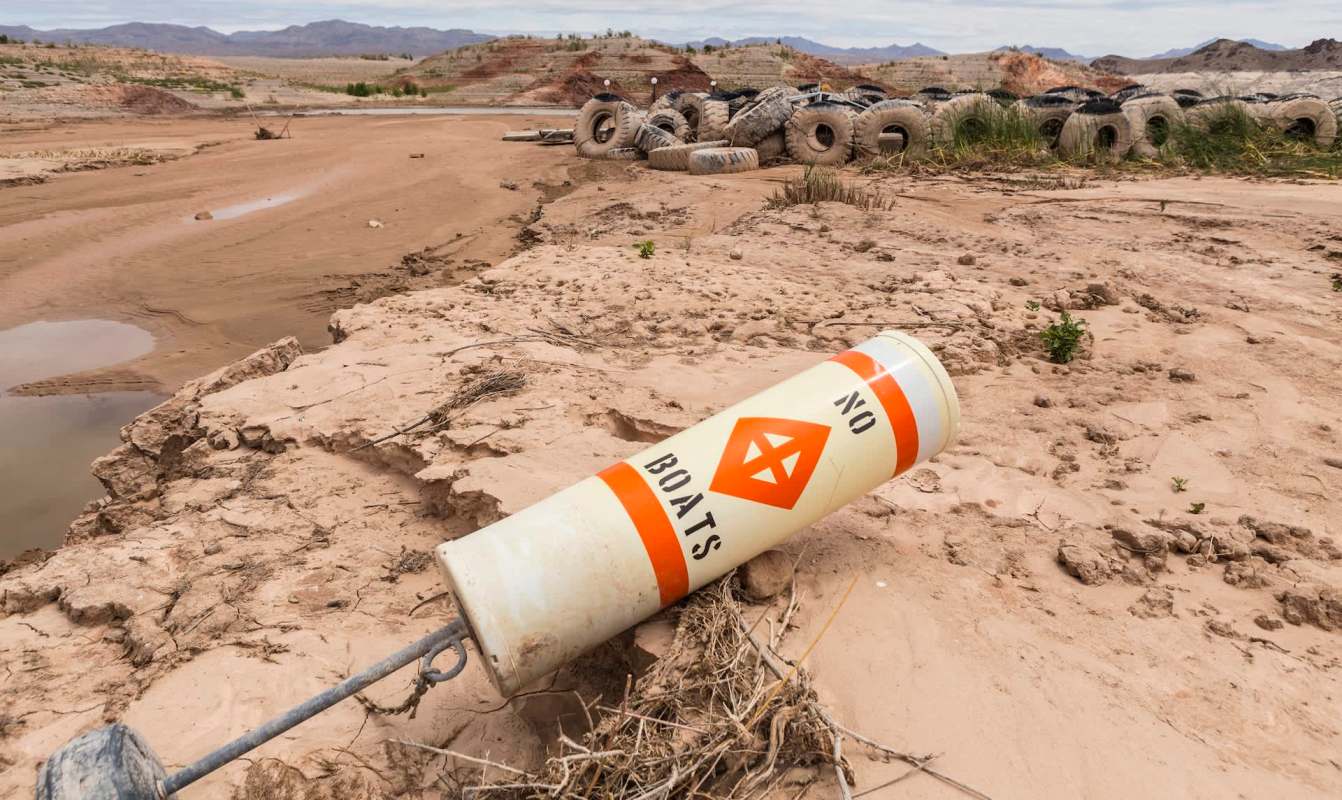
Lake Mead, the massive reservoir formed by Hoover Dam on the Colorado River, is still above "dead pool," the point at which water levels are too low to keep flowing downstream. But the shrinking buffer is becoming a bigger concern for water managers across the Southwest, WorldAtlas reported.
What's happening?
Years of drought and rising demand have steadily shrunk Lake Mead, according to WorldAtlas.
The U.S. Bureau of Reclamation said the dead pool level begins at 895 feet. Lake Mead still sits about 150 feet above that point, but federal forecasters expect the water to keep dropping through 2026 and 2027.
The Colorado River Basin is the water source for about 40 million people in seven states and Mexico, and Lake Mead supplies major metro areas including Phoenix, Las Vegas, Tucson, San Diego, and Los Angeles.
Hoover Dam's hydropower output fell 25% when Lake Mead reached 1,067 feet in December 2021, per WorldAtlas. Federal officials have warned generating capacity could fall by up to 40% more as the reservoir drops.
Why does it matter?
A dry Lake Mead would strip more than 25 million residents of Nevada, Arizona, and California of their main water source. Farmland across millions of acres could also lose irrigation, putting crops at risk and increasing food costs.
TCD Picks » Quince Spotlight
💡These best-sellers from Quince deliver affordable, sustainable luxury for all




Farming takes about 75% of the water people draw directly from the Colorado River, and alfalfa and hay grown for cattle feed account for roughly a third of the flow on their own. A worsening shortage could raise grocery bills and hurt jobs and local businesses.
Lake Mead is also an important habitat in the Mojave Desert. Falling water levels have driven native fish, including the razorback sucker, Colorado pikeminnow, humpback chub, and bonytail chub, toward extinction.
What can I do?
Current forecasts don't show Lake Mead going completely dry, and experts are not warning that it is about to disappear overnight.
Fix leaks, install water-efficient fixtures, run full loads in the dishwasher and washing machine, and replace outdated appliances with more efficient electric models when you can. Each step lowers household costs and eases pressure on shared water supplies.
Swapping out gas stoves and gas heating can help cut indoor air pollution tied to asthma and other breathing problems. And modern efficient systems may lower monthly bills.
Lake Mead is still about 150 feet above the dead pool level, but the downward trend alone is enough to keep scientists and water managers on alert. How much water the basin states agree to draw in the years ahead will decide how close the reservoir comes to that mark.

Get TCD's free newsletters for easy tips, smart advice, and a chance to earn $5,000 toward home upgrades. To see more stories like this one, change your Google preferences here.






