


The world's largest operating nuclear fusion reactor just got a major boost, thanks to an assist from a U.S. lab, per Interesting Engineering.
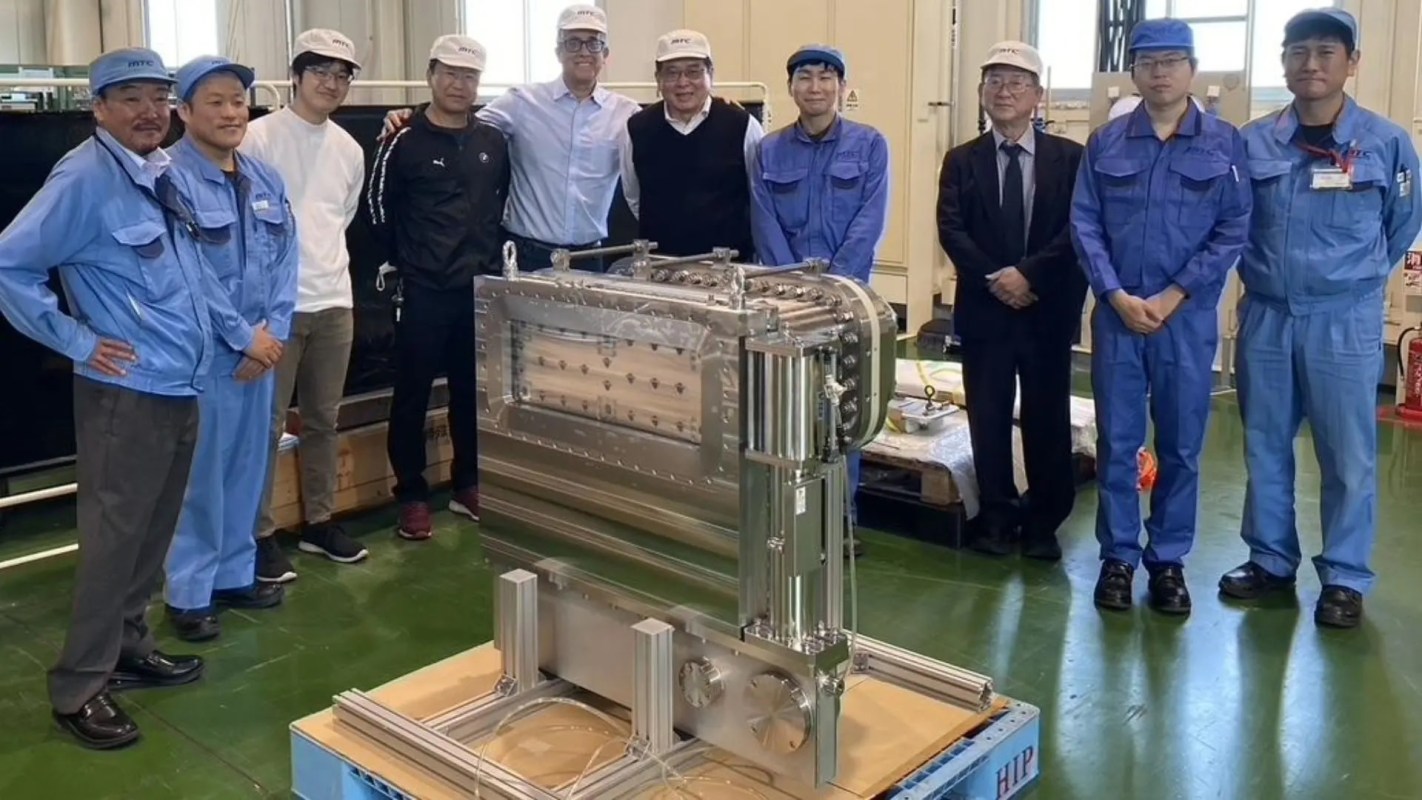
The Princeton Plasma Physics Laboratory, part of the U.S. Department of Energy, has delivered a four-ton X-ray imaging crystal spectrometer to Japan's JT-605A experimental fusion reactor, bringing humanity one step closer to harnessing potentially nearly unlimited, clean energy.
"Because JT-60SA will be such a powerful machine, we will access operating conditions that we have never achieved before," said PPPL scientist Luis Delgado-Aparicio, who leads advanced projects at the lab. "The measurements need to be very accurate for us to learn the science of these new regimes."
Fusion energy — the same process that powers the sun — involves merging light atomic nuclei under intense heat and pressure, releasing massive amounts of energy with next to no carbon pollution. The process produces no long-lived radioactive waste, making it one of the most promising paths toward a sustainable energy future.
The JT-60SSA reactor, located in Naka, Japan, is the most powerful tokamak (or donut-shaped fusion device) in operation. It's a joint project between Japan and Europe's Fusion for Energy, with PPPL's contribution one of the U.S.'s first to be installed in the facility.
The spectrometer will measure X-rays emitted by superheated plasma to help researchers monitor its temperature, density, and composition in real time. These readings are critical to keeping the plasma stable and confined within powerful magnetic fields — one of fusion's most difficult engineering challenges.
"XICS is essential," explained PPPL physicist Masayuki Ono. "You need something like it to get the data from plasma and do the physics."
Once fully operational next year, JT-60SA will help to inform the design of ITER, the massive international fusion project under construction in France. ITER aims to prove that fusion can produce net-positive energy at a commercial scale, potentially revolutionizing how cities power themselves.
Fusion technology could help to drive down global energy costs by diversifying our clean energy sources and reducing worldwide dependence on dirty fuels, making future power systems more resilient.
|
Should we be pouring money into nuclear fusion technology? Click your choice to see results and speak your mind. |
 Yes — it'll pay off 👍
Join our free newsletter for weekly updates on the latest innovations improving our lives and shaping our future, and don't miss this cool list of easy ways to help yourself while helping the planet.
TCD Picks » Quince Spotlight
💡These best-sellers from Quince deliver affordable, sustainable luxury for all




Cool Picks





