


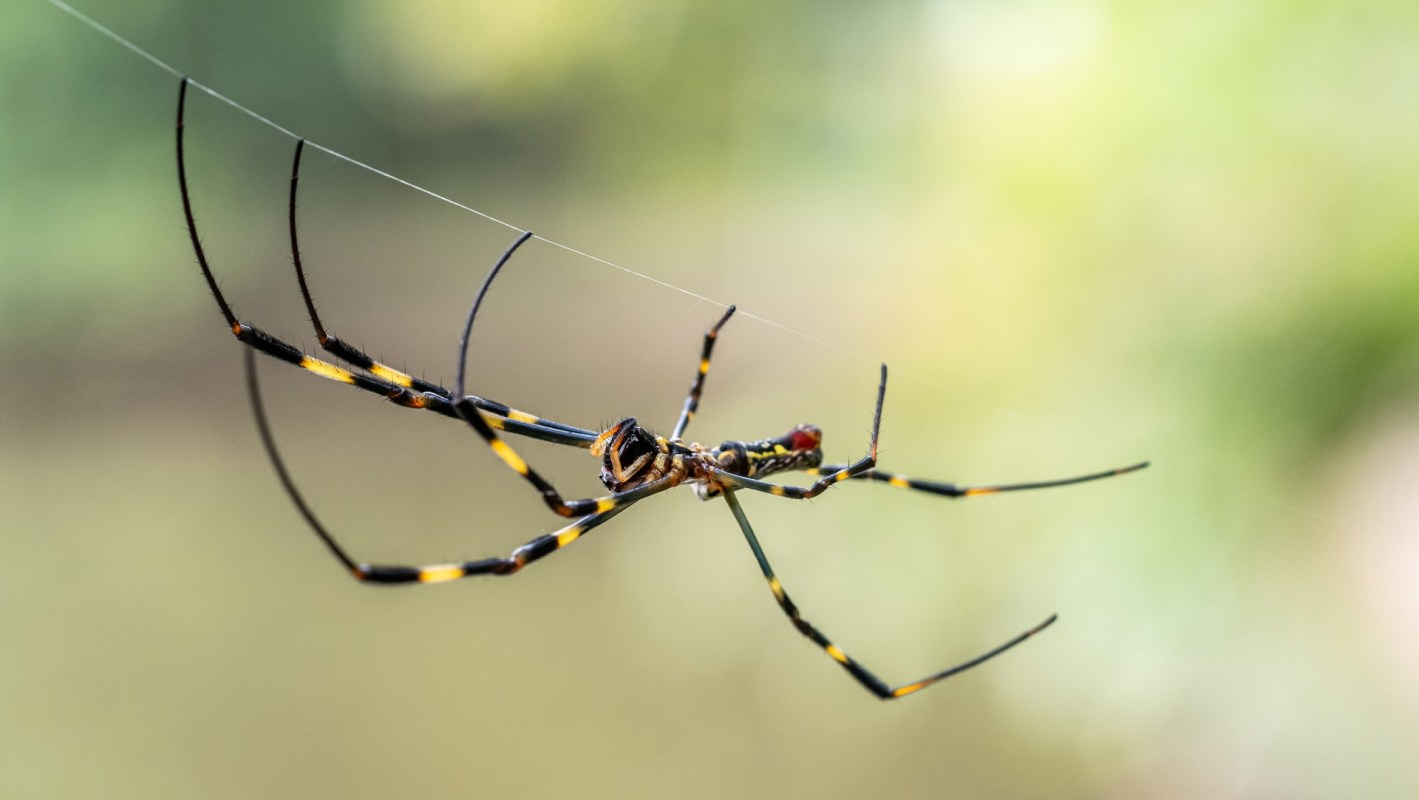
Some East Coast residents might be doing a double-take when noticing a unique critter in their backyards, as the latest online range map suggests the palm-sized Joro spider has continued moving north and now appears to reach as far as Baltimore.
For all the surprise its appearance causes, experts say the flashy arachnid is far more alarming to look at than it is to live near.
What happened?
According to a 2026 map in Yahoo Creators, the Farmers' Almanac documents the spider's range this year across about a dozen states: Alabama, Florida, Georgia, Kentucky, Mississippi, North Carolina, South Carolina, Tennessee, Virginia, West Virginia, Ohio, and Maryland.
The spider can look especially huge when perched in its web: adult females reach about four inches across with their legs outstretched, and the golden webs they build can span up to 10 feet. It is also recognizable for its bright yellow and blue-black coloring, Yahoo Creators reported.
A key reason the species keeps showing up in new places is "ballooning," a behavior in which young spiderlings float through the air by releasing silk that the wind carries over long distances.
Native to East Asia, the species was first spotted in Georgia in 2014, and experts think it likely reached the U.S. in shipping containers. Its spread is another example of human trade networks unintentionally moving wildlife into places it never evolved to inhabit.
TCD Picks » Quince Spotlight
💡These best-sellers from Quince deliver affordable, sustainable luxury for all




Why does it matter?
Across the eastern U.S., people may begin noticing these oversized web-builders in gardens, on porches, or in wooded areas. Despite the fear factor, these giants are "about as dangerous to you as a houseplant," according to Yahoo Creator Robin Raven.
Viral spider stories can quickly trigger panic, but Joros are not viewed as a threat to people or pets. Unlike some household spiders, Joros don't prefer living indoors, instead building webs in outdoor areas like trees or along eaves. The biggest impact is psychological, as seeing a huge spider in a giant web can be unsettling even when it poses little real risk.
Invasive species often spread because of human activity, and global shipping is one of the clearest examples.
Scientists are still tracking how Joros may affect local ecosystems, and the University of Georgia's Joro Watch program is asking the public to report sightings at jorowatch.org.
What are people saying?
In the University of Georgia's 2025 spotting contest, nearly 3,000 participants helped produce 3,602 verified records across 112 counties — an 835% increase over the prior year.
Experts advise leaving the spiders alone, noting that if a web is in an inconvenient spot, clearing it away with a broom will encourage the spider to relocate without using pesticides.

Get TCD's free newsletters for easy tips, smart advice, and a chance to earn $5,000 toward home upgrades. To see more stories like this one, change your Google preferences here.






