


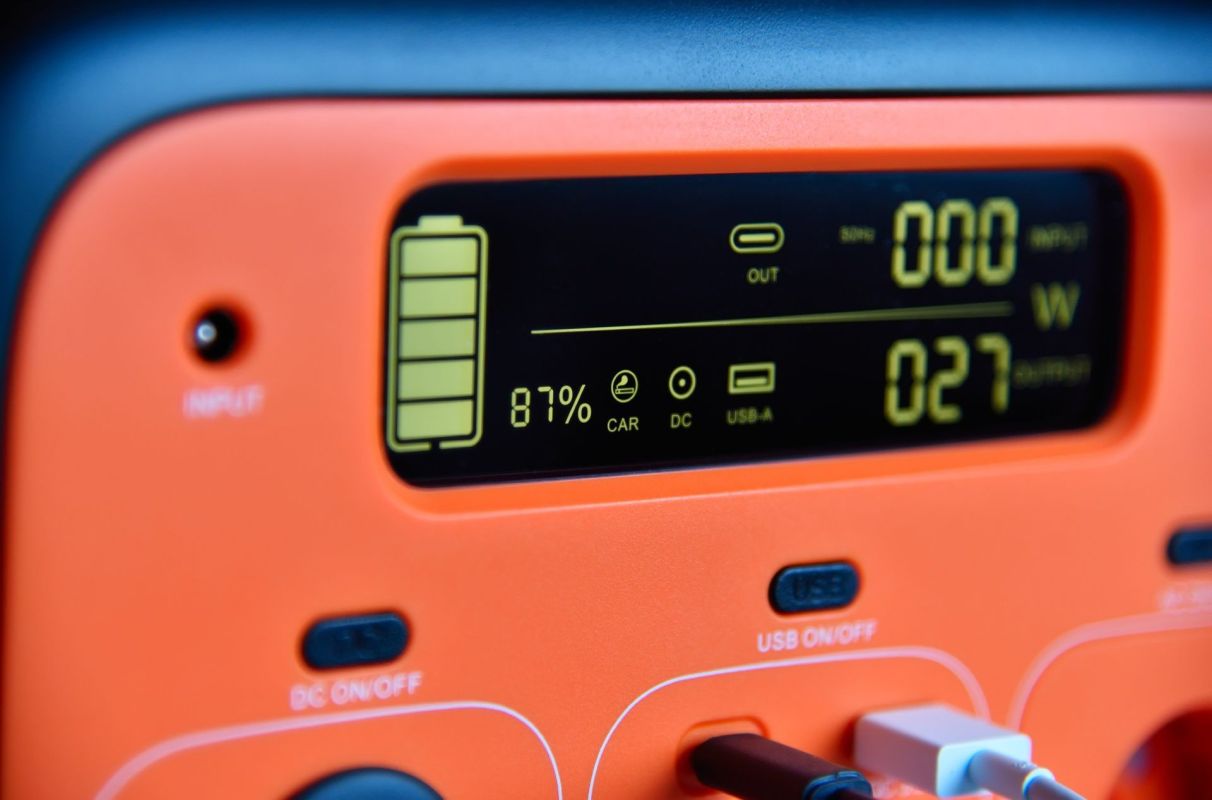
Home battery backups are supposed to offer peace of mind when the grid goes down. But one Jackery owner said staying outage-ready around the clock may come with a surprising trade-off: a daily drain.
The complaint centered on the Jackery 5000 Plus, a large backup battery designed to keep home circuits running during blackouts.
Here's what to know
The issue surfaced in a thread on Reddit. "Works great as designed," the homeowner said. "If the power goes off, all my circuits I have on the Smart Switch move directly to the 5000." But they added that the unit was losing about 10% of its charge per day simply because it was powered on.
Adding battery storage is one of the best ways to protect your home during outages, save money on energy, and go off-grid. If you're weighing your options, exploring EnergySage can help you get information about options.
Several users said the drain may have more to do with settings than the battery itself.
"In UPS mode, the Jackery 5000's inverter is always turned on and is ready to start supplying power to the transfer switch within 20ms of a power loss," one wrote. "This drains a lot of battery life."
Others reported much lower standby loss with UPS mode turned off, with one saying their unit depleted 2-3% per day. Another Reddit user estimated that a 10% daily drop on a 5.040-kilowatt-hour battery works out to a continuous 21-watt draw.
More background
Standby losses are rarely the main feature people consider when shopping for backup power. Most buyers focus instead on battery capacity, transfer speed, and how many appliances a system can support during an outage.
Save $10,000 on solar panels without even sharing your phone number Want to go solar but not sure who to trust? EnergySage has your back with free and transparent quotes from fully vetted providers in your area. To get started, just answer a few questions about your home — no phone number required. Within a day or two, EnergySage will email you the best options for your needs, and their expert advisers can help you compare quotes and pick a winner. Solar panels can save you more than $50k over their 25-year lifespan, and EnergySage can help you save as much as $10k on installation. Which begs the question — isn't that worth an email or two? |

Still, battery storage can make a meaningful difference in everyday life. It can keep lights, refrigeration, internet service, and medical or work equipment running during blackouts while also helping households store energy for later use and reduce dependence on the grid.
The trade-off is that always-on readiness can consume electricity and cycle the battery more often than some owners expect. For households trying to keep utility costs down, that adds expense even if the dollar impact is relatively small.
A few users said firmware could be involved. The one who calculated the 21-watt draw recommended reaching out to support and documenting the drain with photos and video to verify whether that behavior was typical.
What can be done?
Much of the discussion centered on UPS mode since that setting keeps the inverter ready for a near-instant switchover and may be the reason an otherwise idle battery loses charge.
For households that mainly want backup during storms, users said it could be more practical to leave that fast-transfer feature disabled most of the time and only enable it when bad weather was expected. The first user mentioned above added that electronics needing uninterrupted power, such as computers, could be supported with a small computer-style UPS instead.
Shoppers who are deciding on a system may also want to compare alternatives, including Pila's plug-and-play batteries, which are available at a lower price point than whole-home battery systems.
Battery backup can be a smart resilience tool, but settings, use cases, and standby behaviors matter just as much as the specs on the box.

Get TCD's free newsletters for easy tips, smart advice, and a chance to earn $5,000 toward home upgrades. To see more stories like this one, change your Google preferences here.







