


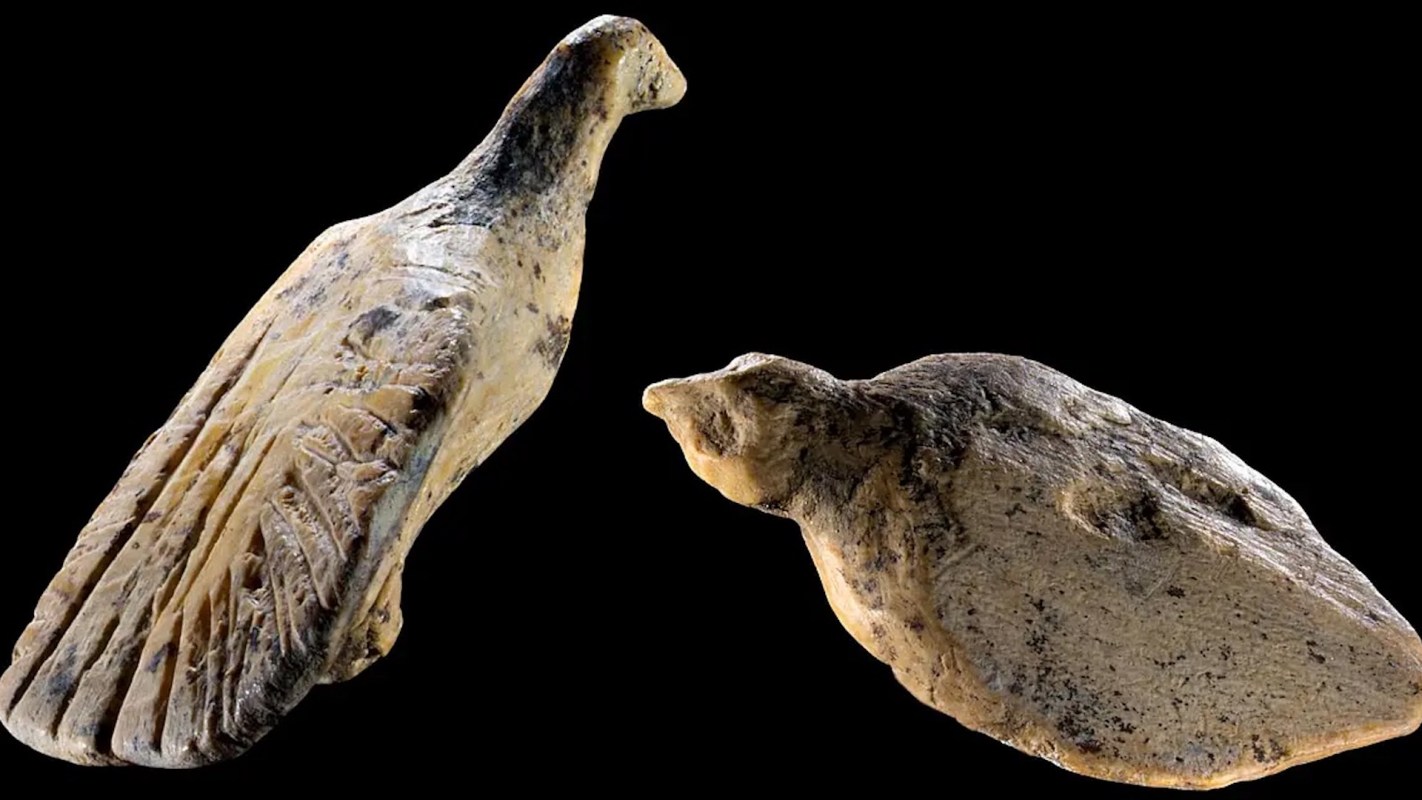
In late July, archaeologists at the University of Tübingen in Germany found a pair of tiny Ice Age bird carvings — each tiny enough to sit on a thumbnail.
The birds are about 40,000 years old and carved out of mammoth ivory. They offer a glimpse of how some of the earliest modern humans watched animals and used art to express ideas.
Here's what to know
Excavators found the figurines at Hohle Fels Cave in southwestern Germany's UNESCO-listed Swabian Jura, a region known for yielding some of the world's oldest figurative art.
The two birds came from the same Aurignacian layer and were about 4.9 feet apart. SciTechDaily reported.
They are about 0.8 by 0.4 by 0.2 inches in size, smaller than the 1.2- to 3.5-inch figurines more commonly seen from this era.
The seemingly complete figurines appear to depict the birds in a low brooding posture, while the incomplete piece shows spread wings that could indicate flight, landing, or display.
TCD Picks » Quince Spotlight
💡These best-sellers from Quince deliver affordable, sustainable luxury for all




"The figurines demonstrate that the earliest artists were skilled ivory-carvers, who could depict delicate motifs in miniature form," Nicholas Conard, professor at the University of Tübingen and director of the excavations, said, according to SciTechDaily. "Additionally, it seems that specific depictions are associated with specific sites."
He said the details are specific enough to make the figures more than generalized bird forms, giving researchers evidence about posture, anatomy, and even possible species.
More background
These birds may capture behavior rather than form alone. Researchers think one figure may be hunkered low over eggs, whereas the other seems designed to suggest motion.
The species cannot be pinned down with certainty, though the brooding bird is thought to resemble a ptarmigan, an animal well represented in remains from Hohle Fels, SciTechDaily reported. The second piece may also be a ptarmigan, but a grouse or raptor is another possibility.
These additions bring the total from Hohle Fels to three carefully crafted bird carvings, while nearby Ice Age art sites in the region have produced none. That concentration suggests bird imagery may have held special meaning at this cave, whether spiritual, personal, or social.
"Even 40,000 years ago, birds were here," Stefanie Kölbl, the managing director of urmu, told SciTechDaily. "Their song filled the air, and some species came to the region in the course of annual migrations."
The discovery is already informing new research into early human creativity, symbolism, and relationships with local wildlife.
Because the carvings were found in the same layer and so close together, archaeologists are even considering whether they were made by the same person.
The figurines are also being made available to the public. They can be seen at the Museum of Prehistory and Ice Age Art in Blaubeuren, Germany, in a special exhibition that runs through April 4, 2027.

Get TCD's free newsletters for easy tips, smart advice, and a chance to earn $5,000 toward home upgrades. To see more stories like this one, change your Google preferences here.







