


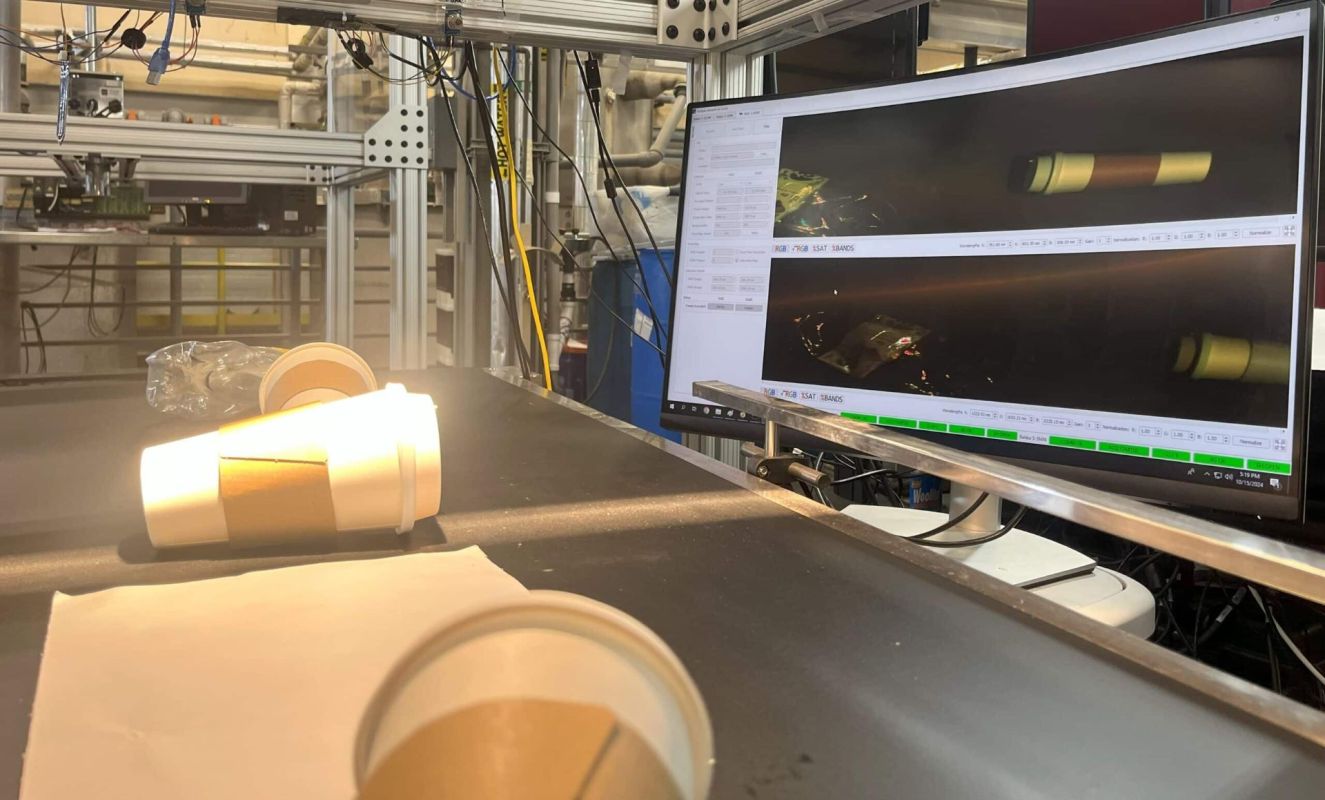
Researchers at North Carolina State University have published an inquiry into advanced hyperspectral imaging technology as a potential jumping-off point for sorting municipal waste.
The study, published in the journal Matter, discusses the scientists' use of powerful optical sensors to analyze the wavelengths of light reflected against various materials as conveyed through a pixelated image.
As the researchers explained, while the range of visible wavelengths sits between roughly 400 and 700 nanometers, the entire electromagnetic spectrum extends far beyond that, and hyperspectral imaging can recognize additional wavelengths of up to 2,500 nanometers — near-infrared and shortwave infrared light.
"Hyperspectral imaging is a powerful tool that allows us to see what human eyes or standard cameras can't," explained Lokendra Pal, an E.J. Woody Rice Professor and one of the study's co-authors.
"With this technology, we can capture real-time images of large quantities of waste, down to the pixel level of data. By doing that, we can identify different materials based on variations in light reflection that we could not normally see."
Through the imaging process, the researchers were able to assign distinct "spectral fingerprints" to each material, even distinguishing between those that might contain invisible or near-invisible differences outside of the visible light range.
TCD Picks » Quince Spotlight
💡These best-sellers from Quince deliver affordable, sustainable luxury for all




A large body of these "fingerprints" can better equip local recycling systems as they sort through municipal waste — in particular, identifying materials that can be salvaged for various recycling endeavors.
According to the Environmental Protection Agency, only about 30% of municipal solid waste was recycled or composted in the United States in 2018, with another 10% diverted for energy recovery. That left over half the total amount, around 150 million tons, to be disposed of in landfills.
Unfortunately, overburdened landfills can pose a significant problem for the environment, releasing planet-heating gases like methane into the atmosphere and seeping other hazardous contaminants into the soil and groundwater.
What's worse, whether through inhalation or direct consumption, these various pollutants have the potential to infiltrate our bodies, leading to myriad health risks.
|
Which of these factors would most effectively motivate you to recycle old clothes and electronics?
Click your choice to see results and speak your mind. |
 Giving me money back 💰
 In short, keeping recyclable materials out of landfills is crucial to protecting our planet and ourselves.
This research to speed up and enhance automated sorting techniques through hyperspectral imaging can help pinpoint more salvageable materials and transform our recycling management systems for the better.

Join our free newsletter for weekly updates on the latest innovations improving our lives and shaping our future, and don't miss this cool list of easy ways to help yourself while helping the planet.






