


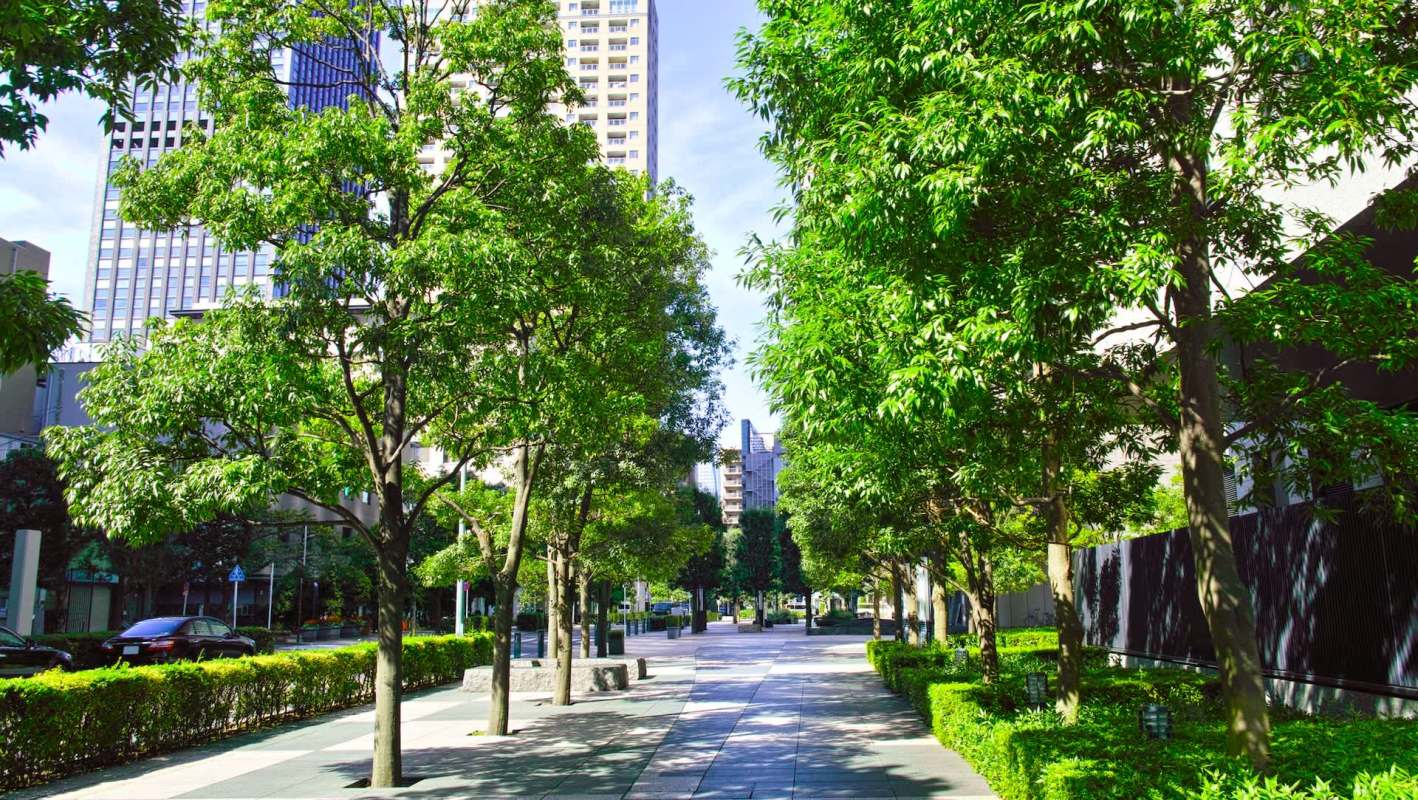
More buildings are installing green roofs filled with plants for their many benefits, including their newfound impact on microplastic pollution.
A recent study has determined that microplastics in rainwater can be filtered out by plant life on green roofs, according to a report by Happy Eco News. They can capture up to 97.5% of particles in urban rain.
Researchers in China built scaled-down models of green roofs and simulated rainfall to test the filtration. They controlled the amount of microplastics in the "rain" they used, then measured how much was left in the runoff.
The soil and plants trapped nearly all the particles from the water, but the irregularly shaped fragments were the easiest to catch. The study also noted that more research is needed on how to address soil maintenance so that it doesn't become too overloaded with plastic over time and begin releasing it back into the environment.
"We are actively exploring opportunities to carry out such long-term field studies to better understand microplastic retention and release dynamics over time," said Shuiping Cheng, an author of the study, per Happy Eco News.
Green roofs are becoming a more popular choice for skyscrapers in cities for the benefits they offer both to the buildings and the environment. They are known to help keep their buildings cooler, thereby reducing energy costs, and control stormwater to minimize damage.
The research team estimated that the existing green roofs atop buildings in Shanghai could already be trapping about 56.2 metric tons of microplastics every year. It's strong data that could be leveraged to expand the use of green roofs in cities all over the world.
Installing green roofs not only on skyscrapers in cities and on more buildings everywhere, but it could also significantly reduce the amount of microplastics that make it into our waterways. This would mean less plastic in our drinking water and in our bodies — a huge win for public health.
"Since roof areas constitute 40%-50% of urban impermeable areas, developing green roofs holds significant potential for intercepting atmospheric microplastics and improving urban water quality, warranting further investigation," the authors said in the study.
|
Should the government offer tax incentives for energy-saving home upgrades? Click your choice to see results and speak your mind. |
 Absolutely 👍
💰Join TCD's exclusive Rewards Club to earn up to $5,000 toward clean upgrades that will help you slash your bills and future-proof your home.
TCD Picks » Upway Spotlight
💡Upway makes it easy to find discounts of up to 60% on premium e-bike brands





Cool Picks





