


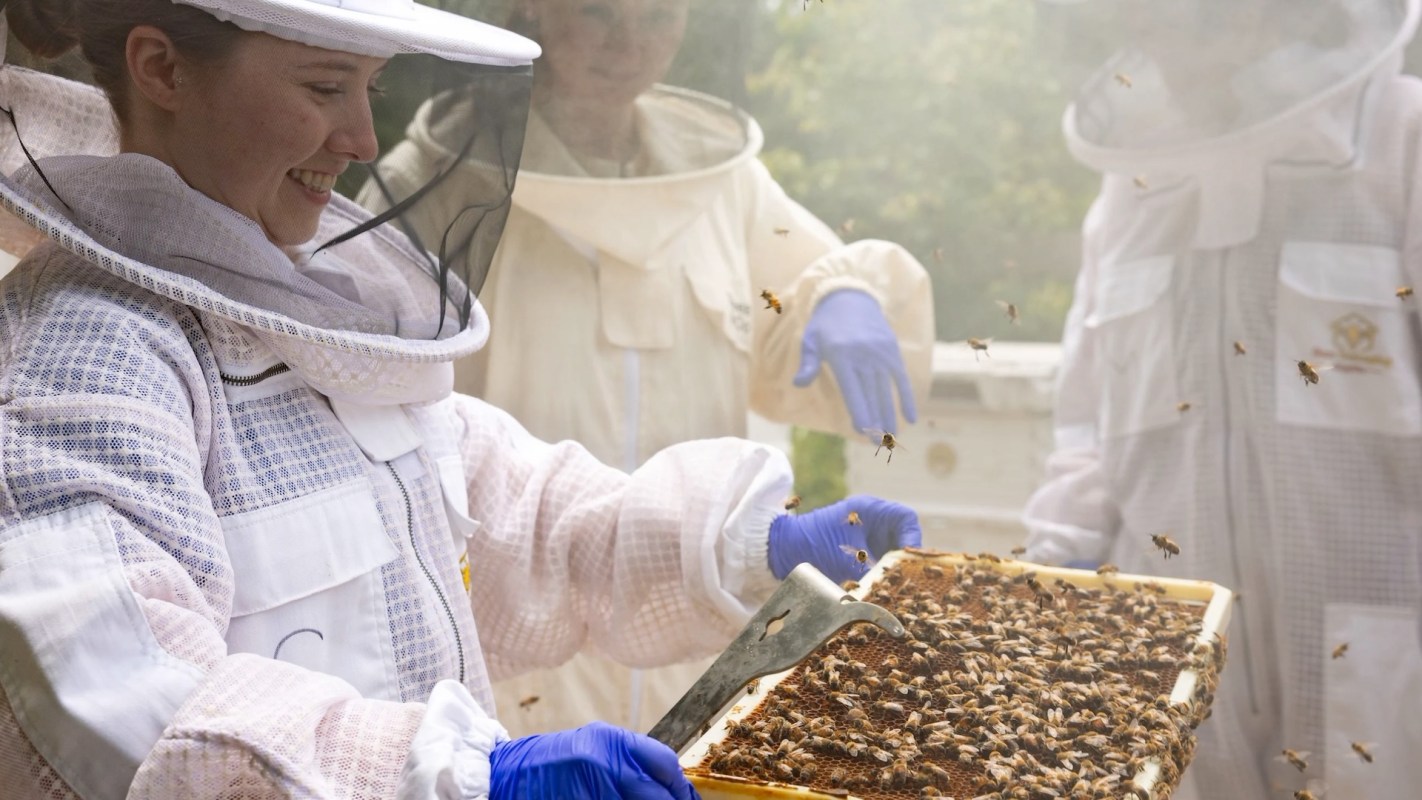
In April, veterinary students at the University of Georgia pulled on white protective suits to examine honeybee hives, reflecting how bee care is becoming a more visible part of training.
As The New York Times reported, the school's teaching hospital is preparing future vets to treat more than the usual dogs, cats, and horses.
This comes as honeybee losses continue to mount, threatening the pollinators that support much of the food system.
What's happening?
The honeybee medicine program features a bee club, bee treatment crew, and three-week elective.
Dr. Jörg Mayer, an exotic-animal veterinarian and professor, is helping lead that honeybee medicine training.
The United States lost more than half its managed honeybee colonies during the 2024-25 season, the Times reported.
TCD Picks » Quince Spotlight
💡These best-sellers from Quince deliver affordable, sustainable luxury for all




That is concerning since honeybees pollinate about $15 billion in crops annually, including more than 130 kinds of fruits, vegetables, and nuts.
Mayer told the Times that losses on that scale would trigger a major animal health crisis if they happened to household pets or livestock.
"Yet in beekeeping, it's basically called Wednesday," he said. "It's considered totally normal."
Bob Binnie, a commercial beekeeper who owns Blue Ridge Honey Co. in Lakemont, Georgia, told the Times that the industry is under siege. Beekeepers are "fighting a war trying to keep their bees alive," he said.
Why does it matter?
When bee colonies struggle, pollination can suffer, affecting food supplies, farm economics, and local ecosystems.
The threats are layered.
Bees are dealing with parasites such as Varroa destructor mites as well as pathogens, habitat loss, pesticide exposure, malnutrition, and climate-related stress.
Lewis J. Bartlett, who heads research at the UGA bee lab, warned that those pressures can wear down colonies' natural defenses.
"If we run out of good food for them … and we're poisoning them with all these insecticides and fungicides and other agrochemicals that we know inhibit their immune system, then you can get these huge outbreaks," he told the Times.
There is also a training gap in veterinary medicine.
The Times cited a survey conducted in 2023 and 2024 in which 74% of veterinarians said they didn't know how to write honeybee prescriptions, and 89% said they could not identify honeybee diseases.
Programs such as this one are intended to build support networks for beekeepers and the communities that depend on healthy pollinator populations.
What's being done?
Professional groups such as the Honey Bee Veterinary Consortium have been expanding continuing education and certification opportunities for practicing vets.
That need grew urgent after a 2017 federal rule change tightened access to antibiotics for bees, making veterinarians more central to treatment decisions.
Veterinary schools are also trying to introduce the subject earlier in training.
"We just really need all hands on deck," Meghan Milbrath, who heads Michigan State University's honeybee medicine program, told the Times.
In the Peach State, students monitor colonies by checking hive debris for mites and other pests, then evaluating whether the bees have enough food and space to stay resilient.
That practical, community-focused approach supports local beekeepers who depend on strong colonies and disease management.
"It ended up being a newfound love that I was not expecting," fourth-year vet student Madison Morgan told the Times.
Mayer said he wants students to leave ready to offer support, not just write prescriptions.
"You don't want to be that guy that just drives around in a station wagon and writes a prescription and says, 'See you later,'" he remarked.

Get TCD's free newsletters for easy tips, smart advice, and a chance to earn $5,000 toward home upgrades. To see more stories like this one, change your Google preferences here.






