


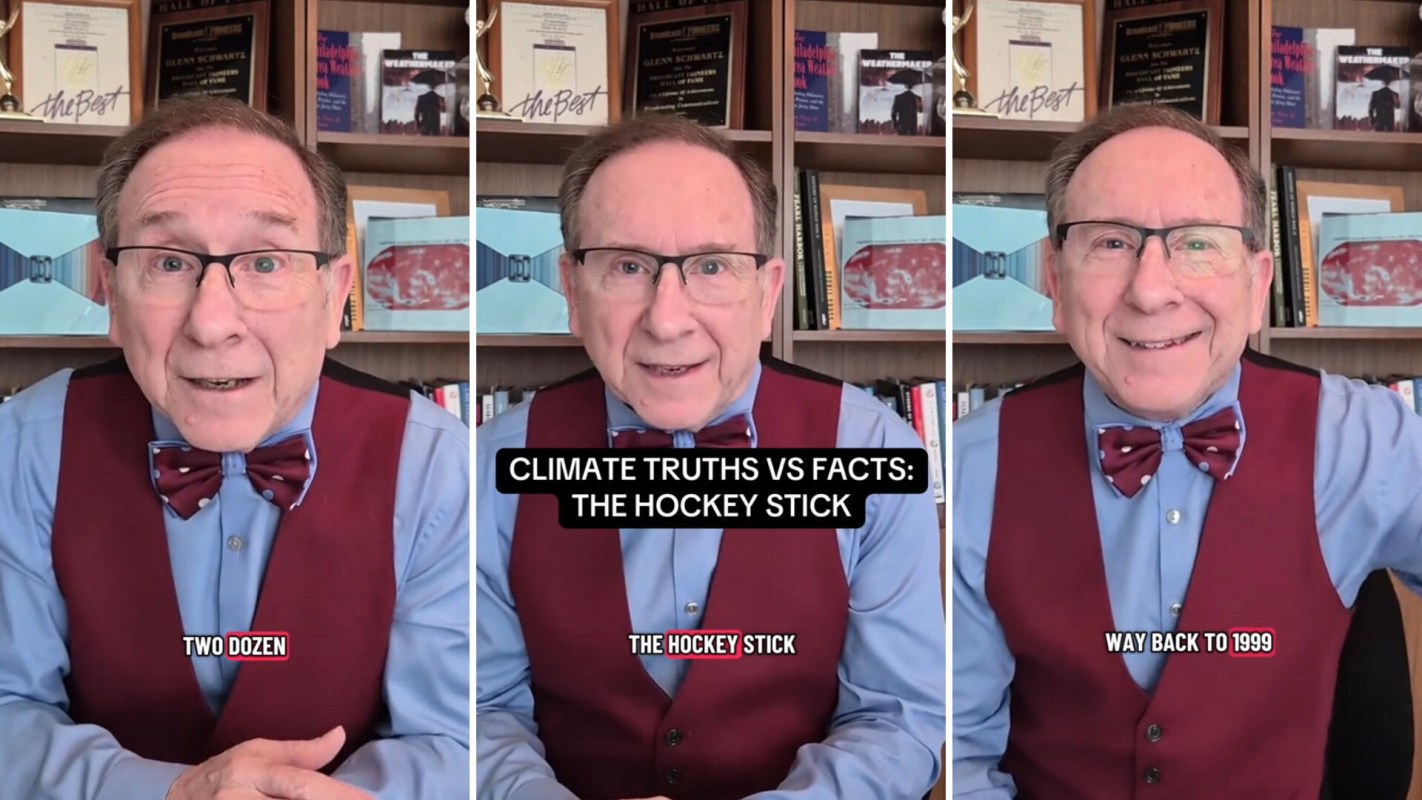
First developed by climate scientist Michael Mann in 1999, the iconic "hockey stick" graph — a visual representation of the accelerated rise in our global temperatures in recent decades — has had its fair share of skeptics and nonbelievers, but a new TikTok post attests to its legitimacy.
Veteran meteorologist Glenn "Hurricane" Schwartz (@hurricane.schwartz) unpacked the evidence behind this famous graph in an in-depth video, ultimately concluding that its information should be received as a "climate FACT."
@hurricane.schwartz Another climate FACT! #climatechange #climatechangeisreal #climatedenial #climateaction ♬ original sound - Hurricane Schwartz
"The study was done in 1999," Schwartz explained, "and here, 25+ years later, they're still talking about it!"
According to the post, Mann drew his data from ice cores, tree rings, ocean sediments, and the like to reimagine the climate of the past — and determined that the second half of the twentieth century had recorded temperatures higher than "any period in the past thousand years."
Although some contenders today might argue the inaccuracy of a study completed in 1999, scientists since the initial publication have repeated the data collection more than 24 times and arrived at the same results. Not one study has unearthed any new material that might counter the original model.
Unfortunately, the validity of the "hockey stick" graph means that the changing climate is only becoming more and more of a problem. If the trend continues, we may witness global temperatures climbing at unprecedented rates and speeding toward dangerous levels. What's worse, much of the damage is caused by human activities, namely those which generate heat-trapping carbon pollution.
As it is, warmer temperatures have been shown to supercharge extreme weather events like floods, wildfires, and hurricanes, increasing the amount of destruction that unfolds in the wake of a single calamity. Recent examples include the 2025 Los Angeles wildfires, which were exacerbated by the region's growing aridity, and last year's Hurricane Helene, which was intensified by warmer Florida waters and a high-moisture atmosphere.
Responses to Schwartz's post were overall supportive of his conclusion regarding our overheating planet.
"Nailed it!!!" one user commented, followed by several applause emojis.
"Thank you so much for this!!!" wrote another.
TCD Picks » Quince Spotlight
💡These best-sellers from Quince deliver affordable, sustainable luxury for all




|
Do you think America does a good job of protecting its natural beauty? Click your choice to see results and speak your mind. |
 Definitely 👍
Get TCD's free newsletters for easy tips to save more, waste less, and make smarter choices — and earn up to $5,000 toward clean upgrades in TCD's exclusive Rewards Club.
Cool Picks





