


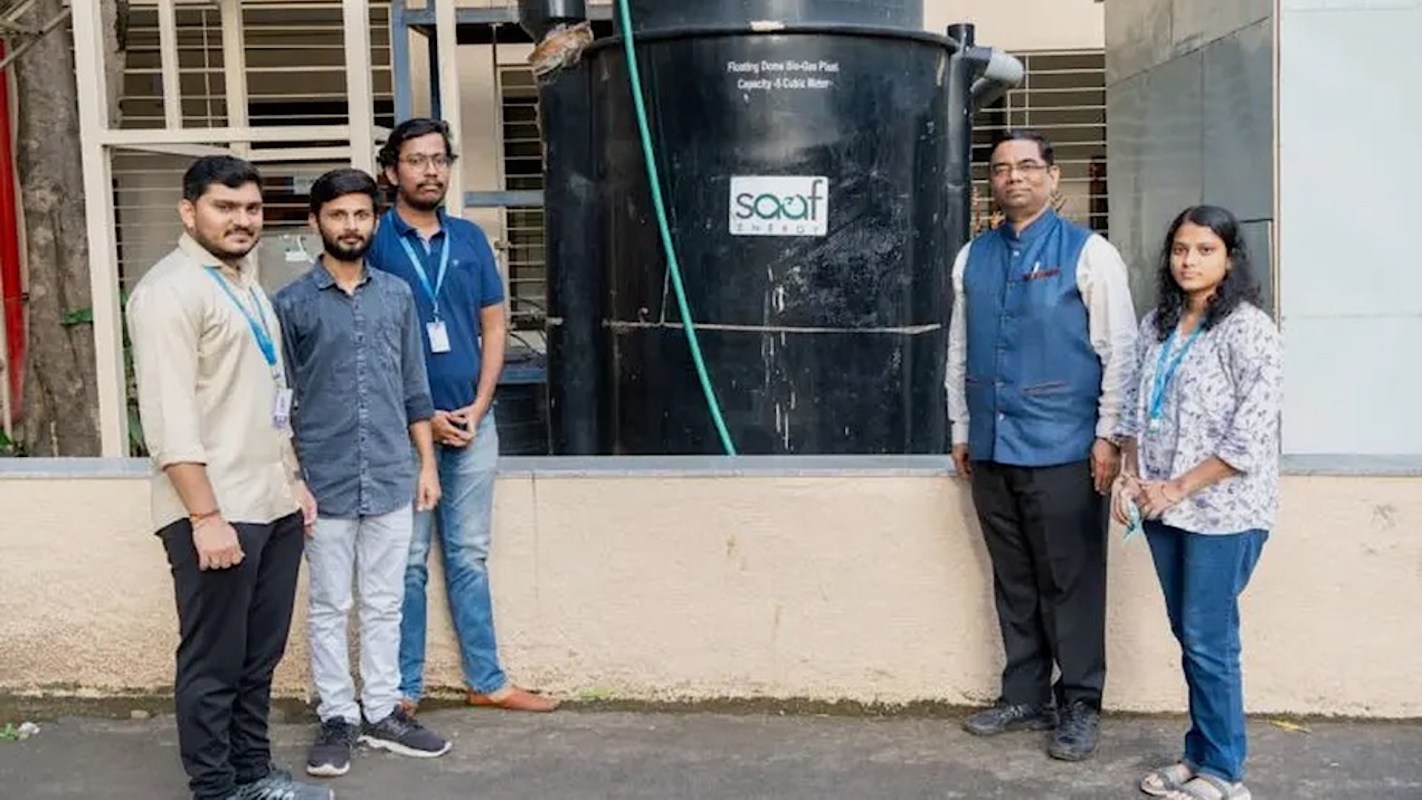
A team of researchers at MIT World Peace University has developed a new method to produce green hydrogen from mixed agricultural waste, which could transform our pursuit of clean energy.
According to Fuel Cells Works, the team's process can convert agricultural waste, such as millet stalks and other seasonal residues, into clean-burning hydrogen fuel at a production cost of just $1 per kilogram. This offers a significantly cheaper alternative to traditional methods.
If that wasn't enough, the creation of the fuel also generates biochar and patented biofertilizers that produce nutrients only when in contact with water, reducing the need to rely on urea and other toxic chemicals to feed plants.
"We have used a pyrolysis catalyst derived from plants, helping us produce green hydrogen without carbon dioxide emissions," Ph.D. researcher Aniket Patrikar said.
Green hydrogen is a booming business due to its clean-burning properties. The only byproduct from hydrogen-powered engines is water, and they run as efficiently as gas-powered engines. The problem arises from the fact that producing hydrogen fuel is costly, and it can also produce planet-warming gases such as carbon dioxide through the electrolysis process.
Hydrogen's promise as a fuel continues to grow. Researchers have utilized novel catalysts to enhance production, while others have developed modular electrolyzers to facilitate the process more quickly and efficiently. China debuted the world's first hydrogen-powered high-speed train, demonstrating that hydrogen can be used commercially by rail systems as well as by ships.
However, the MIT-WPU team's creation could change the game entirely. By producing it from agricultural waste — where the primary byproducts are agriculturally and environmentally useful — and producing it at half the current cost of green hydrogen, they've shown that it could be produced at an industrial scale.
"The world is looking into electrolysis, but it remains expensive, with costs above $2/kg," fellow scholar Avinash Lad said. "Our process is carbon-negative, affordable, and scalable.
|
Should the government continue to give tax incentives for energy-efficient home upgrades? Click your choice to see results and speak your mind. |
 Absolutely 💯
Join our free newsletter for weekly updates on the latest innovations improving our lives and shaping our future, and don't miss this cool list of easy ways to help yourself while helping the planet.
Cool Picks





