


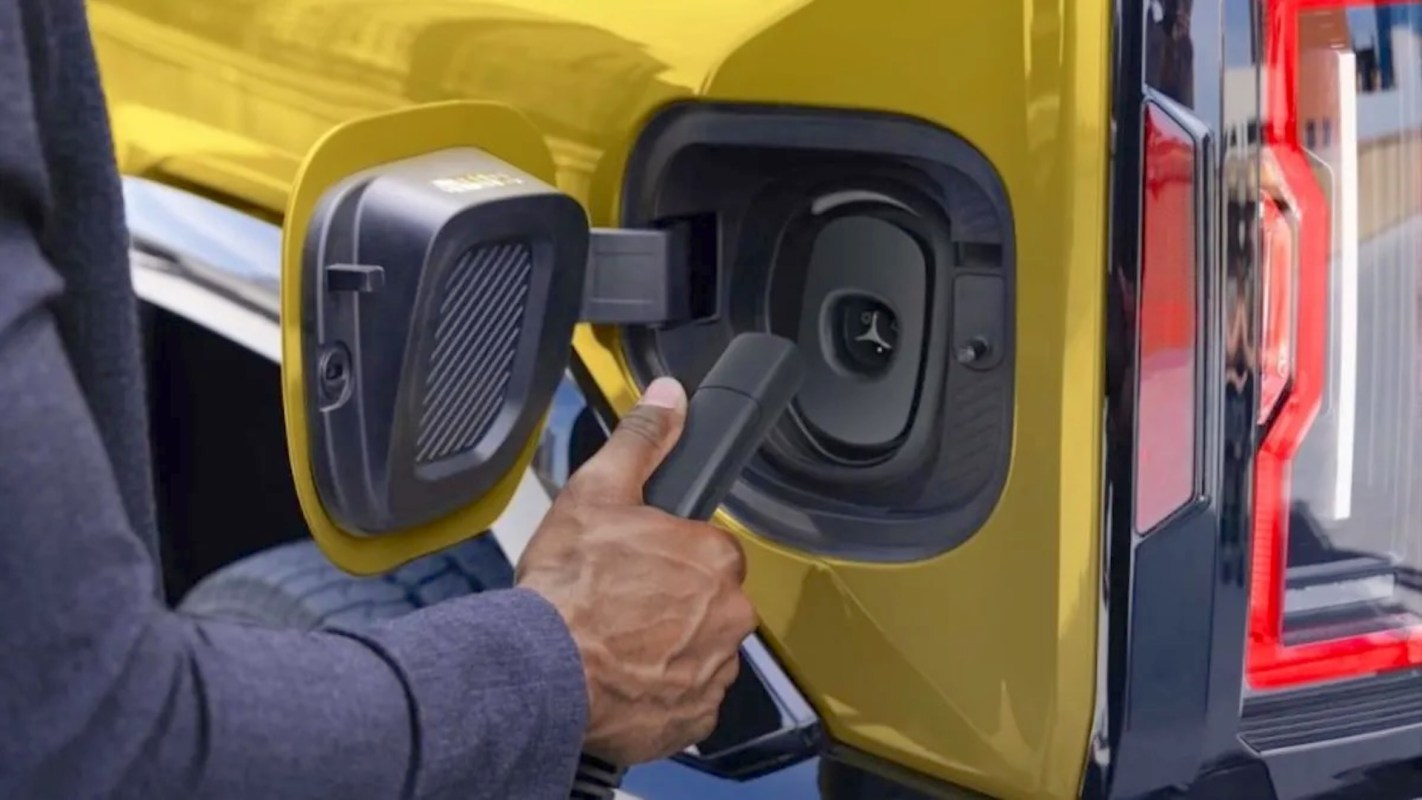
General Motors is making a charging change that could remove one of the biggest hassles for EV drivers.
Beginning with the 2027 model year, GM says its electric vehicles from Chevrolet, Cadillac, and GMC will leave the factory with the Tesla-style North American Charging Standard (NACS) port, allowing drivers to connect directly to compatible Tesla Superchargers and other NACS chargers instead of using a separate adapter.
Here's what to know
According to Electrek, GM is making SAE J3400, better known as NACS, the standard connector across its full 2027 EV range.
GM says that list covers the Chevrolet Bolt EV, Equinox EV, Blazer EV, and Silverado EV; Cadillac's Lyriq, Optiq, Vistiq, Escalade IQ, and Escalade IQL; and the GMC Hummer EV pickup and SUV, along with the Sierra EV.
The shift is underway on a few models: the 2026 Cadillac Optiq already uses a native NACS port, and the revived Chevrolet Bolt arriving in 2026 as a 2027 model will use one as well.
Most of GM's other 2026 EVs still come with CCS1, so owners need GM's approved $275 NACS DC adapter to use eligible Tesla Superchargers and other NACS fast-charging locations.
TCD Picks » Quince Spotlight
💡These best-sellers from Quince deliver affordable, sustainable luxury for all




GM says that adapter can be used with more than 27,500 Tesla Superchargers, although some of those sites are still restricted to Tesla vehicles.
One commenter also pointed to a practical limitation at some older stations: "V3 has the short cords and v4 has the more convenient longer cords."
More background
The change should make charging away from home easier.
Broader access to public fast chargers can simplify EV ownership, especially on longer trips or for people who cannot always charge at home.
GM is also working to simplify the software side of the experience. Its Energy Pass, which is integrated with the MyChevrolet, MyCadillac, and MyGMC apps, lets drivers register and pay across Tesla Supercharger, IONNA, Electrify America, and ChargePoint, with EVgo expected to join as well.
GM says those networks account for nearly 70% of U.S. DC fast chargers.
Easier charging access adds to the appeal of buying an electric vehicle. EVs can help drivers save money on fuel and typically require less routine maintenance because they have fewer moving parts and do not need oil changes.
What's being done?
GM's port switch is one part of a broader charging transition, not the complete end of adapters.
Even with NACS built into 2027 models, adapters will still matter. Drivers will need a CCS1 adapter at some older DC fast chargers and a J1772 adapter for many Level 2 chargers, including plenty of home units.
GM sells its CCS1 DC adapter for $189 and its J1772 adapter for $67, or both for $256.
Home charging will also remain the most convenient option for many households. Charging an EV at home often costs less than using public chargers, though basic Level 1 charging can be slow. That's why faster Level 2 setups can be such a useful upgrade.
For drivers who want that option, Qmerit provides free, instant installation estimates for Level 2 home charger installations. Combined with broader access to Tesla-style fast charging on the road, that could make everyday EV ownership smoother for future GM buyers.
The change is unlikely to eliminate every charging frustration overnight, especially at older stations with shorter cables.
As one commenter put it, "Until the A2Z DC extension cord is available for v3 Supercharging I would prefer left rear. V4 fixes the situation."

Get TCD's free newsletters for easy tips, smart advice, and a chance to earn $5,000 toward home upgrades. To see more stories like this one, change your Google preferences here.






