


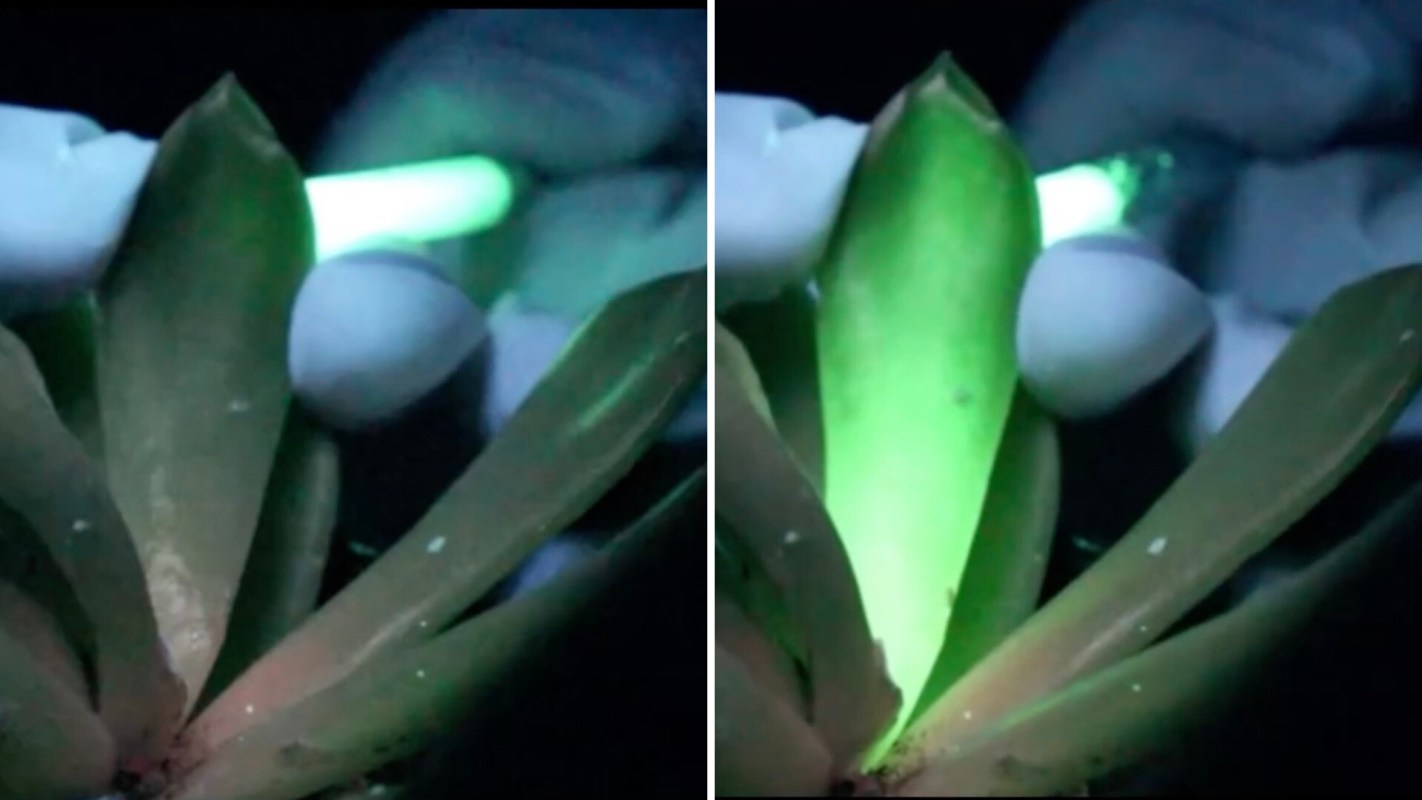
Lighting a home with glowing plants seems like something out of a fantasy novel, but thanks to new research, it could soon become a reality.
Researchers have developed succulents that absorb the sun's energy during the day and then glow at night, Mongabay reported.
Shuting Liu, who led the research team at South China Agricultural University, injected small particles called phosphors into the plants to give them their luminescence. This is the first study to rely on these particles instead of trying to transfer bioluminescence from something such as a firefly.
The researchers "note that they have now successfully created 'the world's first plants with visible blue, green, red, and blue-violet afterglow,'" according to Mongabay. The team's glowing succulents can emit about as much light as a nightlight.
The potential for plant-powered light could cut down on energy costs and reduce lightbulb e-waste. Like many other electronic items, lightbulbs can contain hazardous materials that should not be included in regular trash or deposited in a landfill.
These glowing plants, as they currently exist, would most likely take the place of nightlights. Nightlights, especially LED night lights, do not use a lot of energy. Estimates range from 0.5 to 7 watts. While this is a drop in the bucket, the plants have the potential to neutralize the need for nightlights.
Some experts, however, are skeptical about using phosphors in leaves, as they are not organic. "What happens to the microparticles once the plant dies? This should be a primary concern for any of these man-made technologies," University of Tennessee professor Scott Lenaghan told The New York Times.
The research team is still studying the long-term safety of these plants. It is also trying to extend their glow time, as they start to dim after 30 minutes and fully extinguish after two hours.
Despite the criticisms, Liu is hopeful for a future with glowing plants. "One could imagine gardens or public spaces softly illuminated at night by glowing plants — a form of living, energy-saving light bulbs that are as aesthetic as they are functional," she told Mongabay.
|
Would you cover your home in sticky solar film?
Click your choice to see results and speak your mind. |
 Sign me up 👍
Join our free newsletter for weekly updates on the latest innovations improving our lives and shaping our future, and don't miss this cool list of easy ways to help yourself while helping the planet.
TCD Picks » Quince Spotlight
💡These best-sellers from Quince deliver affordable, sustainable luxury for all




Cool Picks





