


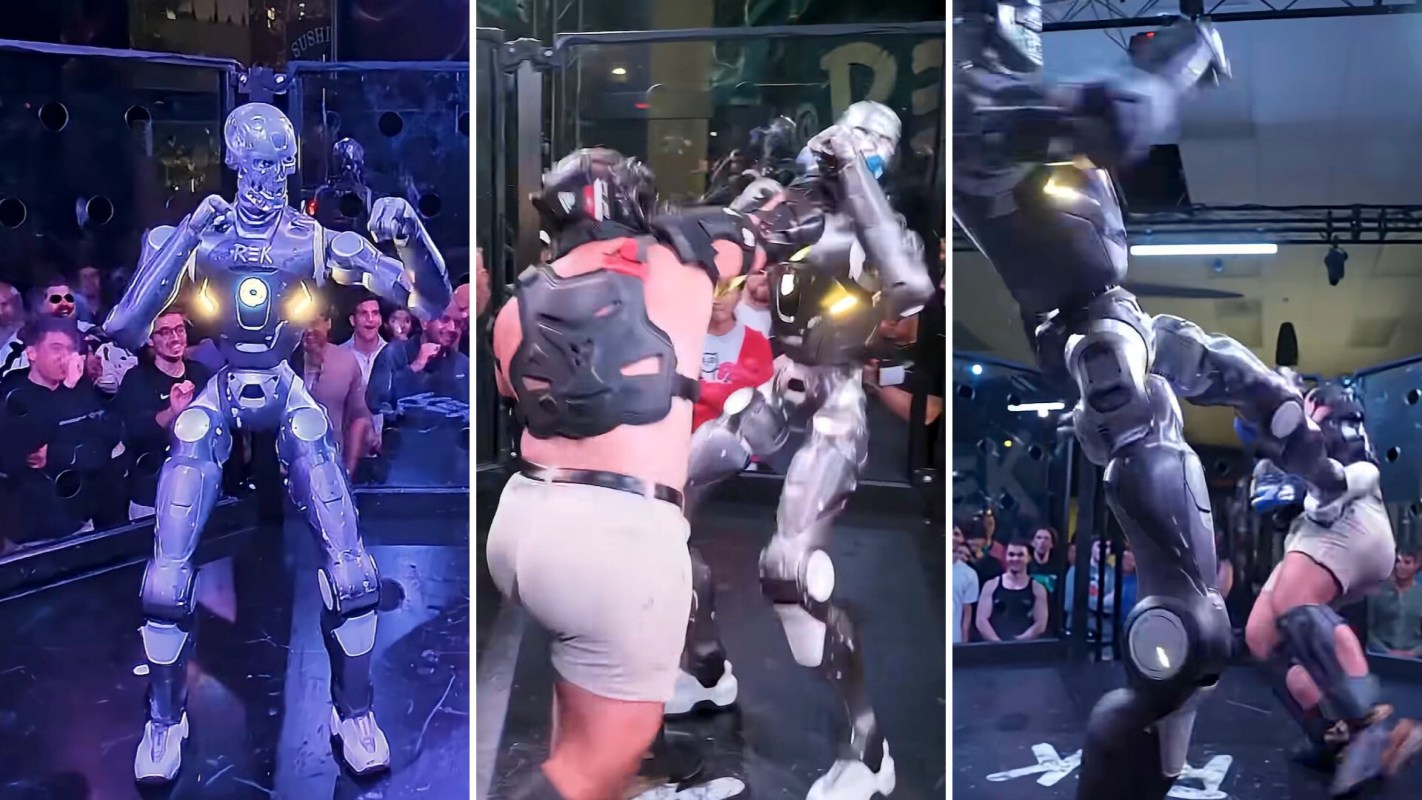
A viral clip is putting sci-fi fight-night energy to the test in a very real way: influencer and TikTok personality Frankie LaPenna stepping into an MMA-style cage with a humanoid robot.
While the matchup looks like pure spectacle, it also offers a glimpse of how quickly robot movement, balance, and responsiveness are improving.
Here's what to know
In the footage highlighted by Futurism, REK stages a 44-second match between LaPenna and one of its humanoid androids inside a plastic-lined octagon.
Before the action unfolds, an announcer in the clip declares, "For the first time in history, a human faces off against a six-foot-tall robot."
LaPenna, wearing heavy padding, appears to throw punches while taking several kicks, with a final blow sending him sprawling across the ring.
"Is this just a showcase or did that robot legit yeet that dude five meters across the ring?" one Reddit user wondered.
TCD Picks » Quince Spotlight
💡These best-sellers from Quince deliver affordable, sustainable luxury for all




Even if the fight was choreographed, the scene points to a very real trend: Humanoid robots are becoming more agile, coordinated, and capable of controlled movement in ways once largely confined to labs and movie sets.
More background
The advances that help a robot balance, pivot, and react in a ring could also support more practical uses in everyday life.
Improved mobility and coordination may allow robots to assist with physically demanding or dangerous work, such as lifting heavy loads, navigating disaster zones, or handling repetitive warehouse tasks.
Humanoid systems could also become useful in elder care, rehabilitation settings, and home assistance because they are designed to move through spaces built for people. A robot that can walk, stabilize itself, and respond to obstacles is one step closer to carrying groceries, retrieving dropped items, or supporting independent living.
Because LaPenna is known for elaborate comedic stunts, the matchup reads at least partly as performance art rather than a serious test of machine-versus-human combat.
What's being done?
Companies developing humanoid robots are continuing to invest in better locomotion, safer contact systems, and more precise controls. Even flashy demonstrations can serve a purpose if they help engineers test movement, reaction time, and impact management in dynamic settings.
If these machines become reliable enough for warehouses, hospitals, construction sites, and emergency response, they could save people time and reduce exposure to risky conditions.
Robots that can operate in human environments may eventually help with routine physical chores and step in for hazardous tasks most people would rather avoid.
"It's still clumsy… for now," one commenter wrote.
Where can I learn more?
If the cage match got you curious about humanoid robots, these stories look at how the tech is holding up beyond viral stunts.
• Tesla drew backlash after a poor humanoid robot demo exposed serious movement flaws.
• In Hyundai factories, Atlas showed it doesn't have to move like a person.
• Tesla's Optimus plans hit a potential major setback as China magnet concerns grew.
• MIT roboticist Rodney Brooks blasted what he called the "pure fantasy" vision for humanoid robot assistants.
• At a Chinese automaker, humanoid robots as interns are being tested in factory jobs.

Get TCD's free newsletters for easy tips, smart advice, and a chance to earn $5,000 toward home upgrades. To see more stories like this one, change your Google preferences here.






