


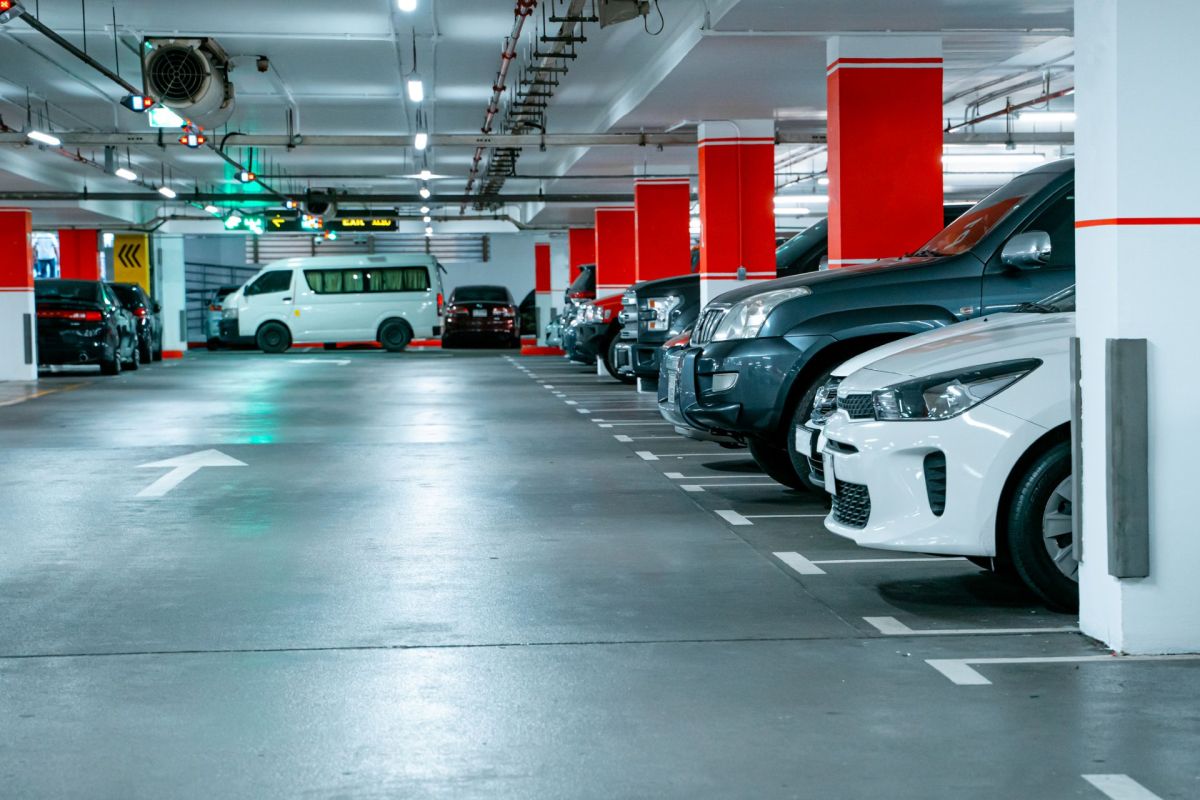
In China, electric vehicle chargers come to you.
It's a fascinating concept being built by several companies for parking garages, removing the need to roam around in search of a plug-in, according to Electrek.
A video clip shared on the social platform X shows the boxy contraptions moving on roof rails. They drop a charge line when they reach the vehicle that needs a boost.
✨🇨🇳China's overhead mobile charging stations support on-demand park-and-charge. Their automatic moving design eliminates the need for drivers to wait in line for charging. pic.twitter.com/3gCSArzvlC
— 🇨🇳XuZhenqing徐祯卿 (@XueJia24682) February 20, 2026
"China is living in the future when it comes to EV charging," Electrek's Fred Lambert wrote.
The story noted Li Auto and CGXi as companies leading the development of these types of systems. In the U.S., a group of firms and designers helped to bring a unique parking garage to fruition at Lume Apartments in Menlo Park, California. An automated parking process transports EVs to charging stalls and then parks them after they are recharged. A robotic arm places a cable in the EV to fill the battery, according to San Francisco's Heller Manus Architects, one of the firms that helped with the project.
The goal is to bring ease to the EV experience in sometimes crowded environments where public ports can come at a premium. That's why charging at home is a value. EV owners can save hundreds of dollars a year by plugging in at their house. It's far cheaper than gas, and even a value when compared to public stations that charge fees, per a cost breakdown from experts at Qmerit.
The Chinese system arrives to drop a line automatically, with no app required to trigger the service. The design saved money by eliminating the need to wire a connector for each spot. It's all built through the roof-hung rail line. The system's power supply is limited to a Level 2 speed, according to Electrek.
When it comes to chargers, a standard wall outlet — or Level 1 — is the slowest option and often takes more than 40 hours to fully charge an EV. Level 2 chargers are a middle-ground option, fully powering a battery in one to eight hours, depending on pack type and other factors. Public stations with DC fast chargers can provide 80% battery life in 20 to 40 minutes, Qmerit reported. But stall operators charge fees, which is part of the reason powering up at home is cheaper.
Save $10,000 on solar panels without even sharing your phone number Want to go solar but not sure who to trust? EnergySage has your back with free and transparent quotes from fully vetted providers in your area. To get started, just answer a few questions about your home — no phone number required. Within a day or two, EnergySage will email you the best options for your needs, and their expert advisers can help you compare quotes and pick a winner. Solar panels can save you more than $50k over their 25-year lifespan, and EnergySage can help you save as much as $10k on installation. Which begs the question — isn't that worth an email or two? |

Qmerit's experts can help you through the process of having a Level 2 unit installed at your house. The expertise includes free quotes for installation, so you know you are getting the best price. It starts with some easy questions about your utility panel and garage.
Home solar adds to the savings by providing cheap energy from the sun to power the ride. TCD's Solar Explorer is a great resource that partners with vital expertise and curated information, including free installation estimates from vetted installers. It's information that can save you up to $10,000 off upfront costs.
|
Which of these savings plans for rooftop solar panels would be most appealing for you?
Click your choice to see results and earn rewards to spend on home upgrades. |
 Save $1,000 this year 💸
 Electrek detailed some other unique overhead tech that's on the way to ease public charging. Stateside, an alliance of automakers is working on a project dubbed Ionna, which is designed to add 30,000 ports to America's roadways by 2030.
Another idea offered by experts at EnergySage is to leverage the country's robust campground network, which is already lined with reliable electric hookups, to offer charging opportunities for long-distance travelers even in remote areas.
Unique options in parking garages could greatly reduce searching and line-waiting that's often needed to secure a recharge.
"The overhead rail charging robot is the kind of practical, unsexy innovation that China excels at," Lambert wrote.

Get TCD's free newsletters for easy tips to save more, waste less, and make smarter choices — and earn up to $5,000 toward clean upgrades in TCD's exclusive Rewards Club.
Cool Picks





