


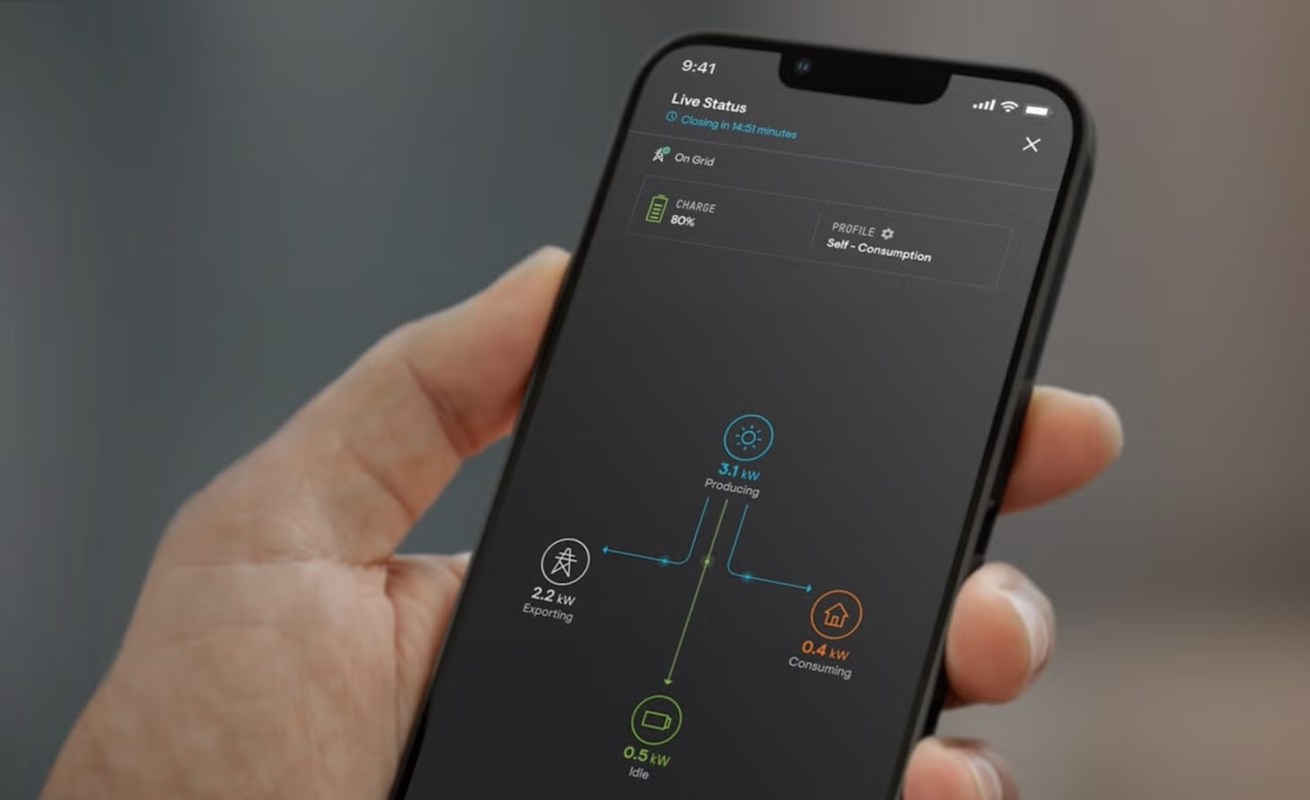
A homeowner who invested in solar panels and battery backup expected a sunny outage to be the ideal test case for the investment. Instead, they were met with disappointment and confusion.
The poster said their Enphase system did not appear to recharge the batteries after the gateway stopped communicating, leaving the house to slowly drain power.
This serves as a reminder that backup power depends not only on hardware capacity but also on software systems and monitoring during grid failures.
Here's what to know
In a detailed Reddit thread, the homeowner described an Enphase setup with 27 IQ7+ solar panels, four IQ 5P batteries, an IQ System Controller 3, and a load controller.
The biggest concern was that the batteries seemed to lose charge instead of building it during daylight. The homeowner said the system entered backup mode when the utility went down on Aug. 17 and dropped the air-conditioning compressor, but by the morning of Aug. 18 the battery level had slipped from 85% to 82%, the gateway had stopped communicating, and the batteries still did not appear to charge despite full sun and very light household use.
The homeowner's main question was: "Why did batteries not charge during an entire day of full sun, with basically no household draw but refrigerator?"
It's hard to understand where an issue stems from without good monitoring. One commenter replied, "Sounds like one of the big issues is not being able to see what the system is doing in an outage."
Battery storage is one of the best ways to protect your home during outages, save on energy costs, and go off-grid. Homeowners who want to compare systems can explore EnergySage for information about home battery storage options, including competitive installation estimates. EnergySage has also teamed up with the electrification brand Qmerit to guarantee you get the best price on home battery storage solutions.
Save $10,000 on solar panels without even sharing your phone number Want to go solar but not sure who to trust? EnergySage has your back with free and transparent quotes from fully vetted providers in your area. To get started, just answer a few questions about your home — no phone number required. Within a day or two, EnergySage will email you the best options for your needs, and their expert advisers can help you compare quotes and pick a winner. Solar panels can save you more than $50k over their 25-year lifespan, and EnergySage can help you save as much as $10k on installation. Which begs the question — isn't that worth an email or two? |

For people who do not need a whole-home setup, Pila is another company offering strong backup options, and its plug-and-play batteries are priced at a fraction of the cost of a whole-home backup system.
More background
Once communication returned, the homeowner said delayed low-battery messages finally appeared. That fit with their earlier impression that the app had been frozen at an older battery reading, even though the home's local Wi-Fi was still working while internet service was down.
One reply urged the homeowner to practice local access before the next outage, saying, "First thing is to make sure you can connect locally in an outage." The same commenter added that Enphase support should still be able to inspect logs from the inverters, batteries, and gateway to sort out what happened.
Homeowners who want a custom setup, but are still weighing solar options, can use EnergySage to go solar with free tools that let them compare competitive bids from local installers without sharing contact information unless they decide to move forward.
What can be done?
A good pre-outage test can include checking how to access the system locally if internet service fails, ensuring the gateway remains powered during backup mode, and having the installer identify the gateway breaker.
When a system acts strangely, saving screenshots, alerts, and a timeline of events can make troubleshooting easier with both the installer and manufacturer. As one commenter noted, "the logs are stored on the inverters, batteries, and gateway so support will be able to analyse."
The homeowner's final takeaway captured the learning curve many people face with new energy tech: "The more I learn, the more I realize I need to learn!"

Get TCD's free newsletters for easy tips, smart advice, and a chance to earn $5,000 toward home upgrades. To see more stories like this one, change your Google preferences here.






