


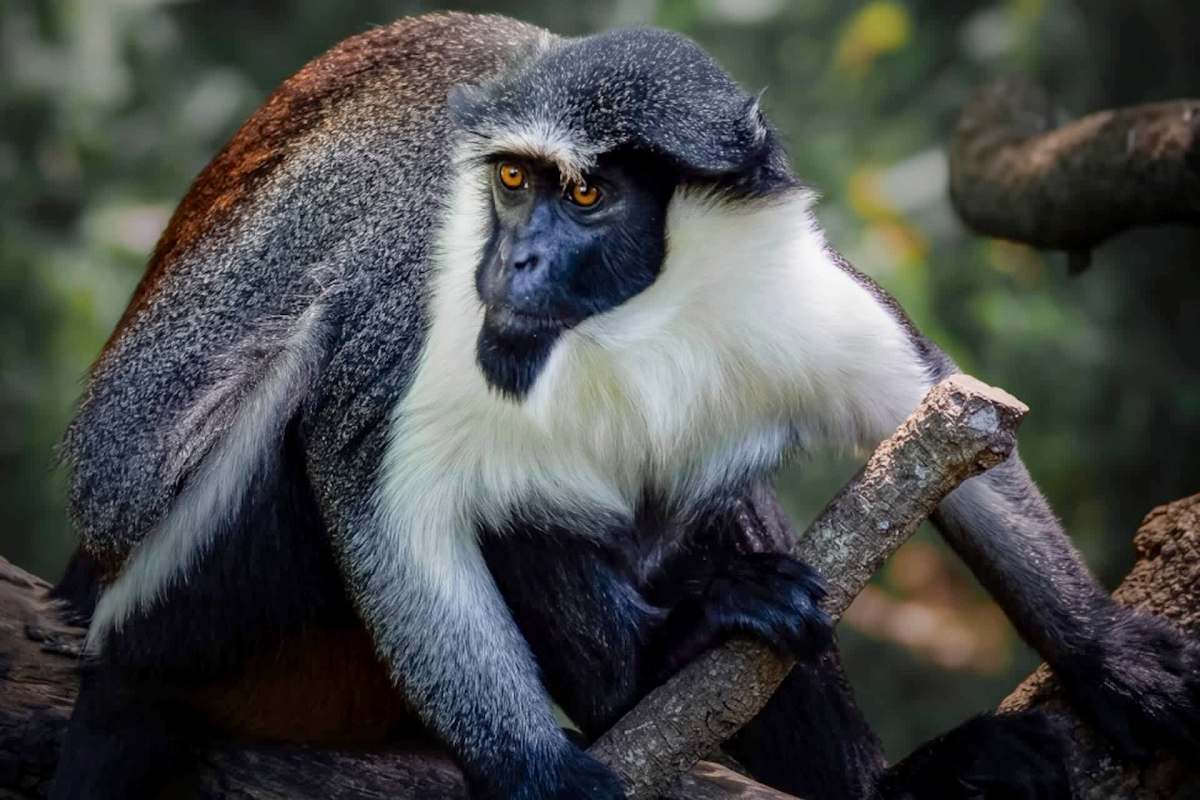
A monkey with what appears to be a crescent moon on its forehead is drawing attention online, but the fascination comes with a serious warning. The Diana monkey is not only visually striking but also increasingly vulnerable in the rainforest.
What's happening?
Content creator SnapsByMylo (@snapsbymylo) took to their Instagram account to highlight the species' signature white marking and the threats contributing to its decline.
The animal's common name refers to the Roman goddess Diana, and the caption noted that the white patch on its forehead resembles a crescent moon.
In the caption, the creator called Diana monkeys "one of West Africa's most beautiful and endangered primates" and said that populations in parts of their range have declined due to habitat destruction and hunting for bushmeat.
The post also highlighted the monkey's ecological role, noting that it helps forests regenerate by dispersing seeds that can grow into plants and trees.
Why does it matter?
That role is important because rainforests rely on animals to disperse seeds. When those seed carriers disappear, natural forest recovery after disruption can become more difficult.
TCD Picks » Quince Spotlight
💡These best-sellers from Quince deliver affordable, sustainable luxury for all




Healthy rainforests are critical not only for wildlife but also for people. They store carbon, support water cycles, and reinforce ecosystems that communities rely on for food, livelihoods, and climate stability.
When a primate population declines, the effects do not remain limited to a single species. The changes can ripple through plant life, forest structure, and biodiversity, leaving already stressed ecosystems less resilient over time.
What can I do?
One practical way to help is to support organizations, public policies, and conservation efforts that protect tropical forests and reduce wildlife trafficking. Individual choices alone will not reverse a regional decline, but they can support broader action.
People can also pay closer attention to products linked to deforestation, including paper, timber, palm oil, and cocoa, and seek out sourcing standards designed to reduce forest destruction. Consumer awareness is not a cure-all, but it can create pressure for better practices.
Sharing credible information can help, particularly when the focus is on habitat protection and ecological importance rather than on treating rare animals as mere visual curiosities. Posts that explain why a species matters can help build broader public understanding.
Even simple next steps can make a difference, such as learning more about rainforest conservation, donating to reputable groups, and supporting efforts to preserve intact ecosystems where animals like the Diana monkey can continue to survive.
"Every species has a role to play, and every species has a story worth telling," SnapsByMylo's post concluded.

Get TCD's free newsletters for easy tips, smart advice, and a chance to earn $5,000 toward home upgrades. To see more stories like this one, change your Google preferences here.






