


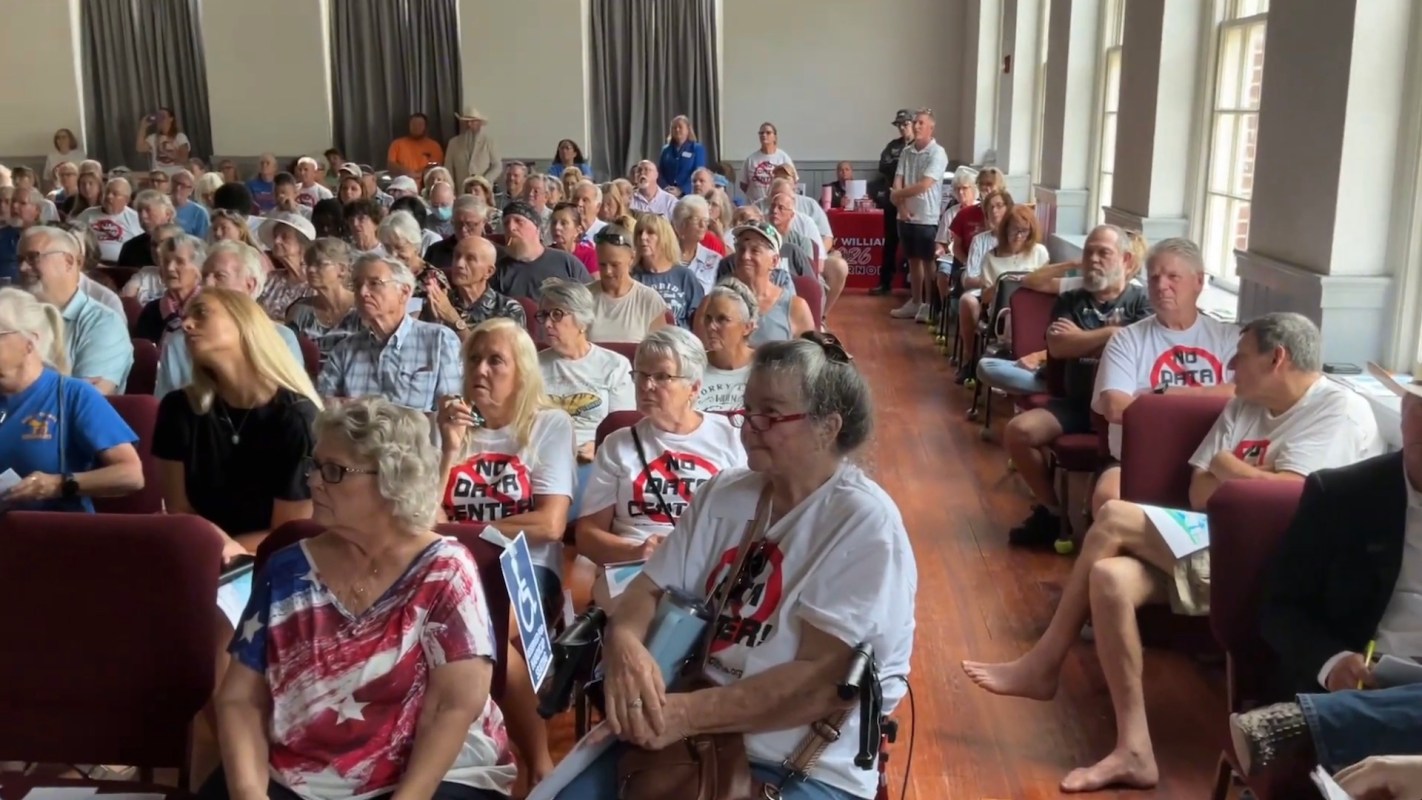
When organizers in Citrus County, Florida, scheduled a town hall to challenge a proposed data center industrial park, they had no clear sense of whether the effort would draw much interest.
It did: roughly 200 neighbors showed up, an unusually large crowd for a rural county, and a sign that resistance to new data centers is building far beyond major cities.
What happened?
According to the News Tribune, the fight in Citrus County centers on a proposal to expand an industrial park in Holder to 1,356 acres for prospective data centers, a plan residents came to discuss at a May gathering in a historic schoolhouse in Hernando.
For organizers, the turnout marked a major turning point after weeks of outreach on Facebook and Nextdoor, through petitions, and by canvassing neighborhoods.
A June 18 hearing is next on the schedule, with county commissioners expected to vote on July 14 after the planning board postponed a decision and requested more information. At the earlier meeting, opposition was reportedly so intense that officials ran out of overflow space.
A separate campus proposal near Lake Okeechobee was ultimately abandoned amid public opposition, while in Fort Meade, residents are pushing back against a proposed 4.4-million-square-foot hyperscale data center.
TCD Picks » Quince Spotlight
💡These best-sellers from Quince deliver affordable, sustainable luxury for all




Why does it matter?
Critics say data centers reshape their communities through persistent noise, air pollution, pressure on water supplies, and heavy industrial activity near homes.
"I'm mad as hell," said Candace Nichols, a 68-year-old retiree in Citrus County, according to the News Tribune. "This is the Old Florida we grew up in. And now they're trying to destroy it."
The disputes also reflect the growing connection between artificial intelligence and the power grid. AI can require enormous amounts of electricity and water, increasing pressure on local resources, raising concerns about pollution from backup generators, and potentially driving up energy costs.
A single zoning decision can affect nearby wells, traffic patterns, nighttime noise, and monthly utility bills.
What's being done?
Across Florida, residents are organizing quickly, including in places where grassroots activism has not traditionally been common.
The News Tribune reported that organizers in Citrus County say their broader network now reaches about 7,000 people through social media and petition efforts.
Raul Alfonso of Fort Meade said the fight has changed him.
"As a matter of fact, I was almost what you'd consider a shut-in," he said.
Now Alfonso and his neighbors have created a Facebook group, gathered signatures, and drawn public attention to a project that had already cleared major local hurdles. Some opponents are also focusing on procedural pressure points.
In other areas, residents are attending hearings, reviewing research, speaking with neighbors, and urging elected officials to slow down and answer questions before approving projects with lasting consequences. In Fort Meade, a water-use approval process before the Southwest Florida Water Management District has become one of their "last hopes," as Alfonso described it.
Reflecting on the campaign against the Lake Okeechobee-area proposal, Wyatt Deihl said, "Ultimately, what it comes down to is who gets to make the decisions and who doesn't — the decisions that affect our health, our environment and our community."
"This just feels so predatory," Alfonso said. "I just have to smack the bully in the nose."

Get TCD's free newsletters for easy tips, smart advice, and a chance to earn $5,000 toward home upgrades. To see more stories like this one, change your Google preferences here.






