


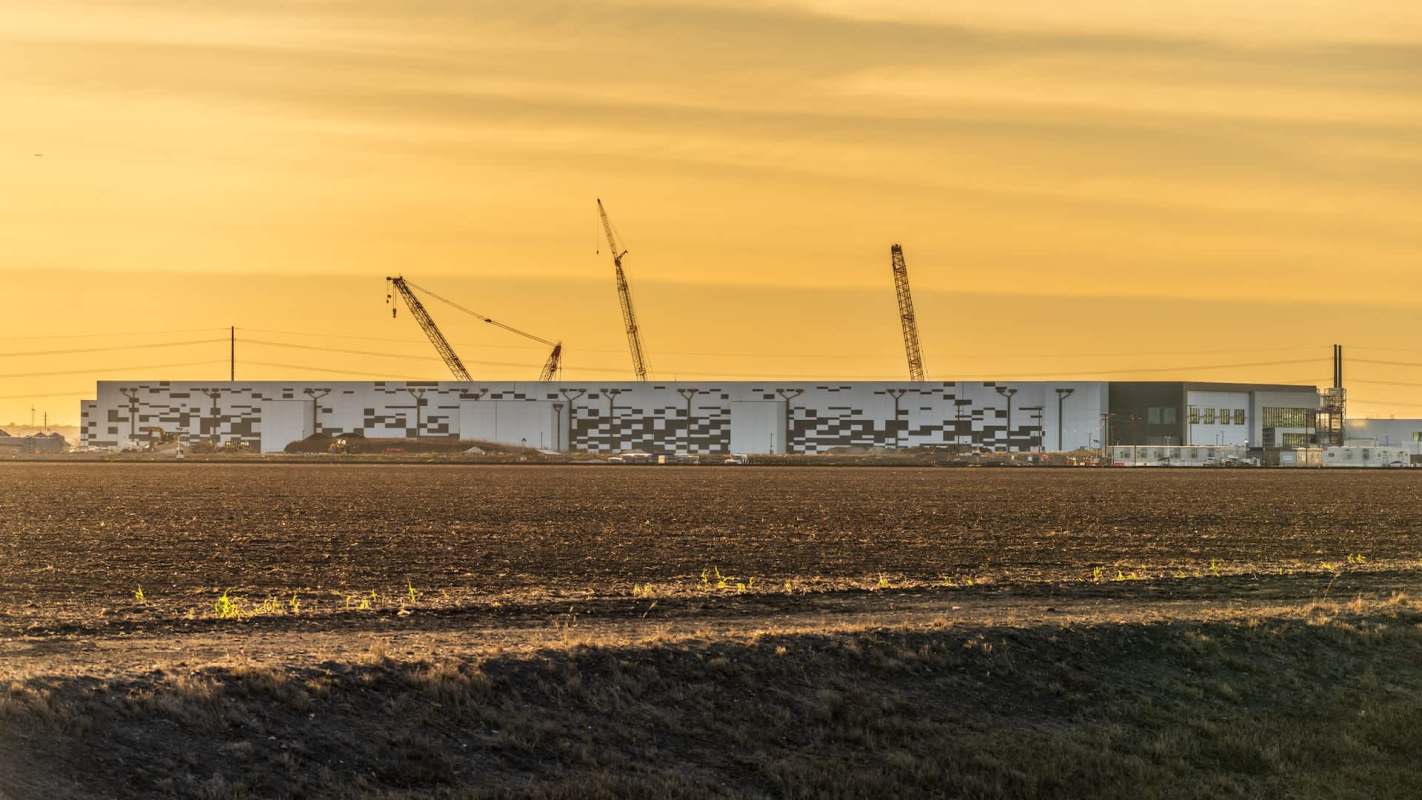
As Texas looks to expand its role as a data center hotspot, public officials and local residents have grown increasingly concerned over the impact on electricity and water supplies, according to a report by Inside Climate News.
Meanwhile, data-center companies have sought to assure policymakers that the new facilities will use far less water than existing data centers.
In the near future, Texas appears poised to overtake Virginia as the state with the most data centers under construction. However, such rapid development will come at a cost.
The question of how to balance data-center development with the needs of landowners, businesses, and local residents has become a hot topic at the Texas Senate's Business and Commerce Committee. The committee has been tasked with providing recommendations to lawmakers ahead of the 2027 legislative session.
The committee certainly has its work cut out for it.
According to the Environmental and Energy Study Institute, a medium-sized data center can consume as much as 5 million gallons of water every single day. That is roughly equivalent to the water use of a town of 50,000 people.
TCD Picks » Quince Spotlight
💡These best-sellers from Quince deliver affordable, sustainable luxury for all




The water is primarily used to cool data centers' electrical equipment.
However, data center operators claimed before the Business and Commerce Committee that such massive water use was a thing of the past. By developing so-called "closed loop" systems that reuse water supplies, operators said that data centers now can use less water than just five households, per Inside Climate News.
"We have a water shortage, but it's a water shortage driven by shortages of engineering and money," argued Michael McNamara, CEO of Lancium, a data-center company.
"We can fix all of those," he added.
|
Which of these savings plans for rooftop solar panels would be most appealing for you?
Click your choice to see results and earn rewards to spend on home upgrades. |
 Save $1,000 this year 💸
 However, as large swathes of Texas continue to struggle with significant water shortages, public officials and local residents have remained skeptical of such claims.
Corpus Christi, a city with over 300,000 people, has been experiencing a serious, long-term drought.
"We just have not kept up with water supply and water infrastructure like we should have," said Peter Zanoni, the city manager, according to the Associated Press. "And it's decades in the making."
If Texas pursues its plan of massively expanding the number of data centers in the state, the fight over limited water supplies will only grow more heated.

Get TCD's free newsletters for easy tips, smart advice, and a chance to earn $5,000 toward home upgrades. To see more stories like this one, change your Google preferences here.






