


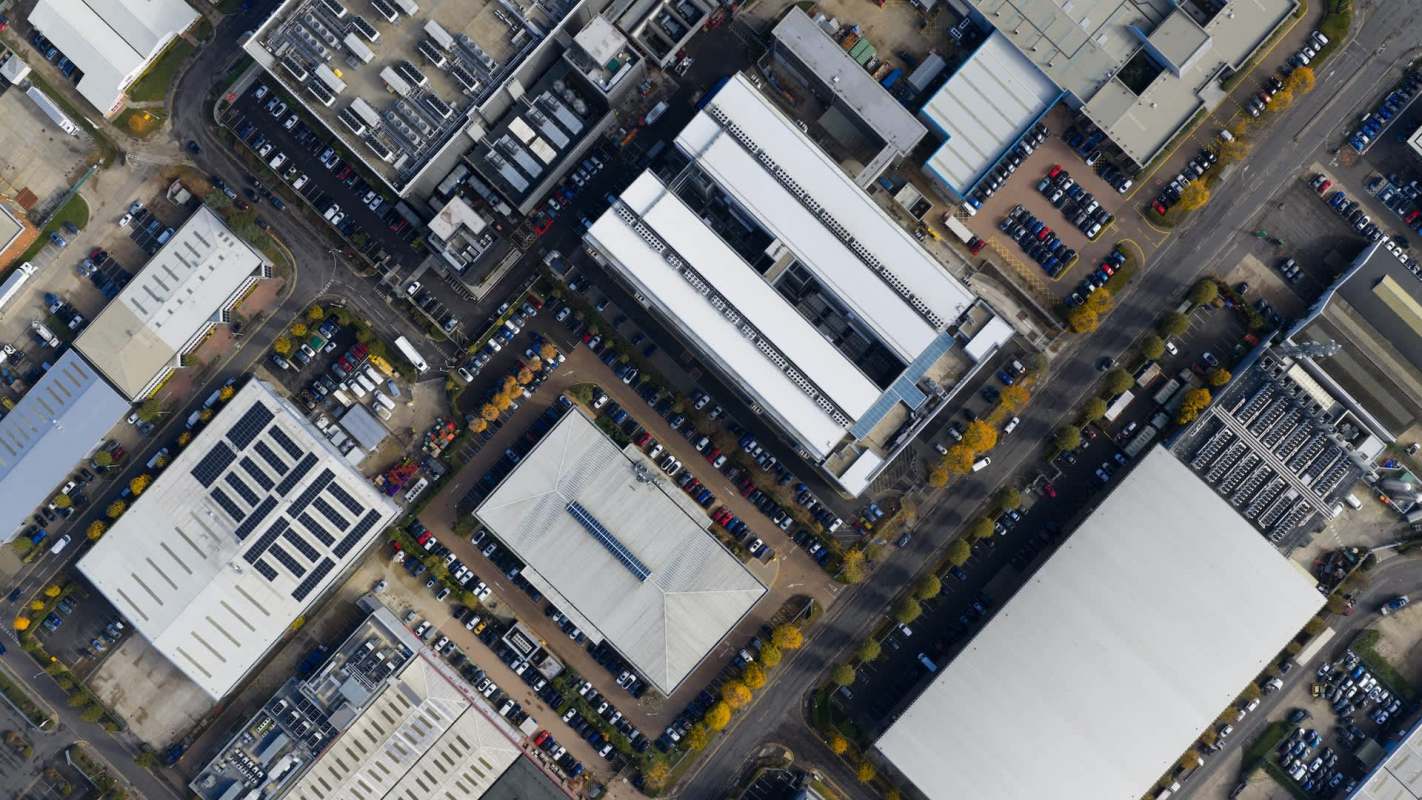
Europe's dangerous heat wave has been especially brutal for some people in Slough, west of London, who say temperatures feel worse near a giant data center.
For people living beside the sprawling facility, the heat is no longer just part of the weather story. It is becoming a neighborhood one.
What's happening?
According to Futurism, which cited reporting from The Guardian, local weather data this week showed temperatures near Europe's largest data center running a few degrees hotter than nearby areas and nearing 100 degrees Fahrenheit.
People living nearby described it in visceral terms, with one resident saying it felt like "pinching your body and burning your skin."
Roughly 10 miles from London Heathrow, the facility provides major computing capacity for companies including Amazon, Google, and Microsoft, according to Futurism.
Researchers at Cambridge have proposed that this may reflect a broader "data heat island effect" in a paper that has not yet been peer reviewed. The paper estimated that data centers can increase nearby temperatures by about 3.6 degrees Fahrenheit on average and by as much as 16 degrees Fahrenheit in some situations.
TCD Picks » Quince Spotlight
💡These best-sellers from Quince deliver affordable, sustainable luxury for all




Cambridge associate professor and paper co-author Andrea Marinoni told The Guardian that "Slough is almost like an experiment by itself in the sense that the new investments in data centers are bringing to life a new generation of data centers."
Why does it matter?
Heat waves are already becoming more intense and dangerous as the planet warms, and even a few extra degrees can make a difference for nearby residents.
Higher nighttime temperatures, hotter indoor conditions, and more strain on cooling systems can all increase health risks, especially for older adults, children, and people without reliable air conditioning.
Beyond the heat, Futurism noted that local opposition to data centers, popping up at record speed across the globe to support artificial intelligence infrastructure, has also focused on noise, reduced water pressure, and rising electricity costs.
What's being done?
Researchers are still trying to understand the full local impact of data centers, and Slough may be only an early example.
Marinoni told The Guardian that what researchers have measured so far reflects "the first generation of data centers" built over the last two decades.
In the near term, better local monitoring, stronger planning requirements, and clearer disclosure of heat, water, and energy impacts could help shape decisions before new facilities are approved.
For those already living beside these projects, though, the issue is no longer theoretical. As Marinoni put it, "Slough is a different context for the scaling up of data centers, and is something that is quite unprecedented."

Get TCD's free newsletters for easy tips, smart advice, and a chance to earn $5,000 toward home upgrades. To see more stories like this one, change your Google preferences here.






