


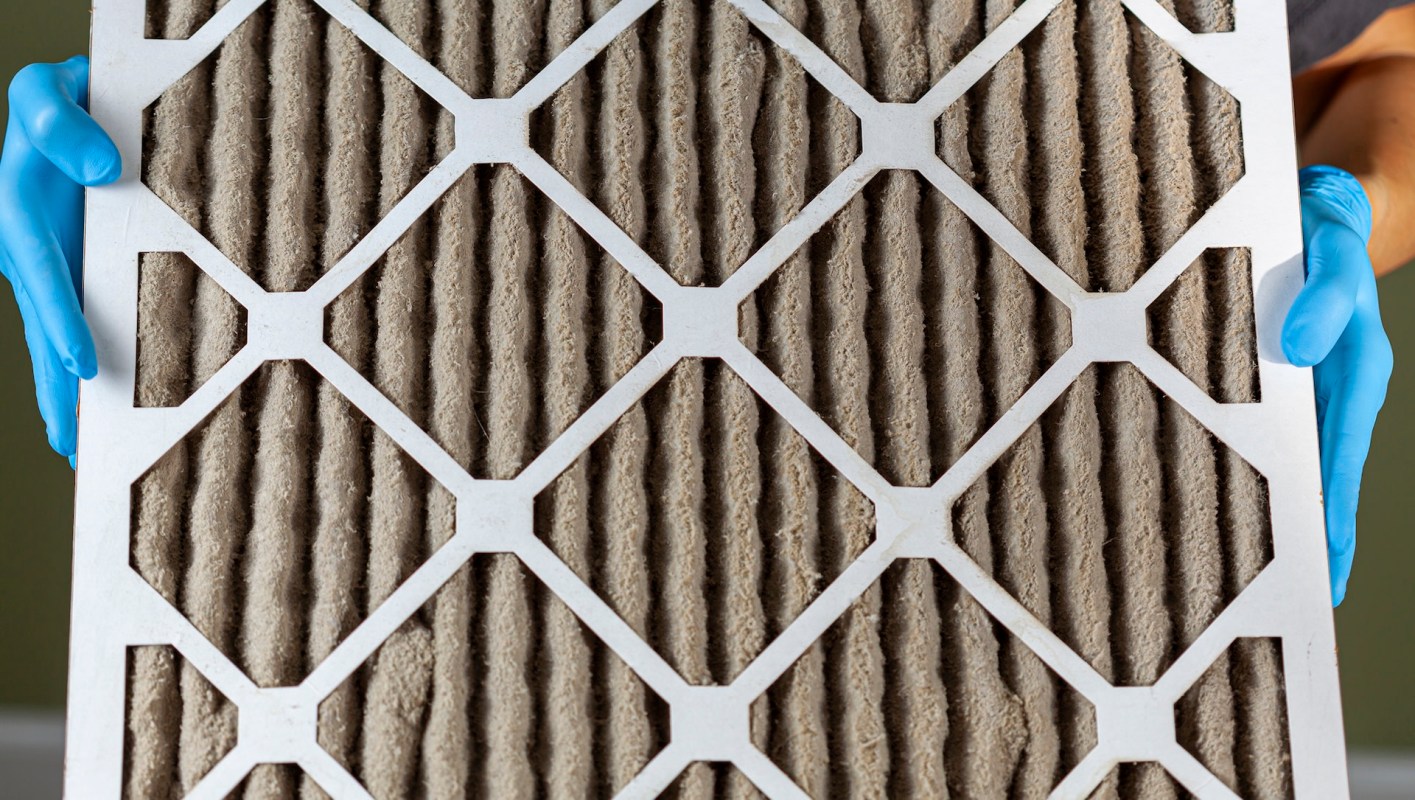
A group of scientists is developing technology that could turn your home into an air pollution remediation site.
Their plan is to use special filters to capture heat-trapping carbon dioxide from air that passes through HVAC systems. It's a fascinating process that utilizes sunlight as part of a low-cost alternative to other direct-air capture, or DAC, projects, according to KnowESG, an Amsterdam-based environmental, social, and governance marketplace.
As part of the setup, carbon nanofibers trap the pollution with a 92% efficiency, per the report. The potential could be great at scale.
"By taking advantage of billions of ventilation systems in the world, distributed DAC air filter technology can shift the paradigm and strengthen the present joint force to confront climate change," the study's authors reported in Science Advances.
The innovation could reduce air pollution by 596 million tons annually, the scientists added.
The team includes experts from the University of Chicago, Argonne National Laboratory, and Duke University.
DAC is utilized at industrial and manufacturing sites to neutralize planet-warming fumes, often using chemical filtration. KnowESG reported that the sites are commonly "large, expensive, and energy-hungry."
Nestlé has had success using a filter made by London-based Emissions Capture Company. Its tech is attached to the flue of a plant operating in South Africa. A team at Purdue University is using liquid filters to capture carbon, with the hope of scaling the tech for commercialization.
The carbon dioxide is sometimes turned into a harmless product, such as baking soda, or pumped underground for safe storage, according to the Department of Energy.
Experts working on the HVAC-based invention intend to provide many more opportunities for filtration by making it easy to utilize. Their system works by using nanofiber filters coated in a polymer that binds to carbon dioxide molecules. From there, sunshine can be used to help finish the process, per the summary.
TCD Picks » Quince Spotlight
💡These best-sellers from Quince deliver affordable, sustainable luxury for all




|
Do you worry about having toxic forever chemicals in your home?
Click your choice to see results and speak your mind. |
 Majorly 😥
 "After absorbing the CO2 from direct air, the … filters can be regenerated using renewable energy sources, such as sunlight and renewable electricity with high efficiency and extremely low carbon footprint. The desorbed CO2 can be compressed and sequestrated after separation from water by condensation. The air filter returns to the building for recyclable usage," the experts wrote.
KnowESG reported that the setup can remove a ton of air pollution for about $362 to $821, depending on whether renewable sunlight or electricity is used. The expense is on par with the "lower range of current DAC technologies," per the story.
DAC has been a debated technology. Critics worry that capturing pollution from dirty-fueled plants will discourage a shift to cleaner energy. But the United Nations said that air pollution remains on the rise, resulting in 4.5 million premature deaths globally each year.
With that in mind, more experts are coming around to the idea of using DAC to help with the planet's cooling, according to KnowESG.
The building-based DAC system can be easily retrofitted onto existing HVAC units. But hurdles include the need for scaled nanofiber manufacturing and "managing the collection and regeneration of filters," per the story.
In the study summary, the researchers said that the tech can "promote building energy efficiency and promote public health and productivity" as part of the perks.
Homeowners looking to upgrade their HVAC systems quickly, reduce pollution, and save money should consider a heat pump. The International Energy Agency reported that heat pumps are up to five times more efficient than gas boilers. Mitsubishi's trusted experts can help you find the right kind for your home and an installer. Fast action can secure up to $2,000 in tax breaks before they expire Dec. 31.

💰Get TCD's free newsletters for easy tips to save more, waste less, and make smarter choices — and earn up to $5,000 toward clean upgrades in TCD's exclusive Rewards Club.
Cool Picks





