


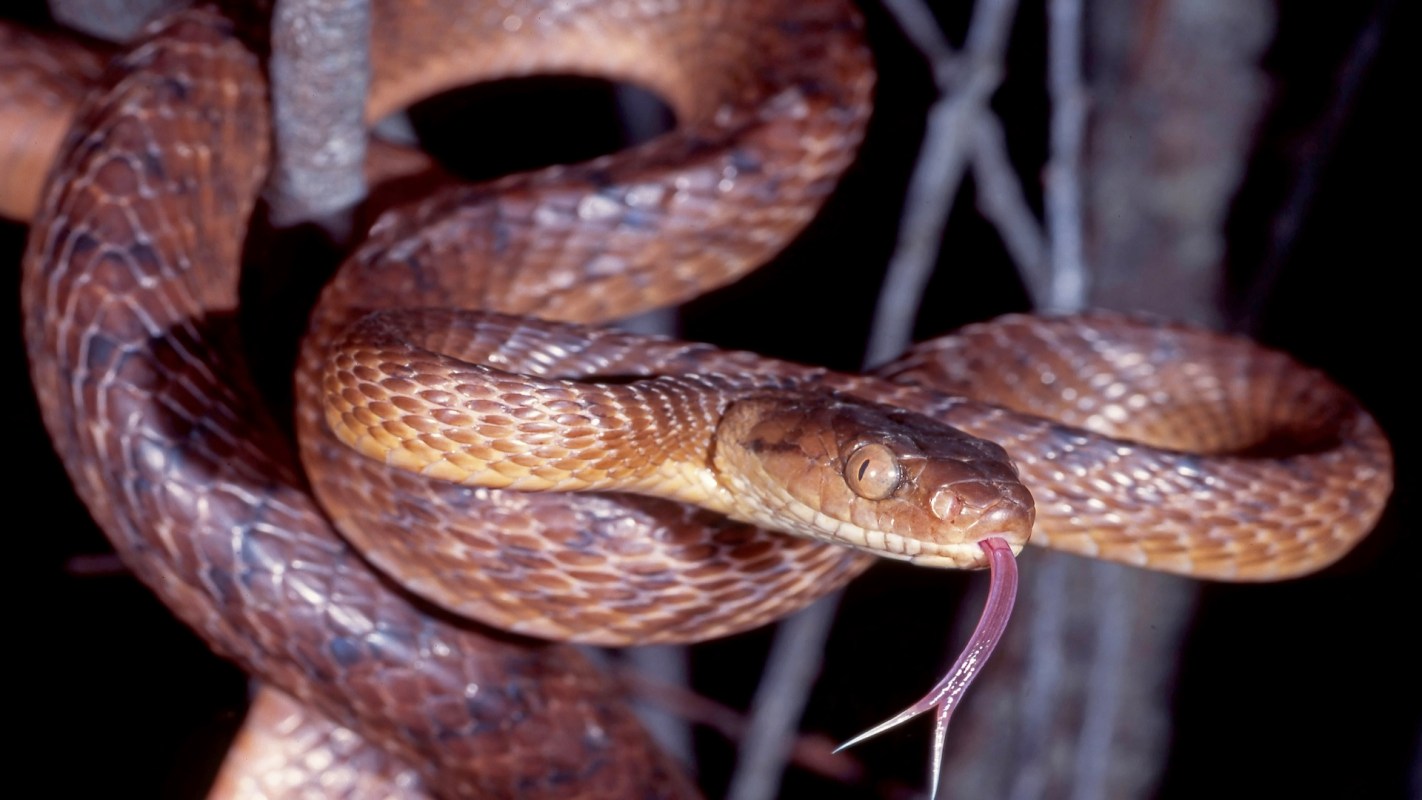
A snake population that could have been expected to die out quickly became one of Guam's most destructive invasive species.
New genome research from the University at Buffalo is helping explain how brown tree snakes — descended from only a few accidental arrivals — reached densities of up to 30,000 per square mile.
Here's what to know
The paper, published in Science Advances on July 24, found more than 19,000 structural variants in the brown tree snake genome.
Those results offered a possible explanation for how just a few founding snakes endured an extreme genetic bottleneck and still spread throughout Guam.
Many of those genomic differences were found in genes linked to immune function and scent, traits that may have helped the snakes adapt to unfamiliar conditions.
That is notable because invasive populations that start with very limited genetic diversity are usually expected to be at a disadvantage.
TCD Picks » Quince Spotlight
💡These best-sellers from Quince deliver affordable, sustainable luxury for all




The researchers said the species' strong sense of smell may even enable individuals to tell close relatives apart from potential prey.
In broader terms, the study indicates that heavy inbreeding may not eliminate as much adaptive capacity as scientists once assumed.
More background
Although brown tree snakes are native to Australia and the South Pacific, they are believed to have been introduced to Guam by human activity, potentially arriving as hidden passengers on cargo aircraft after World War II.
Once established, they devastated Guam's native forest birds and altered the island's ecology.
They also created a persistent infrastructure problem by climbing utility poles and causing hundreds of power outages each year.
Most striking is that this invasion grew from only a small number of original snakes into populations topping 30,000 per square mile.
Instead of being undone by inbreeding, the species prospered.
What's being done?
One of the biggest advances is a better understanding of the invader itself.
By mapping the structural quirks of the brown tree snake genome, researchers have given scientists and wildlife managers new clues about why this species succeeded where a tiny introduced population might have been expected to fail.
That could help sharpen future control strategies by allowing experts to focus on the biological traits that made the snakes so resilient.
If scent and immune-system genes played a major role in their spread, those pathways may become especially important targets for future monitoring and research.
The result may also be encouraging for endangered animals that have suffered major population crashes, as it suggests adaptive potential that can persist even in inbred groups.
Guam's snake crisis appears to have begun with human transport, and the longer an invasive species has to establish itself, the harder and more expensive it becomes to contain the damage.
Guam's blackout-causing snake problem shows how a few unintended passengers can permanently alter an ecosystem, and new research shows how unexpectedly durable those populations can be once they arrive.

Get TCD's free newsletters for easy tips, smart advice, and a chance to earn $5,000 toward home upgrades. To see more stories like this one, change your Google preferences here.






