


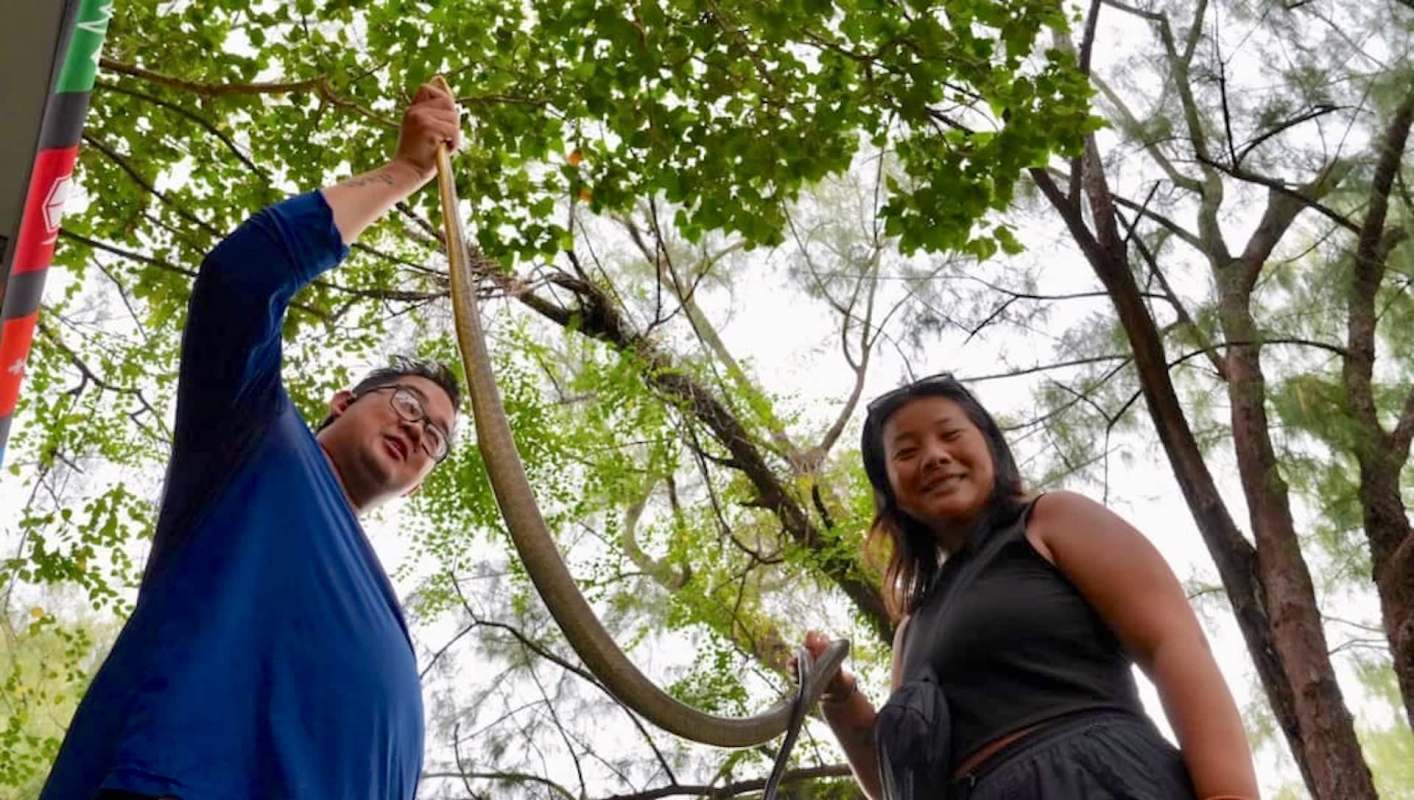
Guam's fight against the brown tree snake drew more than 125 people to Gab Gab Beach for a workshop and nighttime hunt centered on one of the island's most destructive invasive species.
The hands-on event brought together families, volunteers, and conservation partners to help protect native wildlife.
What happened?
NAVFAC Marianas and the University of Guam's Center for Island Sustainability and Sea Grant organized the Brown Tree Snake Control Workshop and Snake Hunt, using the tagline "Learn. Spot. Protect Native Species of the Marianas!"
The University of Guam reported that the event was designed to help residents identify, safely capture, and humanely dispatch the invasive brown tree snake, or Boiga irregularis, before it can spread from Guam to the Commonwealth of the Northern Mariana Islands and other islands through military and air cargo.
In event materials, organizers noted that the snake is especially difficult to spot, and participants were given a chance to practice searching for it in the forest canopy.
Agencies including USDA Wildlife Services, the U.S. Geological Survey, National Park Service, Guam Department of Agriculture Division of Aquatic and Wildlife Resources, the Center for Environmental Management of Military Lands, and the U.S. Fish and Wildlife Service also shared tools and expertise related to broader invasive species threats.
TCD Picks » Quince Spotlight
💡These best-sellers from Quince deliver affordable, sustainable luxury for all




More than 85 people joined the evening search, and despite how hard the snakes were to detect, participants spotted four and captured three.
Why does it matter?
Organizers said the brown tree snake has already helped drive the extinction or local disappearance of 13 of Guam's 21 native bird species and 13 native reptile species, causing ripple effects throughout the island's ecosystems.
Those losses can affect daily life in ways that are not always immediately obvious. When native birds and reptiles disappear, ecosystems fall out of balance, while invasive species often bring higher management costs, agricultural challenges, and infrastructure problems.
The snakes also create practical problems by climbing onto electrical equipment and triggering blackouts, making them both an environmental and economic threat.
The workshop also covered other invasive threats such as the coconut rhinoceros beetle, little fire ant, and feral ungulates.
Teaching residents how to identify and respond to invasive species can help protect biodiversity, support food systems, and strengthen resilience in island communities.
What are people saying?
Else Demeulenaere, Ph.D., associate director for natural resources at UOG CIS & Sea Grant, framed the issue in cultural terms: "Suppressing the brown tree snake on Guam is not just an ecological necessity, it is a culturally imperative."
She added, "Every species we protect is part of our island's identity, our stories, and our future."
Leanne Obra, an event organizer with NAVFAC Marianas, said, "I was surprised by the large number of people that showed up for the Snake Hunt, and I'm grateful that we caught some snakes," adding, "Their commitment to making this event a success truly made a difference and created a fantastic experience for everyone involved."

Get TCD's free newsletters for easy tips, smart advice, and a chance to earn $5,000 toward home upgrades. To see more stories like this one, change your Google preferences here.







