


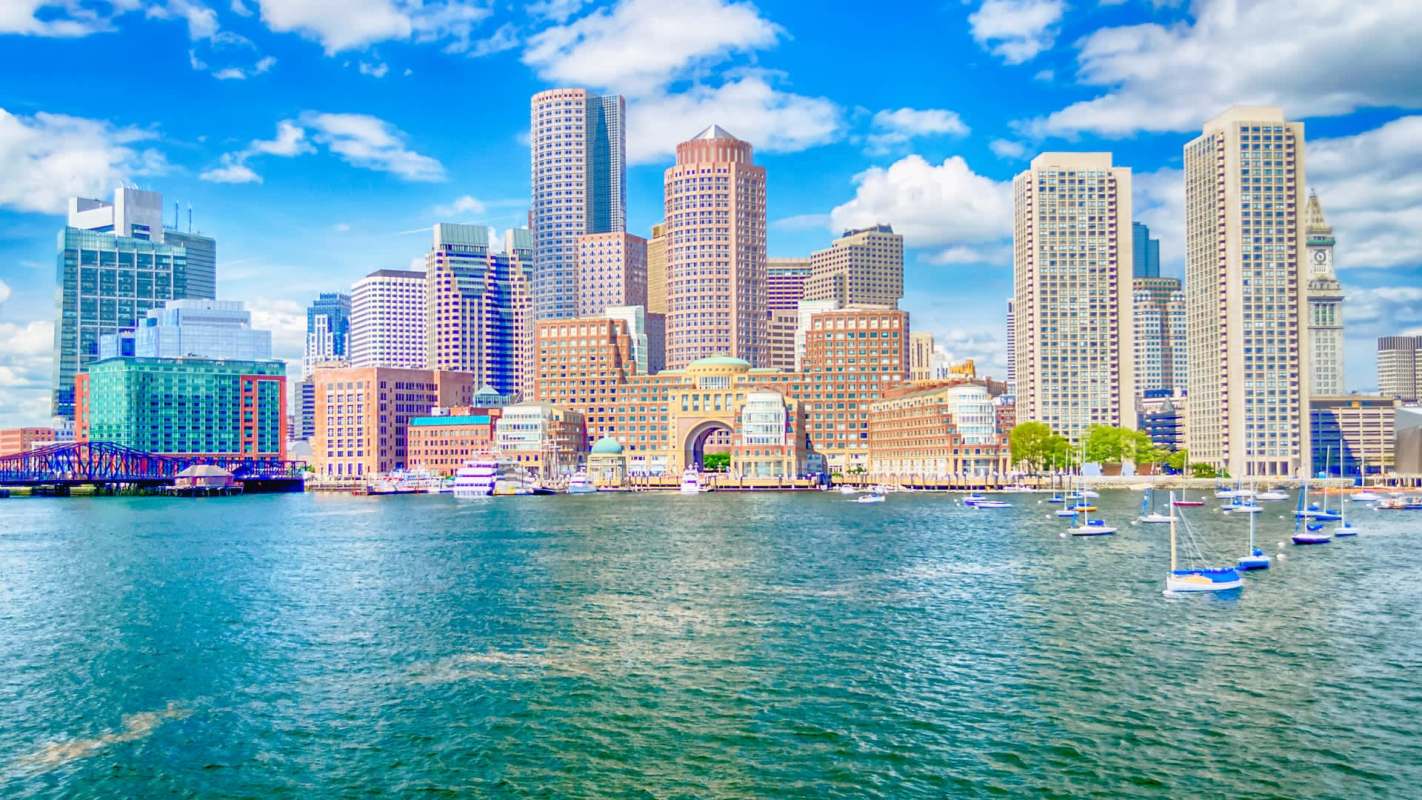
Long associated with the Boston Tea Party, Boston Harbor may take on a very different role: helping some of the Boston area's biggest institutions move away from fossil-fuel heating and cooling.
Here's what to know
Among the efforts under consideration is the Boston Area Thermal Energy Network Project, or BosTEN, which is examining whether major institutions could use thermal energy from Boston Harbor, the Fort Point Channel, the Charles and Mystic rivers, and the bedrock beneath them. Separately, Canary Media reported that three projects in Boston and neighboring Cambridge are planned to use nearby waterways for heating and cooling.
Instead of producing heat by burning fuel, heat pumps transfer it from one place to another, which allows buildings to be heated in winter and cooled in summer. The technology behind them has been around for more than 150 years.
Zeyneb Magavi, executive director of the Boston-based nonprofit Home Energy Efficiency Team, known as HEET, framed the push this way: "We're launching a thermal revolution."
Buildings remain a major source of climate pollution, and cleaner heating and cooling systems could help dense cities cut emissions without relying on combustion-based energy.
More background
One reason water-based thermal systems are drawing attention in Boston is that standard geothermal networks can be hard to install there. Lindsey Butler, executive director of the Boston Green Ribbon Commission, said the city's age and physical layout create unusual challenges below ground.
TCD Picks » Quince Spotlight
💡These best-sellers from Quince deliver affordable, sustainable luxury for all




Butler said, "We're a very old city, we're dense, we have a very crowded underground, and a large portion of our city is built on fill."
She added that geothermal is "impossible in some places and in others just very expensive."
Waterways may be useful partly because their temperatures fluctuate less than the air. That means the water tends to stay cooler during hot periods and warmer during cold ones, giving heat pumps a more efficient thermal source.
HEET researchers estimate that Boston Harbor's warmer waters hold enough thermal energy to serve about 2.4 million households a year.
What's being done?
The BosTEN initiative is evaluating several questions at once: how much energy can be extracted reliably, how a network could move that energy, which buildings are the best candidates, and what permitting or regulatory obstacles might arise.
If the model succeeds, it could offer a new blueprint for older coastal cities hoping to electrify heating and cooling while facing obstacles to traditional geothermal build-outs.
Cleaner systems at hospitals, campuses, and other large institutions can reduce pollution and help normalize alternatives to gas-based heating. Broader adoption of heat pump technology, whether through district networks or individual buildings, could make low-emissions comfort more common and more practical.
Supporters also point to the fact that the supply keeps renewing itself. Archana Dayalu, a scientist who worked on HEET's analysis, said ocean currents renew the harbor's heat on a two- to 10-day cycle.
Dayalu said, "Really, this is a near-infinite source of energy. It is a long-term sustainable solution."

Get TCD's free newsletters for easy tips, smart advice, and a chance to earn $5,000 toward home upgrades. To see more stories like this one, change your Google preferences here.






