


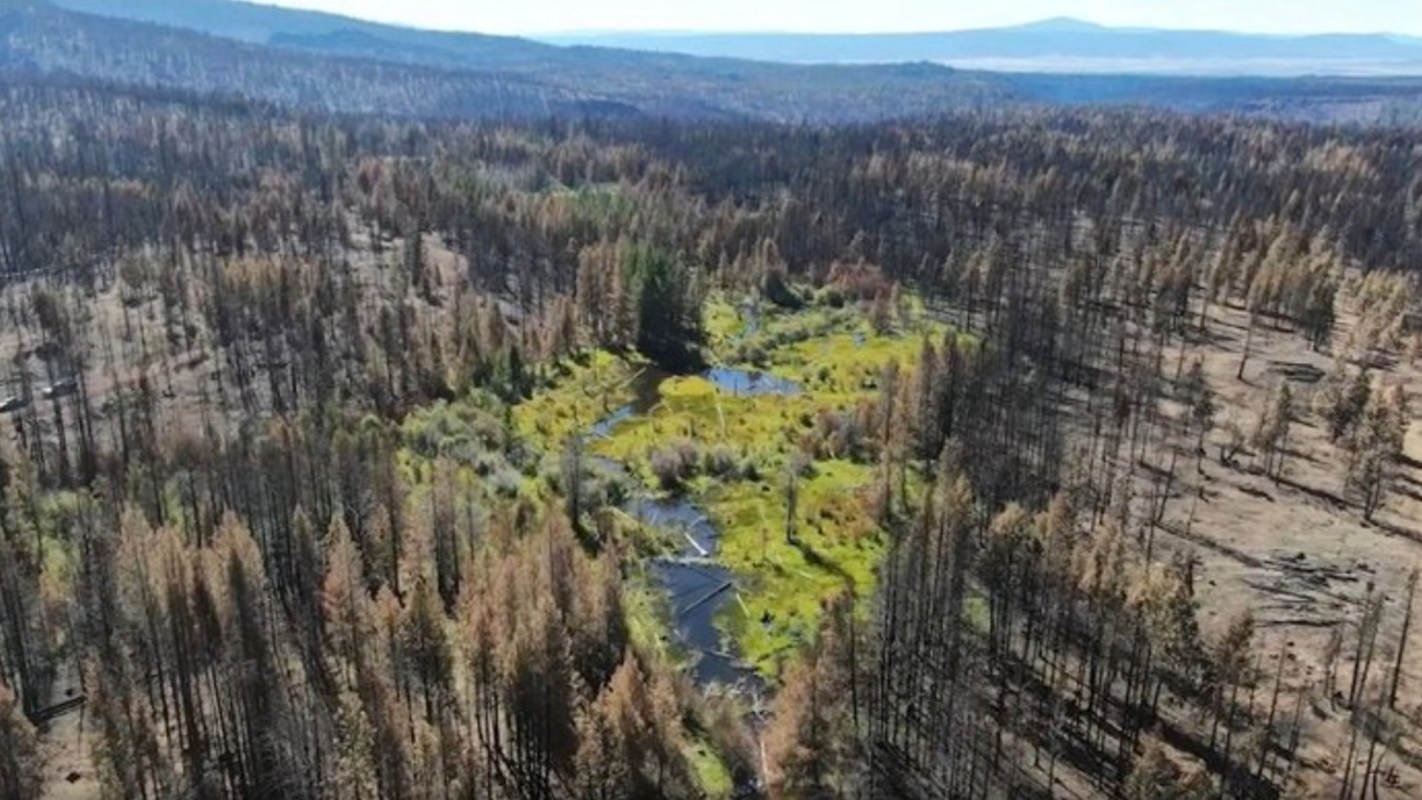
A wildfire turned most of a landscape into a blackened scar, but one vivid green strip stayed alive. In a striking aerial image shared on Instagram, that untouched ribbon appears to follow a beaver dam and the wetland around it, showing how stored water can leave part of a landscape less damaged by fire.
What happened?
On July 27, landscape-regeneration creator Louis De Jaeger (@louis.de.jaeger) shared the image and used it to make a point about the role of water during wildfire season. As De Jaeger wrote in an Instagram post, "Hydrated landscapes don't burn."
The image shows a mostly scorched landscape broken up by a lush corridor of vegetation. "Look at this aerial photo," De Jaeger wrote. "Everything around it is scorched, black and dead. But in the middle, a strip of deep green, full of water and life, completely untouched by the fire."
De Jaeger identified the green strip as the result of beaver activity and noted that he was resharing the image from João Brites, who had passed along insights from a video by Zach Weiss and Nick Steiner at Water Stories.
Areas where water lingers longer — allowing wetlands to expand and the ground to stay saturated — may be better able to endure intense heat and fire.
Why does it matter?
Beavers are often called ecosystem engineers for a reason. By building dams, they can create ponds and wetlands that hold water longer, support plant growth, and give animals refuge during dry spells.
TCD Picks » Quince Spotlight
💡These best-sellers from Quince deliver affordable, sustainable luxury for all




As wildfire seasons grow longer and more destructive in many places, a wetter patch of land can act like a natural firebreak, slowing flames and helping protect the habitat, soil, and water systems nearby communities rely on.
Land that retains more moisture is often better positioned to bounce back after a fire, while burned, dried-out ground can be more vulnerable to erosion and additional damage when storms arrive.
In the right setting, this may also help shape landscapes that are more resilient to climate-driven extremes.
What's being done?
Across some fire-prone regions, land managers and restoration groups are paying closer attention to beavers and beaver-like infrastructure. That can include protecting existing wetlands, reconnecting streams to floodplains, and installing low-tech structures that mimic the water-slowing effects of dams.
These approaches are not a cure-all, and they will not prevent every wildfire. But they can help keep more water in a watershed, which may reduce damage in some areas while improving habitat for birds, fish, insects, and other wildlife.
Nature-based solutions are often already at work, sometimes thanks to an animal with a talent for reshaping the land one dam at a time.
"The beaver didn't know there was a wildfire coming," De Jaeger wrote. "It just did what beavers do: slow the water down, spread it across the land and keep the ground wet. And that wet ground didn't burn."

Get TCD's free newsletters for easy tips, smart advice, and a chance to earn $5,000 toward home upgrades. To see more stories like this one, change your Google preferences here.






