


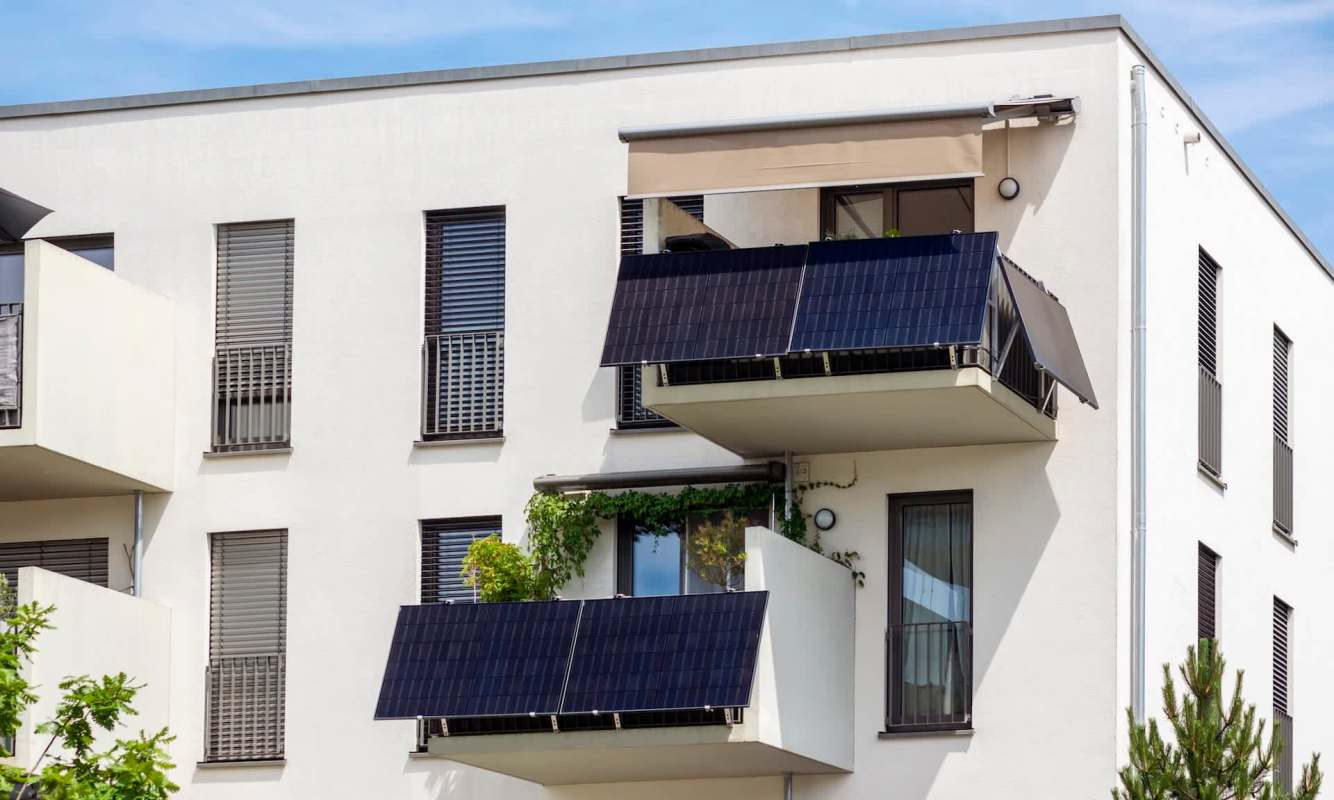
"Balcony solar" legislation is gaining traction at the state level as officials look for ways to lower household energy costs.
According to late-March reporting from Canary Media, all six New England states have considered measures to legalize or clarify the use of small plug-in solar panel kits that can be set up on a porch, in a yard, or on an apartment balcony.
The outlet reported that more than 20 states nationwide have been weighing similar bills.
Lawmakers in Maine, New Hampshire, Vermont, Massachusetts, Connecticut, and Rhode Island are all advancing proposals that would allow residents to use plug-in solar systems that connect to standard home outlets.
As of March, Maine's bill was the furthest along. Gov. Janet Mills signed the bill in April, making Maine the third state allowing homeowners to install small solar units behind Utah and Virginia. Colorado became the fourth state to approve balcony solar in May.
According to Canary Media's March reporting, New Hampshire and Vermont have each advanced separate measures beyond one chamber, while Massachusetts and Connecticut included plug-in solar language in broader energy legislation. Rhode Island's proposal has been placed on hold for further consideration.
Depending on your setup, though, you may not have to wait for such laws to be approved in order to see the benefits of solar panels. The experts at EnergySage can help you connect with quick installation estimates and vetted installers so you can start reducing your bills with solar energy.
Meanwhile, interest in balcony solar has been growing across the country. Supporters say the appeal is simple: lower power bills.
Save $10,000 on solar panels without even sharing your phone number Want to go solar but not sure who to trust? EnergySage has your back with free and transparent quotes from fully vetted providers that can help you save as much as $10k on installation. To get started, just answer a few questions about your home — no phone number required. Within a day or two, EnergySage will email you the best local options for your needs, and their expert advisers can help you compare quotes and pick a winner. |

"We think this has taken off because people are thrilled about saving money and having some power to insulate themselves from rising energy bills," Cora Stryker, co-founder of plug-in solar nonprofit Bright Saver, told Canary.
Plug-in systems are typically modest in size, but they can still make a noticeable dent in electricity bills, often generating enough power to run a refrigerator.
New England faces some of mainland United States' highest electricity prices, and many homes in the region still depend heavily on oil and natural gas for heat. That leaves households especially vulnerable to price spikes and energy-market volatility.
Plug-in solar offers a lower-cost entry point than traditional rooftop systems. Bright Saver estimates current kits cost about $3 per watt and says prices could drop significantly if more states formally authorize them.
More From EnergySage
💡Go deep on the latest news and trends shaping the residential solar landscape




Because the systems can often be installed without hiring an electrician and do not require the same level of utility coordination as full rooftop setups, they can be more accessible for renters and people who cannot afford larger solar investments. This may expand access to the clean energy source and its potential savings.
There is also a broader climate benefit. The more electricity homes can generate from the sun, the less they may need from polluting energy sources.
In much of the U.S., plug-in solar has not been clearly banned but also has not been plainly approved. The new wave of legislation is designed to change that, creating basic rules around system size, safety certification, and more.
Supporters say those rules may do more than protect consumers — they may also build confidence in the technology.
If you're interested in taking advantage of the trend, a few practical steps can help. Check whether your state allows or is considering plug-in solar, look for equipment certified by a recognized safety testing organization, and make sure you have a suitable sunny location, such as a balcony, patio, or yard.
If you want to see even more savings, a larger whole-home panel array could be a worthwhile investment. To get started, you can check out the free tools from EnergySage. Homeowners who work with EnergySage experts can save up to $10,000 on the cost of installations and purchases.
EnergySage also provides a useful mapping tool that shows, on a state-by-state basis, the average cost of installing a home solar system, along with a breakdown of available solar incentives in each region. Combined, these tools can help homeowners compare pricing more easily, lock in competitive rooftop solar quotes, and maximize any incentives they qualify for.
Adding battery storage to a solar setup is one of the most effective ways to keep your home powered during outages, reduce energy costs, and increase independence from the grid, including the option to move closer to off-grid living. It stores excess solar energy for later use, helping homeowners avoid peak rates and maintain backup power when it matters most.
EnergySage can help you here by making it easy to explore home battery storage options and compare competitive installation estimates from vetted providers.
Ease appears to be part of the allure of plug-in solar systems too. As Stryker told Canary Media of the technology, "It's not only empowering, but it's also easy, and it's so much cheaper."

Get TCD's free newsletters for easy tips, smart advice, and a chance to earn $5,000 toward home upgrades. To see more stories like this one, change your Google preferences here.






