


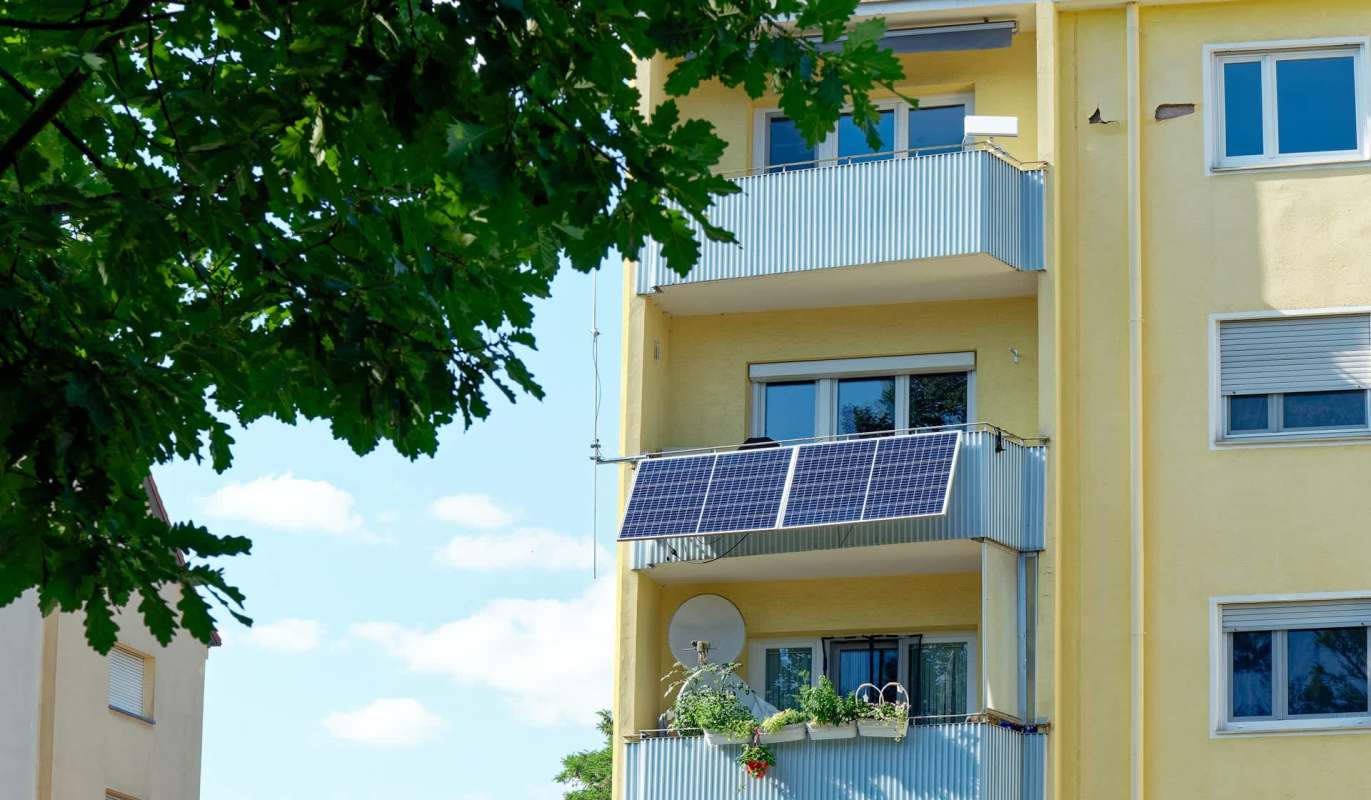
Maryland and Virginia are opening the door to plug-in, balcony solar systems that don't require a full rooftop setup.
The two states have passed laws allowing residents to use plug-in balcony solar systems capped at 1,200 watts, the Washingtonian reported.
In Maryland, residents can begin using the systems now. Virginia's version of the law takes effect on Jan. 1, 2027.
These compact solar setups can cost as little as a few hundred dollars, making them far less expensive than rooftop arrays. They can hang from balconies or sit on roofs or in yards. They then connect to a standard home outlet to feed power into the household circuit.
The systems have already proved popular overseas. About 4 million households in Germany are using them. And the technology is spreading to other states in the U.S. like Colorado and Utah.
The policy shift is part of a broader effort to expand solar access. This can be especially helpful for renters and others who don't own their roofs or can't afford a full installation.
TCD Picks » Quince Spotlight
💡These best-sellers from Quince deliver affordable, sustainable luxury for all




For many households, the biggest benefit is lower monthly bills. As the Washingtonian stated, these plug-in systems can cut electricity costs by up to 25%.
In cities and apartment-heavy areas, residents may not have had many clean energy options before. Instead of needing a contractor and a major financing plan, some people may be able to get started with a portable system they can set up themselves or with limited help.
There's even an environmental upside. Generating even part of a home's electricity from the sun can reduce demand for power produced by polluting energy sources, helping households save money while shrinking their footprint.
These smaller systems may offer a lower-cost way to try solar before making a bigger investment. They can also pair well with other bill-cutting strategies like weatherizing a home or upgrading to energy-efficient appliances.

Get TCD's free newsletters for easy tips, smart advice, and a chance to earn $5,000 toward home upgrades. To see more stories like this one, change your Google preferences here.






