


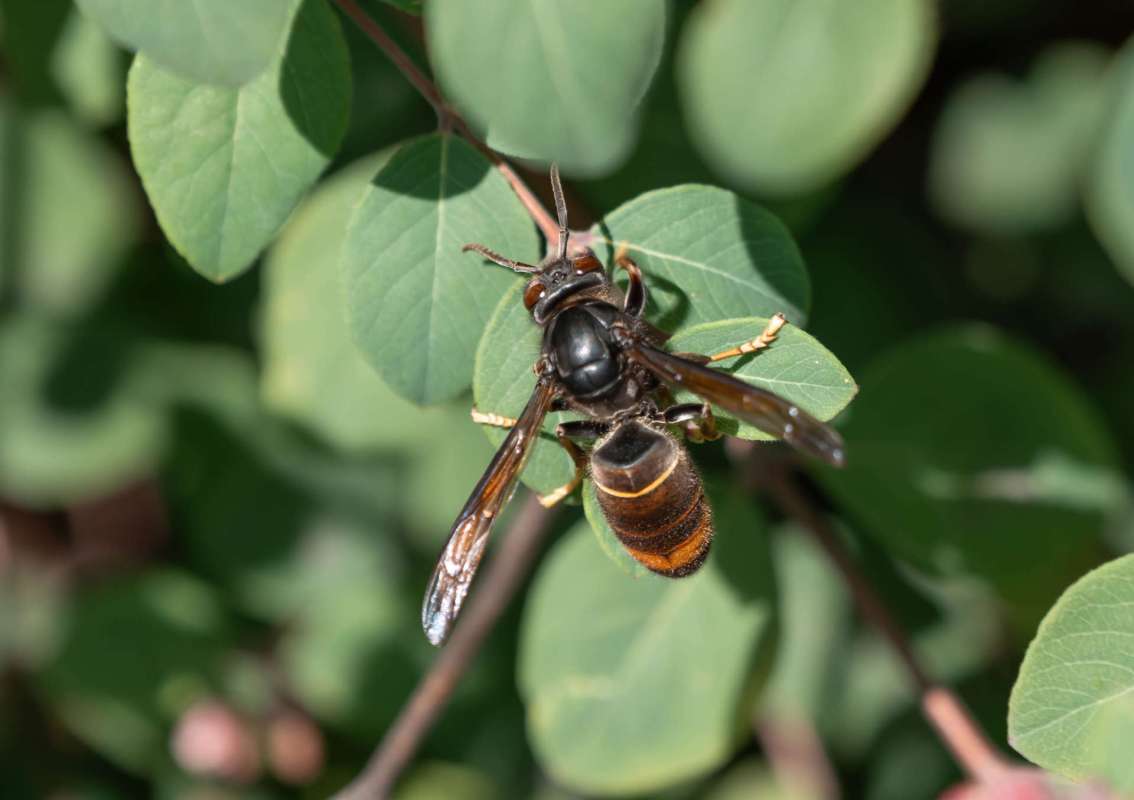
A yellow-legged Asian hornet sighting in Ripon, England, described as "credible," has put Yorkshire on alert, and officials are trying to catch the invasive insect alive so it can point them to a nest.
According to The Yorkshire Post, experts assessed a photo sent through the Asian Hornet Watch app, after which the precise location was given to the National Bee Unit, and traps were set nearby.
What happened?
Authorities say the suspected hornet was seen in Ripon, and their priority is to capture a live specimen that could lead them back to a nest before the problem grows.
The yellow-legged Asian hornet is an introduced species in Britain, and it preys on honeybees as well as other pollinators.
Richard Senior, the Yorkshire Beekeepers' Association's Yellow-legged Asian Hornet Coordinator, said the app plays an important role in that response.
"There are a few insects in the UK that can look similar to a yellow-legged Asian hornet at a glance," he said. "The app lets experts see a photo and the exact location straight away, and that's what turns a sighting into something the NBU can actually act on."
TCD Picks » Quince Spotlight
💡These best-sellers from Quince deliver affordable, sustainable luxury for all




There had been 82 credible sightings, with 21 nests found, mainly in Kent and Surrey.
Yorkshire has also dealt with the species. A nest was destroyed in Langton near Malton in 2024, and sightings have also been reported around Yarm.
Why does it matter?
These hornets pose a threat to ecosystems and people.
Because pollinators support food production and healthy local ecosystems, their decline can affect farms, gardens, and biodiversity. Yellow-legged Asian hornets add to that pressure by feeding heavily on bees, hoverflies, butterflies, and other insects, with each nest consuming around 11 kilograms (24 pounds) of them a year.
If a nest is disturbed, these hornets can turn highly aggressive and attack in large numbers.
Senior said, "They're highly aggressive if you get anywhere near the nest, and will defend it in numbers. Anecdotal evidence suggests they can even sting through a regular bee suit."
Invasive species often spread beyond their native range through international trade, shipping, and transport networks created by people.
What's being done?
The National Bee Unit has deployed traps and is hoping a live hornet will lead trained teams to any nest so it can be removed before it expands, according to The Yorkshire Post. Each nest can produce up to 200 new queens, raising the prospect of many more nests.
Officials are also urging the public to report sightings rather than intervene themselves. If someone believes they have seen one, the recommended next step is to submit a photo through the Asian Hornet Watch app so experts can confirm both the insect and its location.
Residents, gardeners, and beekeepers are being urged to keep their distance, avoid disturbing any suspected nest, and report what they see.
"This isn't something to deal with yourself," Senior said. "Leave it to people trained, equipped and licensed to handle it safely."

Get TCD's free newsletters for easy tips, smart advice, and a chance to earn $5,000 toward home upgrades. To see more stories like this one, change your Google preferences here.






